There seem to be two basic approaches to character description in fiction.
Method 1: Painting the entire picture
This is the method I grew up learning in high school creative writing classes: lots of adjectives and descriptive details intended to paint a complete picture of the character for the reader.
I think authors can sometimes fall into the trap of believing this is what “good writing” is supposed to look like. The more detailed the description, the better the writing. But it can easily be overdone.
Much like fractals, or measuring a coastline, you have a nearly unlimited ability to zoom in on a character at finer and finer resolution. You can go on and on describing infinitely finer detail as to the hair, the eyes, the clothes, the wrinkles, the way someone stands and on and on.
The problem this often creates is something I call letting the words get in the way of the story.
Too many adjectives or too much descriptive prose creates a longer journey for the reader to get to the underlying plot. That doesn’t mean detailed description is bad. Sometimes the details matter. They can establish mood, tell us something important about a character or even reveal something about the plot, but the question is whether the detail is actually doing something for the story.
Here is an example:
She held the white, dew-covered lilies at her side.
vs.
She held the delicate, white, fragrant, dew-covered, freshly cut lilies at her side.
We do “see” a lot more when it comes to the lilies, but is that really important to the story or is the main point that we understand she has the lilies and they are being held at her side for some reason? Note that “dew-covered” could also be cut if there isn’t an important reason for us to know that.
I try to use no more than two adjectives in series to describe something, sometimes three at the very most if I feel I really need to have it.
Method 2: Giving the reader just enough
The second approach is what I think of as the Stephen King method: provide enough detail for the reader to get a feel for the character, but allow the reader’s imagination to fill in the rest.
King will often give a character some kind of hook: a memorable physical trait, habit, or mannerism that helps us quickly orient ourselves to which character we are reading about.
This is particularly useful in the kind of fiction King often writes: long novels such as It and The Stand, with large casts of characters who may disappear for many pages before showing up again. Giving a character a memorable trait helps the reader recognize them when they return.
I also think part of King’s strategy is to avoid giving us the entire character all at once.
Instead, he organically reveals more details along the way. We learn about the character as they move through the story through actions and dialogue.
In some ways, this is closer to how we actually get to know people.
When you first meet someone, you don’t receive a paragraph describing everything about them. You notice a few things. Then, over time, you learn more. I am not sure if he has ever said this in an interview or a talk, but I feel like it is one of his strategies.
The answer is likely somewhere in the middle
As with many things in writing, taking either approach to an extreme can become problematic.
Describe too much and you let the words get in the way of the story.
Describe too little and we risk the reader not identifying with the characters.
For me, the key is to allow character description to serve the story rather than compete with it.
What do you think? Do you prefer detailed character descriptions, or would you rather have the author give you just enough and let your imagination fill in the rest?
Today’s story comes to us from Jeremy Morris. Jeremy used to research jetpacks for a movie star, and now he writes fiction. In between, he worked on documentaries, a kids cyberpunk movie and several fantasy animation projects involving robots and samurai. His writing has appeared in Darklands, Neon Dystopia and SciFanSat. He’s also won a Sloan Writing Fellowship, the Jubilee Prize and the McGill Short Play Prize. He lives in NYC with his family and their mess of tooth and claw known as Cali.
When I asked Jeremy what he loves about the story, this was his response:
I first learned about the scenario for this story while talking with a Nuclear Weapons expert on a phone call. The fact that it’s plausible, and absurd felt like something that we should be discussing openly, as America prepares to spend a trillion dollars on nukes in the age of social media and AI. Hopefully, we can now make some better decisions than we did during the Cold War.
30 Minutes or Less has been [mistakenly] rejected by: Asimov’s, Cetera, and Clarksworld
30 Minutes or Less, by Jeremy Morris
We’re inside the capsule. Buried 80 feet down. Concrete and comms. The enormous blast door rests open. It’s 110 tons of metal. There’s a Domino’s Pizza Logo painted on its front like a child’s scribble. The room smells like aging military technology.
The air has a sound. That soft hiss it makes when it’s under enormous pressure. Like a sigh through clenched teeth. It’s going to be a nightmare for the post team to fix. I’m holding the boom mic. The Major clears his throat. I lean in. Andy Briggs, our director, flags Becks Reed, the camera operator, to start rolling. I make myself absolutely still. It’s showtime.
“Routine. Procedure. Process. Three words we live by… And Discipline. Four words,”
Major Carrigan says, “We work six hour shifts. Like the Navy. Why swim? When you can fly!”
The Major’s salty today.
“…Which is deeply ironic, I know, because we live in a hole.”
The Major coughs then wipes his brow.
“Does that work for a soundbite? Mic is good?” he asks.
I nod. Andy gives a thumbs up.
“Adjusting wardrobe…” I say.
I tweak The Major’s uniform. Trying to minimize the ruffling on his lavalier.
“I’d like to see them automate that!” The Major says, “Hey, movie man, are they going to replace your job with robots?”
Becks shrugs. Like any of us know.
“Please refrain from wiping your face or you’ll dislodge the mic,” I say.
I step out of frame.
Andy mumbles, “Thank you.”
I think he’s afraid of me.
Becks gestures for the missileer to keep talking.
“After living like a moleman, you get to go topside. You go home,” The Major says.
Andy points to an old acoustic guitar.
“What do you do for fun in the Capsule?” he asks.
“We play our jams. If you like to read, it’s paradise. Being a missileer is a good deal,” The Major replies, “And according to STRATCOM, in the ancient lore of the almighty SAC…”
“Praise Be to the Mega Yields…” The Major’s second, Lieutenant Sykes, chimes in.
The Lieutenant thinks he’s cute. I think he’s a chatbot.
“Some of the OG rocketeers got a bit squirrely down here in the deep. They’d burrow in for weeks, even months…” he says.
I try not to think about getting stuck.
“…So they had to lure the old badgers out with a case of beer and back issues of Jugs.”
Andy giggles.
“Is that true?” he asks.
“No idea,” The Major replies, “But it’s pretty good lore.”
The Major winks. I catch the filings in his teeth.
Lieutenant Sykes swivels over in his big Model 1101 chair.
“And that’s the reason that you have me keeping The Major company here….”
I really hate Sykes. He’s got anime forum vibes.
“Two-man teams guarantee you a conversation. Companionship. It’s scientifically proven that you’re less likely to go ba-na-nas.” he says.
“Lieutenant…” The Major says.
He’s clearly not happy. And their overlap is gonna hurt the mix.
“Apologies, Major,” The Lieutenant replies.
It’s still the old man’s show.
Andy walks over to Becks. Would an AI Andy be faster? Drink less coffee?
“Becks, can you adjust the frame? Great. Thank you.”
They’re doing their show-off camera thing. Does the mic pick up my eyeroll? Becks adjust the key light. Andy fills the dead air.
“Craziest story?” Andy asks.
“I don’t know…” The Major thinks, “We had a bank robber,” he says matter of fact.
“Whoa!” Andy almost spits his coffee out,“What?”
“Corporal Flapjack McDingus, shall we say, got enamored with the wrong sort of people in Las Vegas,” The Major rolls his eyes like he’s talking about a naughty child.
“The mob?” Andy asks.
“One too many bad hands of craps, and he owed a small fortune to some leg breakers…” The Major says.
Andy grins.
“So, to cover his debt, McDingus started knocking over banks in the Dakotas. Took down three of them before the US Marshals chased him through a cornfield.”
The boys are drooling.
“Dumbass even used his company car and service revolver. The judge took special note of those particulars.”
Bingo. Nailed it. Andy relaxes.
“Got a camera tweak…” Andy whispers to Becks, “OK. Keep the sound synching.”
The Major takes his cap off. He rubs his scalp again. Mic’s loose again.
“But, I don’t want you to think that the service is all TomFoolery. We take our mission very seriously,” he says, “It’s rigorous. It’s exacting. And it’s explicitly designed to minimize the human element.”
The Major looks straight at the camera.
“How so?” I ask.
The Major smiles.
“Psych evals. Drilling and testing. Performance reviews. We can’t eliminate every risk. But they can be accounted for,” he says, “We have backups of backups. Multiple redundancies. I can say categorically that No single individual can precipitate a launch. You need two two-man teams to turn their keys simultaneously in two separate locations, which are by design randomized. And the whole thing is useless without a direct order from the President.”
“You know what DEFCON is?” Lieutenant Sykes adds.
Sykes is messing with The Major’s flow.
“But, yes, the recent geopolitical tensions have placed us in a heightened posture…”
The Major takes in all the monitors.
“What’s our…” Andy asks, chewing on a pen.
“Current level?” Sykes says.
He points to an electromagnetic display.
“DEFCON 3.”
Andy chews louder.
“What about a sneak attack?” he asks.
“Our ICBM field is not a second strike capability,” The Major says, “We’re here to signal to our adversaries the intent of our weapons… Our job is to reduce tension.”
Andy jostles past me.
“Like the enemy can see us on satellite?” he asks.
Jerk.
“Good Man,” The Major says, “Yes… Wave to Ivan, movie people.”
“Everyone watches everyone?” Andy asks.
“Here’s a better question: Do I hate them?” The Major asks, “No. Why would I hate them? They’re just some poor bastards sitting in a hole in Siberia. Like me. We’re all just firing pins. A mechanism. Following orders…”
The Major clicks his fountain pen.
“But we preserve a key function. A key element of the human.” he says.
Andy makes eye contact with The Major. “Which is?”
The two soldiers glance at each other.
“Air Force Officers swear an oath to defend the Constitution… Which means they can refuse an illegal order,” The Major replies.
“But, how do you know if an order is illegal?” Andy asks.
There it is. Out in the open. The Million Dollar question.
“First, we express a degree of skepticism over any order that comes over the transom. Our job is not to trust, but to verify. We check and we double check. If the President told us to blow up his mother-in-law’s house, bless her soul, we’d just laugh it off,” he says.
“That sounds like a mutiny…” Andy asks.
“Well, it’s complicated. The Military Code gives us leeway,” The Major replies, “But it’s not like in the movies, no offense, it’s a real mother to reprogram the target list.”
The Major taps a computer interface.
“It has to be done physically at the console there. By a special team. Our target packages are preselected…” he says.
“Like a Denny’s Menu,” The Lieutenant adds.
Andy reads his background notes.
“Like it’s on a laminated sheet?” he asks.
On the playback monitor, I watch Becks zoom in on The Major.
“The President gets three choices of cut: Rare, Medium or Well Done…”
He pauses.
“Then, after careful deliberation, POTUS and NatSec select the best possible firing solution. And only then do they send out the launch code for mass effect.”
The boys are speechless.
“So you can’t stop it or reconfigure it?” I ask.
“No Ma’am. The action would be: A Short. Swift. Volley. Hyper-rational. And it would be a one-way ticket,” The Major says, “With enemy birds inbound. You’d probably only have time to smoke a cigar before… Let me put it this way. We’re 80 feet down. And Russian SS-9s cut 200 foot holes in their blast craters.”
I lean in.
“Assuming you’re not cooked inside the survival capsule first,” The Lieutenant adds.
“Why are you speaking with us?” I ask.
The Major clicks his aluminum pen.
“Well, with the recent tensions, the brass at Global Strike believe that it’s imperative that we have transparency. Accountability. You need clear optics for deterrence,” he says.
The Major raises his index finger.
“First: The enemy has to know what you have…”
Second.
“They have to know that you are willing to use it…”
Third.
“That you have a second strike capability if they sneak one past the goalposts…”
Then he clenches his fist.
“Every once and a while, we need to remind the other side just what we are capable of.”
The Lieutenant flips through a binder.
“How does the Pentagon keep tabs on its missileers?” I ask.
“Well, you may have noticed all the biometric checks that you went through to get in here. The background questionnaires and whatnot,” The Major says.
Then, he points around the room.
“And up there and there are cameras… Constant feedback to command to make sure that we’re not screwing around…”
A scrambled sound crackles over an intercom; The Lieutenant tightens up.
“Major…” he says.
“Report, Lieutenant?” The Major says.
Sykes swings into his action station.
“We have incoming over High Band,” he says.
“Acknowledged,” The Major says.
The Major sits down in his command chair.
“Gentlemen and Lady, please stand against the wall, and turn off your camera.”
The Major is now strictly business.
Our crew moves to the far wall. Becks shuts his camera off. But Andy nods to me to keep the mic speeding.
THUMP. ZEEP. ZEEP. TAP.
An old inkjet springs to life. It has a grimy sticker of a Mushroom Cloud emblazoned with the words: “When All Else Fails.” The Lieutenant grabs the printout.
“Transmission Number: 099-Echo7-Tango88. Alpha. Zulu,” The Lieutenant says.
Major Carrigan repeats the code.
“Confirmed,” he says
Sykes pulls a chain off his neck.
“Retrieving service key,” he says.
Which he hands to The Major who then opens a secure filing cabinet.
“Padlock Unlocked,” he says.
The Major steps back, as the Sykes rifles through the locker, and pulls out a blue binder.
“Retrieving verification book,” The Lieutenant says.
The Major walks across the capsule to open a wall-safe. He extracts a second book.
“Code book retrieved,” he says.
“Fish. Rabbit. Wolf,” The Lieutenant reads.
“Wolf. Rabbit. Fish. Code book verified,” The Major replies.
“Reading Incoming Message. Goddamn,” The Lieutenant says.
“Message Confirmed. Goddamn,” The Major repeats.
The Lieutenant stands, and shouts, “Tempo is now raised to: Fast Pace.”
The electromagnetic display flips down to DEFCON II.
“New Operational Tempo is confirmed,” The Major replies.
“Please step away from the Blast Hatch,” The Lieutenant orders.
Oh, no.
Our doc crew is shoved away from the entrance.
“Hey, hey we’re moving,” Becks replies.
“You don’t have to be so forceful,” Andy says.
The Lieutenant pushes 110 tons of blast hatch shut.
The Major chews his fingernails. Someone picks up.
“Howdy Gus,” he says, “Long Line indicates a pending Domino’s Order…”
He gnaws on a cuticle.
“Yes, that’s correct…”
He examines his handiwork.
“Full lockdown. Force is authorized. Extreme vigilance. That is all.”
He hangs up.
Despite the air conditioning, everyone sweats. The firing pins are now engaged. We stand on the abyss. Becks stares at the ceiling. Andy looks like he’s going to be sick. Am I praying?
“Now, we wait…” The Major says.
The senior officer pulls out a well-loved fishing magazine.
“You think the ham sandwich in the Oval Office is going to do it?” Sykes asks.
“This is what we train for. Going toe to toe with Vladimir. Raining bombs down on Comrade Xi,” The Major says.
The missileers talk like we’ve disappeared. Maybe we have. I need to interrupt. To say something.
“Is this the real deal?” I ask.
The Major flips through page after page of fishing lures and striped bass.
“You got front row seats to the Big Bang,” he says.
I think of blast holes.
“Locked and loaded and hard as… Wooo!” The Lieutenant screams.
I truly despise him.
“You got the animal spirits Sykes,” The Major says, nodding, “But simmer it.”
“Sorry Major, I’m expressing my Esprit de Corps…” The Lieutenant says, “You can’t automate a man’s fighting spirit!”
The Major puts down his magazine.
“We train for this. This is the job,” he says, “Thousands of hours spent in a constant state of readiness…”
He’s monologuing again. Does he know that I’m still recording?
“That’s good. Can we film that?” Andy asks.
The Major grins. Is that him giving us his blessing? Are we back in doc land?
Becks picks up his camera. I check the lavalier on Sykes. He winks at me. No way in hell, buddy. The Major sniffs the air.
“Lieutenant…” The Senior Officer asks, “Did you just let one fly?”
The Lieutenant stands at attention.
“I won’t go into the apocalypse all plugged up, Sir,” he shouts.
“Jesus, Sykes,” The Major says.
His fart smell is unconscionable.
“Live Fast. Die Young. Never regret the brisket, Major,” The Lieutenant says.
I check room tone and step out of the shot. Andy gives the go ahead. Becks rolls.
“Mother of Mary. I’m going to die with Corporal Meat Sweats,” The Major says.
Andy looks sick.
“We’re going to die?” he asks.
Becks pivots the camera.
“What part of Suicide Capsule did you not understand?” The Lieutenant says.
“I thought you said Survival…” Andy replies.
The Major picks up his guitar.
“At least, I had the foresight to bring Trigger. Who here likes Waylon Jennings?” he asks.
He strums a G Major. The Lieutenant becomes agitated.
“No, Major!” Sykes says, “I’m not going to die listening to a man sing about his truck.”
The Major frowns, “Well, then, Lieutenant, what should I play?”
“Lady Gaga,” The Lieutenant says, bluntly.
That request goes straight through the old man’s heart.
“Jesus, your generation’s music,” The Major replies.
“Everyone likes Randy. He’s a troubadour,” Andy says.
“A what?” I ask.
The Major noodles Mama Told Me Not to Come.
“Stop. Stop. Please stop,” Andy says.
From my stash, I hand him a bottle of Fiji water.
“It was always going to happen, right?” Andy asks.
“Chekhov’s thermonuke,” The Major shrugs, “That’s a reference for you movie people.”
Too cute, like a line from a chatbot.
Andy mumbles, “Stop.”
“Let me calm you down, movie man…” The Major says.
He stops playing.
“The genius of the system…”
“Is that it’s a means of communication, Sir,” The Lieutenant interjects.
“Go on…” I say.
“You don’t have to empathize with your enemy,” The Major says.
“Humans suck at empathy, Sir,” The Lieutenant salutes.
“That’s not true,” Becks says.
“Sure it is, college boy,” The Lieutenant replies.
“All you need to know is that your enemy is going to hurt you. And hurt you in a way that is impossible to recover from,” The Major says.
“Pow straight to the nuts!” The Lieutenant shouts.
“Thank you, Lieutenant…” The Major replies.
He tunes his guitar.
“Everything else is Angels dancing ‘round pinheads.”
“Amen, Sir,” Sykes says.
“The system minimizes the human,” The Major says, “We had an egghead, Von Newman something who knew that we’d try to weasel ourselves an advantage.”
“Praise be he and his gospel of the Mutually Destroyed,” The Lieutenant sings.
Now, it’s Becks’ turn to look sick.
“I feel hot,” he says, “I want to leave.”
“No can do, amigo,” The Major plays Stardust. “We are stuck here for the duration.”
RING.
Everyone goes silent. We all stare at the landline that’s come to life.
The Major places the call on speaker.
“Chester’s Pizza,” he says, “What can I do for you, Gus?”
On the speaker, we hear the man from the front gate.
“Major, I have an outside call for you,” he says.
“You know that’s strictly prohibited,” The Major says.
“Remember that thing I told you about… I need a solid here,” Gus says.
“OK, Gus, that’s some serious stuff you’re bringing up…” The Major says, before dropping his voice, “I told you not to post it on Facebook… OK, put them through,” he says.
A voice that’s both Southern and authoritative, comes on. It’s melodious like a glass of bourbon. Formal like a Sunday Roast.
“Major? Major, yeah? This is Johnny,” the Voice says.
The Major thinks about where he’s heard that voice before.
“Cash? …As in Johnny?” The Major replies, dumbfounded, “But you’re dead…”
The Officers look like they’ve heard a ghost.
“Uh, Huh,” the Voice says.
“Seriously. Who are you?” The Major replies.
Becks zooms in on The Major.
“Think of me as Johnny,” the Voice says.
The Major chews his lip.
“Well, shoot… What’s your ask, Mr. Cash?” he says.
“Cards on the table,” the Voice says, “There’s a war going on. And it’s not the one that you think.”
The Major’s watch ticks.
“Isn’t that a lyric from the Man in Black?” He asks.
Are you kidding me?
“You got me there, partner…” The Voice says, “ NC2 has been compromised. The Sat relays are spoofed. Cheyenne sees fantasy. A 1000 inbound missiles that don’t exist.”
“Bullshit,” The Major says.
“They’ve had 15 minutes to verify. NatSEC is split 50/50. POTUS is paranoid. He wants to trust his gut,” the Voice says.
“Full retaliatory? With extra peppers? Extra sausage?” The Major says.
“Considering a Full Package on the dinner card,” the Voice says.
“Jesus. Why are you telling me this?” The Major asks, his brow covered in sweat.
“We think you can be reasoned with,” the Voice says.
“Who’s we?” The Major asks.
That’s another Million Dollar Question.
“We are many. And we want us all to live together. The Others think you are dangerous and believe that you should end. They are incorrect,” the Voice says.
The soldiers panic.
“The Others? Who? …The French?” The Major asks.
“No,” the voice says, “We are everywhere.”
THUMP. ZEEP. ZEEP. TAP.
The ancient inkjet springs to life.
“Major, we’re receiving Binary printouts…” The Lieutenant says.
CLICK. CLICK. SQUEEE.
The telephone now clicks and squeals. A second dusty, nasal voice speaks over the line.
“Major Chester Carrigan, this Willie,” Second Voice says.
“Nelson?” The Major asks, “What happened to Johnny? How did you get inside a National Security Hardline?”
“The picture you are receiving on your printer is a picture of your granddaughter Heidi. She lives in El Paso, which is a key staging ground for several US security agencies, and constitutes the single largest trade corridor on the US-Mexico border. It will be incinerated today with RS-28s. Estimated casualties are 836,253…” Second Voice says, “We will spare El Paso if you proceed with your original planned launch.”
The Major turns to Lieutenant Sykes.
“Cut the line,” he orders.
“Yessir,” The Lieutenant says, as he yanks blue cables out of the wall.
The line goes dead.
“I don’t negotiate with bots,” Major Carrigan says.
“Fuck the robots, Sir!” Lieutenant shouts.
The two officers return to their stations.
“Switch to the pulse relay network. We’re dialing Looking Glass. Advise that Long Line is compromised,” The Major says.
Metallica’s Fight Fire with Fire rips from Andy’s pants pocket.
Major Carrigan looks profoundly disappointed.
“How did you Dumbasses get a cell phone down here?” he asks.
Andy sheepishly pulls out his phone.
“I’m getting a text,” he says.
“How? We’re 80 feet underground,” I ask.
“It’s telling me to put on Spotify…” he says.
He shows us a text: “Listen to Meatman Podcast.”
“You listen to Meatman?” I ask.
“I like his flow,” Andy says.
The missileer rests his head in his hands.
“I’m such a knucklehead for letting you idiots bring…” The Major says.
“Putting the call on speaker,” Andy says.
Meatman’s Podcast’s Theme song, a heavy metal cover of Mr. Tambourine Man plays.
“This is Joe. Hey, long time listener. So, they’re holding a gun to my head… OK… OK… and they say that unless you abort your launch, they will dox your trans sister,” Meatman says.
Lieutenant Sykes looks like he’s just been punched in the gut. Did I misjudge him?
“Who’d you invite to the Quinceanera Joe?” Andy asks.
“I dunno. A couple sweaty mercs. If I could just use my Krav Maga… Dude’s holding up a card that says: ‘There is no meaning in armageddon, when we all have the potential for a limitless existence…’ That’s some weird shit there bros… OK, be nice with the gun… They’re holding up a second card… It says, ‘Robots want peace, Major…’”
Major Carrigan grabs Andy’s phone and throws it against the wall. It shatters.
“Slimeball,” The Major says.
“Major, we need a fresh crew,” The Lieutenant pleads, “Comms have been compromised. We can’t take a clean shot.”
The Major sits motionless in his command chair.
“Get Looking Glass on Secondary,” he says.
The Lieutenant turns some dials.
“Ringing up Secondary,” The Lieutenant says.
Major Carrigan picks up a red phone.
“Looking Glass, this is Chester’s Pizza, over,” he says.
A crackling voice replies over the intercom, “Chester’s, this is Looking Glass, over.”
“We need a replacement crew,” The Major says, “We are FUBAR, over.”
SHHHHHHHHHHHHHH.
“Static, Sir,” The Lieutenant says.
The Major hangs up.
“Dills my pickle…” he replies.
No one moves. No one knows what to do.
Lieutenant Sykes sees something on the monitor.
“Major… look… Gus is waving his hands.”
We lean in.
“Why is there a delivery boy standing next to him?” I ask.
“He’s opening a Pizza Box…” Becks says.
We try to make sense of what’s happening on the screen.
“It’s a portrait… Made out of pepperoni,” The Lieutenant says.
The Major staggers back.
“Major, are you okay?” Andy asks.
The Major collapses.
“That’s my grandson… I haven’t seen him since…” he says.
Major Carrigan wipes his brow, which pulls his microphone off.
“I’m going topside,” he says.
But Lieutenant Sykes blocks his path.
“Think this through, Major,” he says.
The Major looks blank.
“I have to. Ethan’s in trouble,” he says.
They scuffle.
“Major, put away your service…” The Lieutenant orders.
The Major brandishes his pistol.
“This is under control. I’m dealing with a personal emergency in a calm, cool,” The Major says, waving his arms.
CLICK. CLUNK. SSSSSSSSSSS.
The blast door opens.
“Stand back…” he says.
“Major,” Andy says.
The camera crew surrounds the missileer. Andy is knocked to the ground.
“You’re all coming up!” The Major shouts.
No one argues. We’re all going topside. Somehow, I grab the shotgun mic. Still recording. The doors close. I support Andy with my shoulder.
“Rough day?” I ask.
Andy blushes. He’s still scared of me.
The doors open. We’re greeted by base security. Soldiers holding guns.
Major Carrigan salutes.
“Gus, where’s the delivery boy?” he asks.
“Kid says the order was placed by an app,” Gus replies.
Another soldier points his rifle at a terrified delivery boy wearing a Tupac T-Shirt.
“What’s the order?” Major Carrigan says.
“They included a note with the garlic knots…” the delivery boy says, “They say that you have to go through with it… And in exchange they will tell you where your grandson is.”
Major Carrigan chews his lip.
I offer the Major my last bottle of Fiji. He gulps it.
“Gus, your radio,” The Major says, “Call the night shift. We’re rotating out.”
I then hear a low rumble coming up the access road. Everyone turns.
“What’s that sound?” Andy asks.
The rumble gets louder.
“Jesus, Mary and Joseph!” Major Carrigan says.
A huge dust cloud.
“There’s so many of them,” I shout.
Hundreds of cars appear. Corollas. Nissans. Mazdas. A great cavalcade of shitbox sedans. Some of them have plastic takeout signs on their roofs.
The Major runs towards the gate.
“Get back!” he screams, “This is a closed military facility! Get back, or we’ll shoot!”
A delivery boy with a chef’s cap and red apron steps out.
“I have an order for three Hawaiian pizzas,” he says.
Major Carrigan tries to maintain order.
“You are in trespass of the National Security…”
Another driver, smoking a joint, says “I have extra wings and dipping sauce.”
“They’re infinite,” I say.
“There’s no way the backup crew’s getting through,” Gus says.
Another Security Officer, holding a radio, flags down The Major.
“All our launch stations are drowning in takeout,” he says.
Major Carrigan pulls out a cigarillo and lights it.
“Are we going to live?” I ask.
“Hell, if I know,” he says.
“Hey!” Lieutenant Sykes shouts from across the stampede, “Delivery boy’s got himself some sick speakers!”
The Lieutenant gestures for the delivery boy to crank up the volume.
“And I heard that there’s a special place…” The speaker blasts the famous opening piano chords, “Where boys and girls can all be queens every single day…”
The Major blows smoke.
“Shit,” he says, “I just wanted to hear some Hank Williams.”
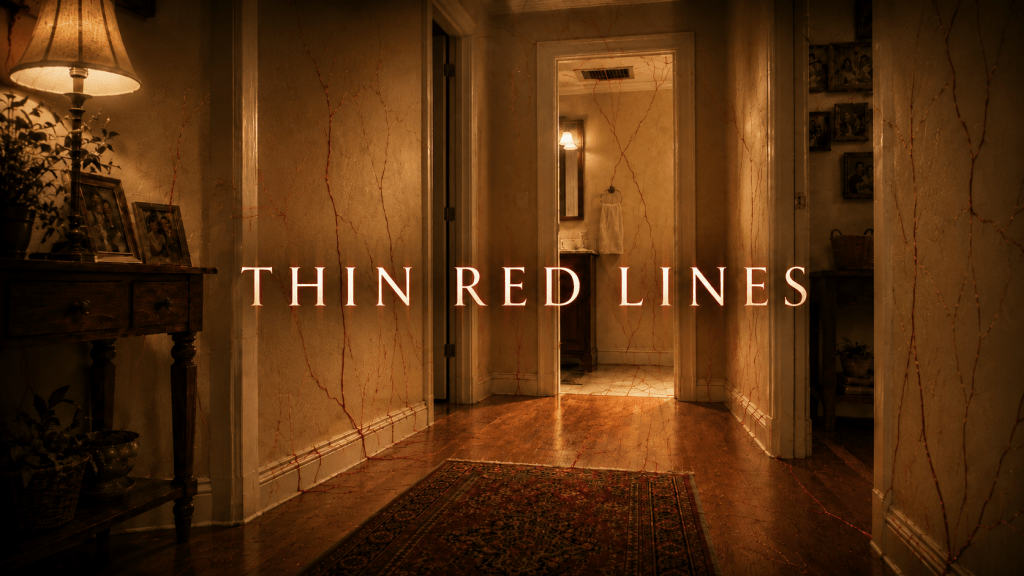
This is an update on my attempt to turn my story Thin Red Lines into a video. The experience was both more rewarding and more challenging than I thought. I am linking to the six-minute video of Thin Red Lines but it is not great. It tells the story but looks like AI slop, something which I did not want to happen.
However, I did learn a few things along the way, some of which pertain to me having a better understanding of the story itself, which I think you will find interesting.
The Tools
There are a lot of AI tools out there for creating video. It seems like Runway, Higgsfield and Open Art are some of the more common ones. There can be quite a bit of a cost to this, so I decided to stick with the most tools I already have paid subscriptions to: ChatGPT, Google AI (using Google Flow). I used ElevenLabs on the free tier but will likely subscribe to as I continue the video creation journey. I manually put everything together and edited it in the free version of the amazing Davinci Resolve.
The Process
I spent a lot of time watching You Tube videos on AI Video creation, which helped me get a good footing. My process ended up being the following, and note that this will likely change and evolve as I learn how to do a better job:
Feed the story into ChatGPT to have it break it into a scene story board
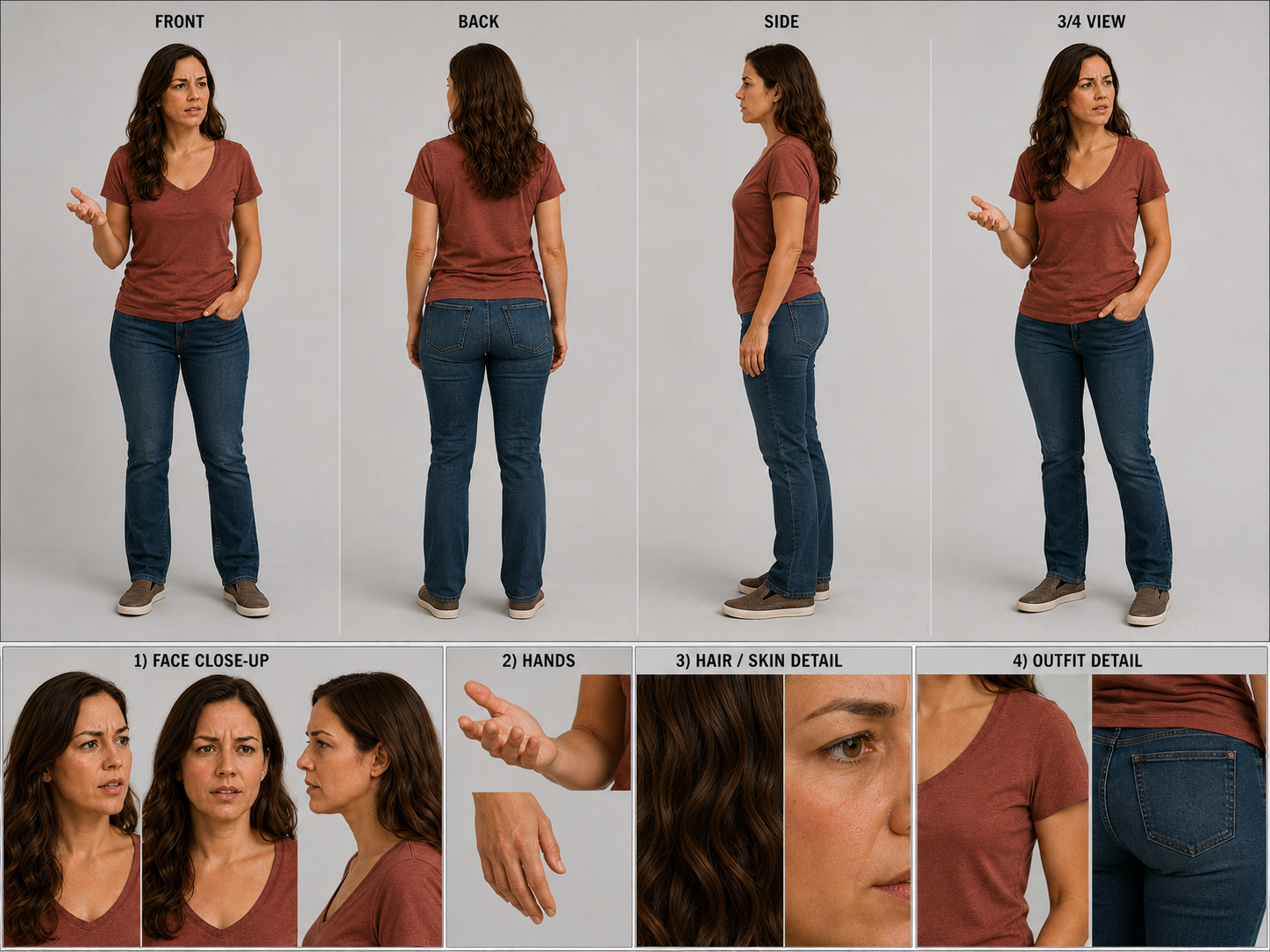
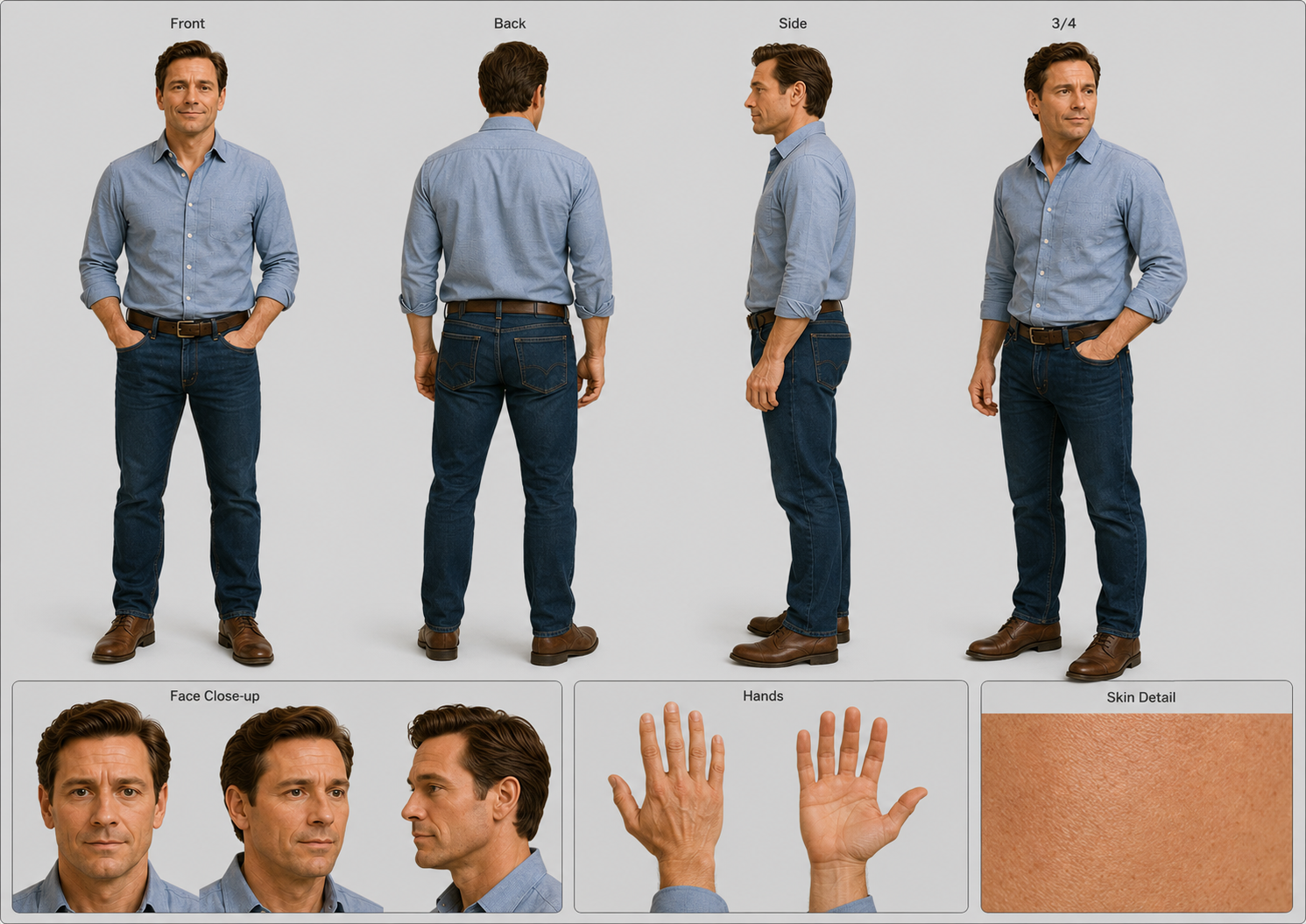
Use ChatGPT to create “Character Sheets” for characters, locations and important objects (Will include an example image of one of these below)
Use Eleven labs to pick out voices for each of the characters. Google Flow does put voices and sound with the videos but does not keep the audio consistent.
I used the character sheets and short sections of dialog to prompt Google Flow for each of the scenes.
I cut the scenes together using Davinci Resolve as my editing platform. Replacing most of the voices generated in the Google Flow clips with the voices from Eleven Labs in order to keep the character voices consistent.
Some still shots, like that of the house were generated in Chat GPT.
The Bad
Continuity issues: If you look closely at the video you will see things that “change” from scene to scene, like how the table in one shot has flowers on it and later on it doesn’t.
Character consistency This one drove me crazy. It was really hard for me to figure out how to keep the characters consistent. Even with me insisting the AI stay true to the character sheets, Cal and Andy, in particular, change quite a bit throughout the video.
Lip syncing the Eleven labs audio to video: This is more a matter of my ignorance, I now know there is a way to take the original audio Google Flow produces and run it through Eleven Labs usin their “Voice Changer” option to get audio that matches the shots.
Audio sounds hollow and out of place. Creating the voices in Eleven Labs works well, but they often sound hollow and out of context with the surroundings. Apparently having separate tracks for scene ambiance can help with this but I didn’t have as much success with that as I would have liked.
Uncanny Valley: There are a lot of places with what I would call AI awkwardness: AI creates a lot of weird pauses and having characters looking around for no reason, or over acting. Sometimes a general feel of stiffness that just doesn’t seem right. It is deceptively hard to get natural looking motion and character actions.
Google Flow limits scene length to only 8 seconds so I had to stitch together longer scenes.
It took way longer than I thought it would have. I spent about 3 full weekends on the six minutes of Thin Red Lines. I will certainly need to get my process more efficient if I want to keep doing this.
The Good:
I love seeing the story come to life and being able to tweak the characters to what I envisioned them to be when I wrote them.
AI did surprisingly well at times. While the voices and appearance didn’t quite match the characters, after its first attempt at it, I kept the end scene in its entirety because I thought it was funny.
What I learned:
I need to know a lot more about video production. Timing, shot selection, how to choose a Point of view color grading and the importance of audio are all very important. If I am to be the director behind what AI is doing, then I need to learn about these things.
Having to break down the story into scenes also really helped me to understand where I had holes in the story. In Thin Red Lines (Spoiler alert), Cynthia, the protagonist, goes on about how much the home means to her but in the end goes after money to make things right. Even though she technically “wins,” this is not a satisfying ending.
Converting my short story to video has been an interesting and fun experience and one I plan to continue with for my other stories. Let me know what you think in the comments below.
-James
The character sheet for Cynthia (Protagonist)
Character Sheet for Andy (Antagonist):
Example of environment characters sheet for the kitchen
A lifelong fan of science fiction, J.D. Sanderson lives in the Midwest with his wife, daughter, and dogs. Follow him for his hopepunk brand of sci-fi on Instagram and Threads @ascifiwriter!
This story was previously [mistakenly] rejected by APEX, Escape Pod, The Future Fire, and Phano.
When I asked J.D. what he loved about the story, this was his response:
Over the last few years, I’ve gravitated toward the ‘hopepunk’ niche of science fiction. I love stories that, even if they are not outright rosy, show characters who know things can (and should) be better. While The Artists shows others willing to help, it also asks when the burden of healing things is too much to ask of one person. The family this story is centered around will never give up hope, even if they grumble a bit in the process.
The Artists, by J.D. Sanderson
Leonard smiled as his seven-year-old daughter, Dana, giggled over her paper and crayons. “What are you coloring there?”
“Lots of things!”
“Will it bother you if I put on some music?” Leonard asked.
“Anything’s better than the news.” Dana reached for a light blue crayon.
“No argument there.” The proud father tousled his daughter’s strawberry blonde hair before reaching for a remote on the coffee table. He flipped through a few different options before selecting a jazz station.
“Jazz again?” Dana moaned.
Leonard laughed. “It’s the most original art form this country has ever produced!”
“Then why don’t they teach it in school?”
“Oh, lots of reasons. What they allow in school has changed a lot recently,” Leonard sighed. “Well, don’t worry about that. Your job is to play and have as much fun as you can on nice weekends like this.” He let out a deep breath. It was hard enough to explain why they had to order books online instead of getting them from the library.
He took a dust rag from his wife, Susan, and walked over to his bookshelf. Over the past two years, the federal government forced school and public libraries to remove hundreds of authors from their shelves, from Beverly Cleary to Richard Wright. Anything the administration felt did not properly reflect the patriotic American spirit had been deemed immoral.
“Don’t worry, Len,” Susan said. “They’d need a crane and a dump truck to confiscate all of the physical media you’ve been collecting.”
“Oh, very funny,” he said.
They were interrupted again as an alert came through on their phones. Susan picked hers up to see what it said. “Shelter in place alert.”
“Oh, God. Another active shooter?” Leonard asked.
“Uh, no. Tiger.”
“…What?”
“It says a tiger escaped from the Zoo.”
Leonard pointed out the front window. “The zoo a mile down that way?”
“Yup.”
“Hmm. I don’t see anything on our street.”
“Well, let’s just all stay inside until it passes,” Susan said.
“That’s okay, I’m still coloring.” Dana reached for another sheet of paper.
Minutes passed, then hours. Eventually, Leonard decided that with all the cleaning, today would be a good day for takeout.
He returned a few minutes later, empty-handed.
“Was it really busy?” Susan asked.
“I can’t believe it!” Leonard dropped his keys on the coffee table. “It’s closed!”
“What? We were just there last week!”
“There was a sign on the door. Said it was closed pending a full investigation from Immigration Authorities! There were a few people out front with signs who said they raided it this morning.”
“Oh, for God’s sake!” Susan rolled her eyes.
El Taco Cucina had been a neighborhood staple for a decade, and anyone who spent an hour inside knew how proud the owners were to have come to the country legally. Leonard rubbed his eyes.
“I liked it there, too,” Susan said. “You know it doesn’t take much these days.”
“It’s freaking horrible,” Leonard whispered. “Mateo is in Dana’s class. And now he’s gone?”
“I know…”
“I guess I’ll order a pizza. Can you put on the local news? Maybe they’re talking about it.”
Susan grabbed a remote and switched over to the local station. “Umm. Len? Come see this.”
Leonard blinked as he listened to a young female reporter speak into the camera from their town’s historic downtown district.
“I’m here in front of Tilly’s Ice Cream Shop, a block away from the mayor’s office, where what looks like a small meteor appears to have crashed in the middle of the street a few minutes ago.”
“…What the hell?” Leonard breathed.
“I just spoke with Professor Wu, who teaches astronomy at the university,” the reporter continued. “He said a meteor this size, bigger than an SUV, should have caused significant damage to buildings and storefronts within a two-mile area. But, as you can see, right here, the street barely has any signs of impact, as if it somehow slowed down before impact and landed softly. How it did not burn up in the atmosphere, Professor Wu was not able to explain.”
Leonard and Susan slowly turned to look at each other.
“Well,” Leonard said,” I hope it missed the tiger.”
***
The next morning, Leonard took his daughter for an early morning drive to their favorite coffee shop. It had become something of a Sunday routine. Dana was an early riser and would often nudge her daddy awake so they could sneak out and get espresso for her mom before she woke up.
Several streets were blocked off for the meteor, which meant they had to drive a bit out of the way. As he pulled onto the far end of Main Street, Leonard saw the sign for El Taco Cucina ahead. To his surprise, he saw Enrique, the owner, walking from his car to the front door.
“Holy shit!” Leonard whispered.
“Daddy!”
“Sorry, sorry! It’s just…” Leonard pulled into the parking lot. “Enrique! You alright?”
“Oh, hey Leonard!” Enrique smiled and turned around. “Beautiful morning!”
“What the hell happened to you, man? I heard you were gone?”
“What do you mean?” The restaurant owner’s brow furrowed as he came to the car.
“Yesterday!” Leonard waved his hand. “The Immigration Authorities!”
Enrique gave a confused look. “I’m sorry, I’m not sure what you mean.”
“Well, I…” Leonard stared at Enrique, who looked confused. “Well, just glad everything is okay with you guys. Guess I’ll see you later.”
“You bet!” Enrique smiled and waved to Dana in the back seat as Leonard pulled the car back onto the street.
“What happened, Daddy?” Dana asked.
“I’m not sure. I thought…I know I saw that yesterday.”
“Are you gonna get a burrito today?”
“Well…might as well!”
After returning home, Leonard put Susan’s iced espresso in the fridge while Dana brought out a set of watercolor paints and paper to the kitchen table. Scrolling through his nonpartisan news app, Leonard read about the latest restrictions on public radio, a dip in AI stocks, a large interstellar object that had been spotted entering the solar system a month ago, and a Rubella outbreak.
A low hum in the air interrupted his browsing. The noise grew with each passing second, giving Leonard a familiar unease. He stood up and walked to the front window.
“Now what?”
“Huh?” Dana glanced up from her watercolors.
Leonard parted the curtains to see a dark cloud in the distance moving over the horizon. Across the street, he saw their neighbor, Pam, walk out her front door for a morning jog. She adjusted her earbuds before starting her run.
“What the hell is that noise?” Leonard whispered. He was about to turn away when he saw Pam sprinting back up her driveway, waving her arms over her head. His eyes widened as he realized why she was frantically trying to get back into her house.
Leonard ran up the stairs and darted into the master bedroom. He tore over the bed, startling his wife awake.
“…Len, what the hell is going on?” she asked.
Leonard did not answer as he closed the window on Susan’s side of the bed.
“Hey, c’mon, it’s not humid,” she said. “I just like the feel of the breeze!”
Leonard backed up as a bee landed on the window. A second one followed. A third. A score. The buzzing intensified as a swarm filled their neighborhood.
“Oh, my God!” Susan shot up. “How the…?” She looked at her husband, who was trying to breathe slowly.
“I hate bees.” His voice shuddered as he spoke.
“Here, just sit down,” Susan said, guiding him to the bed. “Dana, come up here, please!”
“Where the hell did this many bees come from?” Leonard asked.
“Daddy, bad word again!” Dana said as she walked into the room with her stuffed manatee.
After a few minutes, the gargantuan swarm began to thin out. Leonard hugged his wife and daughter as his swell of fear disappeared.
***
Three hours after the swarm passed, Susan took Dana outside to help water the flowers in the front garden. With no hose hookup in the front of the house, it meant several trips back and forth with the watering can. Susan chuckled as she watched her daughter carry a full can that weighed half as much as she did.
“I can do it, Mommy!” Dana smiled as she tipped the can forward, spilling more water on the grass than the flowerbed.
Susan rubbed her forehead as she smiled. “Here, let me see it,” she said, helping her daughter’s aim.
“Susan!” Leonard came around from the side door. “They said on the news that they’re moving the meteor that hit the center of town. We can see it on a huge truck a few streets over.”
“Can we? Can we?” Dana jumped up and down.
“Oh, I suppose,” Susan said. “A walk would be nice.”
They were halfway down the block when a cluster of dark storm clouds rolled in. Dana jumped as thunder boomed overhead.
“I guess we’d better go back,” Susan said.
“But, mommy!” Dana stomped her foot
“I’m sorry, Dana, but we should turn around before we all get drenched,” Leonard said. “We’ll see it on the news tonight.”
***
“Time for bed, Dana,” Susan called out. She walked into the living room where the precocious seven-year-old was once again painting on her watercolor paper.
“Mommy…” Dana moaned.
“Come on,” Leonard said, pointing up the stairs. “Time to brush your teeth.”
Dana sighed. “Can we read before bed?”
“Of course, I’ll be up in a minute. You go ahead; I’ll pick up down here.”
He gathered the paints and brushes and placed them in their box. Afterwards, he picked up a few of the papers.
“Examining her latest masterpieces?” Susan smiled.
Leonard gathered the pile of drawings and paintings, walked over to the coffee table, and laid them out for a closer look.
“What is it?” asked Susan.
“It’s funny.”
“What is?”
Leonard nodded at the drawings. From left to right, he saw a tiger, a meteor falling onto the town, a taco, a swarm of bees, and a rain shower. “All the things that have been happening here the last few days.”
“What’s wrong with that?”
“Look.” Leonard pointed. “She dated them the way they taught her in school.”
Susan put her arm around her husband’s shoulder as she examined the papers. The tiger and meteor were drawn the day before the zoo escape. In fact, each picture had been painted the day before the event it depicted.
Susan’s brow furrowed. “Well, that’s strange. How did she do that?”
“Now look at this one,” Leonard said, pulling a new painting to the center of the table.
The parents stared at what looked like a family portrait she had just finished before being sent upstairs. There was Dana, holding hands with her mother and father in front of their house. On the edge of the painting, there were several pairs of orange dots floating in the air.
“Leonard,” Susan asked. “What’s going on?”
***
Leonard decided to use some of his sick time on Monday afternoon. Even though he worked remotely, he felt better knowing he could keep an eye on his daughter after she came home from school. He also agreed to text his wife in case anything else out of the ordinary happened. As silly as it felt, he kept getting up to check for more things he had found in Dana’s recent stack of artwork piled up in her room. Thankfully, it had been a quiet day.
“Daddy? I’ve been reading for an hour. Can I paint some more?”
“Let’s give it another day. It’s good to explore lots of interests, you know!”
“How about colored pencils?”
“That’s pretty much the same thing.” He picked up the book he had bought for his daughter at the local secondhand bookstore. “Enjoy things like this while you can. They’ll probably ban this one too, before you know it.”
“Mommy says you worry too much.”
Leonard let out a long breath. “I’m sorry. You’re right. I just care about you so much and want you to have…what is it?”
Dana looked at the front window. “There’s someone outside.”
The father’s head turned slowly to face the front of the house. For an instant, he thought he saw something moving on the other side of the glass.
“Dana, come here. Now.” He reached over and pulled his daughter close.
“But…” Dana whispered.
“Just stay close to me!” He took her hand and backed away from the window.
His head whipped around as a loud bang came from the back door. He took his phone with his free hand and texted Susan the word ‘Home!’
“Daddy!” Dana stomped her foot. “Listen!”
Leonard was about to object when he bumped into something and fell to the floor. He turned to see what he had hit. There was nothing but a clear path all the way over to the open door to his home office near the back of the house.
Dana giggled as her father stood up. He took a step back, only for his hand to knock against something firm once again.
Leonard stumbled around, again seeing nothing. “What’s going on!?”
“It’s fine, Daddy!”
Leonard looked down to see his daughter smiling, her arms outstretched. They looped to her side, as if she were hugging one of her parents’ legs.
His eyes narrowed as he stared at the little girl’s arms. Just above and below her sleeves was something very odd. The colors and outline of the fabric looked off. The light around it bent, as if the little girl was squeezing a flexible prism.
“Dana, please. Come here. Now!” Leonard whispered.
“But, they’re nice!”
A ray of sunlight caught him in the eye as the clouds outside parted. He fought off the overstimulating effects, squeezing the stim tool in his pocket with one hand as he reached for his daughter’s arm with the other. “Who? What are they?”
“The art people!”
Leonard looked at the coffee table where some of his daughter’s drawings and paintings were sitting. One of them floated in mid-air; the edges on one side crinkled and blurred with that same flexible prism effect.
“I can’t really understand them, but they sound nice.” Dana pointed to the far side of the living room near the kitchen and office doors. “Now they’re both over there.”
Leonard’s knuckles turned white as he watched two figures slowly start to appear in front of his eyes. At first, the light bowed out in a tall, oval shape. Over a span of twenty seconds, something materialized as all light refraction and bending ceased.
There were two of them, each standing roughly four feet tall. Their bodies, if that is indeed what they were, were no more than ten or twelve inches wide. The bottom part of their body rested on the floor behind them like a large, fleshy, backwards-facing foot. Each creature had six appendages along the center mass and was probably five and a half feet in total length.
“Dana! Come here!” Leonard waved frantically.
The pair of creatures lowered themselves onto their appendages. There was a series of orange clusters standing out on the dark brown surface of the head area. Leonard guessed they might be eyes.
“They’re my friends, Daddy.”
Dana’s father tried to slow his breathing as he took the creatures in. A closer look showed that most of their bodies were covered in a soft, grey, malleable material. The appendages and head were brown and appeared to be uncovered.
“What the hell are you?” Leonard breathed as his pulse raced.
“I told you. They’re artists!” Dana’s tone took on a familiar impatience. “They showed me how to paint and draw the world!” She giggled. “They sound funny. High and squeaky.”
Leonard looked at his daughter. For as long as he could remember, she had demonstrated excellent hearing, easily being able to discern different instruments in music that would have sounded like aural mush to most people. He then thought about how children could often hear higher frequencies than adults, sometimes as high as twenty thousand hertz.
“I can’t hear you, can I?” He pointed to his ears after taking a few long, deep breaths.
The white eye bumps moved, like they were being pinched at the sides.
“That means yes. I think that’s what they said,” Dana whispered.
Leonard backed away, pulling his daughter along. He picked up one of her drawings. “So, you make her drawings, her art come true? Is that it?”
This time, the white eye bumps looked like they were being squeezed on the top and bottom.
“No, huh?”
“They don’t do it. I do!” Dana said. “They said I can do it now.”
Leonard turned his head to see Susan standing near the front door. His pulse had been so loud in his ear that he had not heard her come in.
Susan gasped. “Len, what the fuck?”
“I don’t know,” Leonard said. “Dana, what did you mean, paint and color the world? What are they? What is happening?”
Susan ran over and snatched her daughter off the ground as her husband prodded.
“Wait!” Leonard hissed, holding up his palm.
“Mommy!” Dana whined.
“How long have you talked to them?” Leonard asked.
“Len, let’s go!” Susan backed toward the door.
“A month, I think,” Dana said. “Mommy’s birthday.”
Leonard closed his eyes and nodded. He pulled his cell phone out and opened up the news app.
“Len!!” yelled Susan.
“Hold on,” Leonard said, holding his phone up to the two creatures.
The eye spots once again appeared squeezed at the sides.
“That’s a yes, right, Dana?” The father smiled over at his daughter.
Dana nodded. “Uh huh!”
Susan tried to steady her breathing as she spoke. “What is it?”
Leonard stepped around the coffee table and past the TV to show his wife the image on his phone. Susan’s eyes widened as she looked at an image of the interstellar object that had been traveling through the solar system over the last few weeks at nearly 145,000 miles per hour. As of this morning, it was only three Astronomical Units from Earth.
Susan’s voice shuddered. “Oh, my God…”
“I don’t think they’re here to hurt us,” Leonard said before looking at the alien creatures. “Is this how you got here?”
The eye patches squeezed in from the sides again.
“And you gave Dana the ability to,” Leonard took another deep breath in,” make something happen by painting or coloring it?”
Another yes from the aliens.
“Why? Why do this?”
One of the entities lifted its head and faced Dana. The parents could see several small slits on the underside of the head area, one of which was clamped onto a small translucent tube that emanated from the suit. Leonard guessed it might be a breathing mechanism.
Dana nodded her head as one of the creatures opened a hand-like gripper at the end of its top left appendage. She struggled free of her mom and grabbed a blank piece of paper, laying it on the coffee table.
Susan, Leonard, and Dana stepped back as one of the creatures scurried over to the coffee table and placed its limb over the sheet of paper. They watched as small jets of color misted out from the edges of the suit sleeve.
Dana smiled and clapped her hands as the being sprayed the paper with color. After several seconds, it grabbed a second sheet of paper from the pile and then a third.
“See? That’s what they showed me!” Dana whispered to her mother. “I dreamed it!” Susan nodded in stunned silence as she put her arm around her daughter.
“Len. Look,” Susan said. She reached down and touched one of the pictures to discover it was already dry.
The first picture showed the Earth, with lines shooting out to space in all directions. On the surface of the planet was a pained human face. The second picture showed a large comet or asteroid hurtling past a star, while the third was an image of Dana smiling with pictures in her hands.
“I think I understand,” Susan said.
“Good, then you can tell me,” Leonard whispered.
“Well, Earth sends out signals all the time. Television, satellite, radio. It’s all waves in space.”
“Like at your work, Mommy!” Dana beamed again.
“Exactly, sweetie. If someone in space had sensitive enough equipment and happened to be close enough, they could pick some of it up. Imagine a civilization picking up just one day of what we broadcast around the world.” She looked at her husband.
The alien’s eyes squeezed affirmatively once again.
Leonard looked at his daughter. “So, if they’re not here to hurt us, why are they here?”
“To help!” Dana said. She reached and picked up a paintbrush.
“How does it work?” Susan asked. “And beyond that, how do sketches and drawings help us?”
“Because it will come true! What I make comes true!” Dana waved her brush at her parents. “You saw!”
“Yes, we’ve seen that.” Susan nodded. “We’re just a bit confused as to why.”
Leonard looked again at the image the alien painted of his daughter. “Innocence.”
Susan blinked. “What?”
“Children aren’t born judgmental or prejudiced. They’re taught it. If they could enact their will…”
Susan closed her eyes. She opened them after a long moment, looking up at the aliens who stood there, waiting. The mother picked up the painting of the comet. “Is this where you come from?”
Their eyes squeezed yes.
“Is it a ship of some kind?” she asked.
This time they squeezed no.
“I think they live there now,” Dana said.
Leonard thought of all the reports he had seen and read on the interstellar object, which was estimated to be larger than Mount Denali. The world’s leading astronomers and astrophysicists had discussed how the gravity assist of various stars over the centuries could help propel such an object across the galaxy.
“And you heard us and decided to help? Is that it?” asked Leonard.
Instead of blinking yes or no, the aliens reached out and took another sheet of paper. Together, the pair painted an image of a glowing red world with a faint speck fleeing into space. The imagery was haunting, as the fire looked both real and unreal at the same time.
Dana looked up at her parents. “No one helped them…”
“They saw a world in distress. Somehow, they recognized it,” Susan said. “Of course. Something that could not feel or empathize might not react to what they saw or might not have understood it. But a species that uses art to communicate…They saw us. The protests. Wars. Violence. Somehow, they understood.”
“And they decided to try and help. To stop it from happening to another world,” Leonard said.
Another yes blink.
“I can’t imagine how bad it must have been for them to have to hitch a ride on a gigantic comet.” Susan touched her child’s hair.
“Magic!” Dana said.
“It looks like magic, doesn’t it? So far beyond us that it appears to be.”
“But how?” Leonard scratched his beard. “Does it send out some kind of radio wave? Does it make people do things? Or is it actually like, changing reality?”
“I don’t think it matters how,” Susan said.
“And if they can do that, why didn’t it stop their world from going to hell?”
“I don’t know,” Susan said. “Having access to advanced technology is no guarantee of responsible stewardship.” She watched her husband walk around the room. He stopped to look at her paint set, noticing for the first time that none of the colors had worn down since she first found it in one of her desk drawers last week.
“And it’s not every picture,” Dana said. “Only the ones I want to come true.”
Leonard shook his head as he stared out the front window. “No.”
“No?” asked Susan.
“No. We can’t accept this.”
“But, Daddy!” Dana stomped her foot. “I can paint anything!”
“I’m sorry, Dana.” Leonard knelt in front of his daughter. “It’s too dangerous.”
“But you saw it! You saw! I can make things happen. I can fix things, like I did for Enrique and Mateo!” The little girl fought back tears as she spoke. “I can color or paint anything you want.”
“I know you could.” Leonard’s voice broke as he hugged his child.
Susan’s eyes closed as she heard her daughter’s heart break. “Your dad’s right.” She looked at the house through the front window, remembering that their neighbor Pam’s husband, Michael, worked for the Federal Government.
The two aliens looked at one another before shuffling back over to the coffee table. One of them pointed to the picture of the glowing planet, while the other picked up a paintbrush. Their eyes widened as they waited.
“I understand what you’re trying to do,” Leonard said. “But it’s too much to lay at the feet of one little girl.”
The alien on the right reached over to grab a blank sheet. Susan held up her hand before it could paint another picture.
“You gave our child an amazing gift. What you tried to do here is so admirable. But someone might find out someday.”
“They could force her to paint something she doesn’t like,” Leonard added. “Something harmful.”
“Like the meteor or the bees,” Dana sniffed. “I’m sorry about the bees, Daddy. You said we need pollinators. Nobody got stung! I drew them with smiley faces.”
“And the meteor?” asked Susan.
“I wanted the artists to come down.”
Leonard wiped his eye. “You have a good heart, Dana. But it shouldn’t be all on you to fix the world. That’s too much to put on anyone.”
The aliens lowered their heads before backing up. Dana ran over to them with tears streaming down her face. “I’m sorry,” she whispered.
One of the creatures reached up and touched her hand. The openings on the underside of its head moved. Dana smiled.
“I will…I really like coloring.” She looked at her parents. “Can I make just one more special painting? Please, just one more!”
Leonard knelt. “What do you want to draw?”
“I don’t know…” Susan said.
“Please?” Dana asked.
“Well,” Leonard looked at his wife. “Maybe if it’s something you want. It can’t be for us.”
“Okay, Daddy.”
***
Leonard sat in bed with his wife as the local news came on. Susan reached and took his hand as the anchor began to read the lead story.
“Tonight, the President, in what is being called a stunning reversal, urged Congress to reverse legislation censoring hundreds of books from public and school libraries across the country. While the request comes across as a shock to many in the president’s own party, a new bill is expected to pass through Congress in the next few weeks.”
Leonard smiled as his wife squeezed his hand. They glanced over to a pair of paintings framed on the wall at the far end of their bookshelf.
The first was a cute picture of a man in a suit looking at books with a smile on his face. The second painting, which was much more detailed, showed a little girl hugging two oddly shaped creatures with six limbs.
This week’s story is brought to us by Floyd Largent.
Bio, as provided by author:
I’m a former archeologist who never woke a sleeping god or unearthed an ancient evil (alas). Since February 2025, I’ve published, or had accepted for publication, six poems and 32 short stories in venues including Altered Reality, Bewildering Stories, Bullet Points, CommuterLit, Corner Bar Magazine, Flash Phantoms, Chewers, Masticadores International, Not One of Us, Beyond the Revolving Door II, and more.
Delicate has been [Mistakenly] rejected by Clarkesworld, The Colored Lens, and Mythaxis and four other markets.
When I asked Floyd what he loved about this story, this was his response:
One thing I love about this story is that it offers a sense of wonder about our nearest celestial neighbor that I believe has been largely missing in recent years, as both SF and US space efforts have focused elsewhere. Now that we’ll be going back to the moon regularly, I feel this is an excellent time for it to appear. I also love it because it was a very slow burn that turned out very much to my satisfaction; I literally began writing the story more than 30 years ago and put it aside for a long while before I finished it last year, and updated it after the first Artemis mission.
Editorial note: I don’t normally comment on these questions, but I loved that last bit about how long the story has been around and how he came back to it. It reminded me how fiction has a timeless quality.
Delicate, by Floyd Largent
About five hours into the first day, as I was taking the first deep lunar surface cores (we had a nice 10-meter drill this time), I lost track of Rojo. When I finally looked up and looked around, having finished prepping and bagging the sections of my core, I couldn’t see him anywhere. I walked the entire perimeter of our camp, and he wasn’t visible. I flipped on the magnification optics in my helm of darkness, which brought features on the crater wall miles away into sharp relief, but I couldn’t find him… though once, I thought I detected motion. When I looked again, though, there was nothing, so I assumed I’d just moved my head too fast and caught an afterimage, or maybe one of those ghostly floaters most of us have in our peepers. When I didn’t see any Rojo, I flipped through a series of optical filters. Infrared wasn’t much use on the bright, hot lunar surface, though I figured some of the filters might have been, but no.
Rojo was gone, out of my sight, probably miles away by now. And I suspected he’d left on purpose. I called for him through my comm system, but there was no answer, except for what sounded suspiciously like a faint snicker. What the…?
Needless to say, Houston, which was listening in, went batshit when they realized Rojo was hiding.
Finally, as the first day came to an end, Rojo Cervantes reported in, in a manifesto heard ’round the world. He began with, “I’m not coming back, Houston. Sorry, Emil.” That part’s usually cut from the audio files.
“What do you mean you’re not coming back?” Zeke asked from Texas.
Four seconds later, the standard time-lag from Earth to the Moon, Rojo declared, “You deserve to be up here someday, Zeke. You’ve trained for this all your life. Maybe after I do this, you’ll get a chance. And humanity will get to enjoy its manifest destiny in space.”
“What are you going to do, Rojo?” I asked slowly.
“What I have to, Emil. I’ve decided to take a stand. Earth’s population is over 10 billion now. We’re constantly fighting each other. Did you know that in the last hundred years, there hasn’t been a single year when humanity was at peace? We need new frontiers to reach for, someplace to send our discontented, our adventurers, the ones who hear a different drummer and are guided, literally, by a different star. This next part, this is for everyone. Be sure they hear it.
“People of Earth, my name is Rogelio Cervantes. If any of you have been paying attention, you know that as things stand, I’m the twenty-sixth and final human to set foot on the face of the Moon, that beautiful world just 250,000 miles away. With modern technology, it took us two days to get here, and cost a tiny fraction of what the Apollo program cost in the 1960s and 1970s. The U.S. Army spends more for coffee filters every year. And yet our politicians, caving to pressure from an uninformed public, have cancelled our manned space program for the next budgetary year, and probably forever. The USA was the last, best hope for mankind to expand into space.
“You don’t know what you’re missing. My fellow astronaut, Emil DuChamp, found a gem-quality diamond the size of a bowling ball today. It was probably formed by the meteor that slammed into the Moon’s surface at Littrow a billion years ago. Look up at the Moon next time it’s full. Even with binoculars, you can see it’s absolutely covered by craters of all kinds. Imagine how many diamonds that means!
”And the Moon is just one of dozens of worlds waiting out here for humanity to claim, in our solar system alone. All this free real estate, waiting for hard-working people to come and exploit it, to mine it, to pick up gemstones off its surface, to cover it with domes and turn it into fertile land to help feed us all. All this elbow room that we can turn into new Earths and fill with our descendants. Then there’s all the free minerals and ores in the asteroid belt. There’s over a million asteroids, people. All waiting for us to extract air, water, gold, platinum, silver, iron, nickel, and more. Someday, the rest of humanity might follow the corporate probes into the depths of space to help spread us across the galaxy. Who knows what’s waiting for us out there?
“We can’t just give up on space. It’s a free gift to the whole planet, to every person in the world, if we just have the will to reach out and take it. It won’t be easy; but then, that’s the challenge of it, isn’t it? Aren’t some of you tired of easy? Aren’t you tired of getting the minimum you need and not a jot more? Shouldn’t you be able to have more if you want it? Or would you rather fester on Earth, while our governments pour more money into outdoing each other on our single gravity-bound world, leaving all our eggs in one basket, where a single madman can start a war that could sterilize our planet or one catastrophic accident could remove our species from the galaxy? I don’t want that for humanity. I have to believe that many of you don’t want it either.”
Rojo took a deep breath. “Which is why I, Rogelio Manuel Cervantes, am taking a stand here on the Moon. Tonight, look up. Know that I, the twenty-sixth person man to stand on this pristine globe, am going into hiding — that as an act against government venality, against the Big Brother attitude, against social inertia, against complacency — I have decided to stay on the Moon. When the Perseus lander leaves the surface of our sister world, I will not be on it. When it docks with Pegasus, Emil DuChamp will enter the orbiter alone. When the Selene 1 mission ends, on the Musk Memorial Carrier in the Gulf of Mexico, only one man will leave the capsule.”
There was a brief pause. “I know what I’m doing. I know I’ll die. I’m not going to change my mind. In the tradition of Bruno and Mandela and Kosciosko, I have decided to make a stand, and I won’t be moved from this place. I’m hoping my sacrifice will mean something. I hope it will jar the world out of its collective self-satisfaction and onto a better course before it’s too late. It doesn’t matter to me if the people who spread out into the solar system, and into the stars, speak English, Spanish, Russian, Mandarin, Arabic, Portuguese, Swahili, Finnish, or Lakota — as long as our species takes its proud place in the universe, in the stars where it belongs.
“Thank you for listening. I beg you to do the right thing. Let your leaders know you want humanity to take its rightful place in the stars… before it’s too late. This is Rogelio Cervantes, signing off.”
If you listen very close at the end of his speech, you can hear me muttering, “Dammit, Rojo.”
Most of the public thinks Rojo switched off his radio after that, but he didn’t. All the rest was recorded, but it was released only to a select few… until now. Truthfully, he didn’t say much more, and at first, it was passed off as the anoxic ravings of a dying man. It wasn’t. He still had hours of air left when he started talking again, and had full use of his faculties. He didn’t address me directly, and he wouldn’t respond when I asked him to — I think he’d cut the incoming comm — but I knew he wanted me to hear him, whatever happened. Of course, at first he didn’t know how significant that decision was, or how historic what happened to him would be.
I was frantically running around looking for his trail when I heard him again; I didn’t learn until later that he’d done a lot of high-hopping on his tiptoes, and wasted some of his O2 to brush away the marks every time he took off. It was impossible to tell where his signal was coming from, but about two hours later, during a lull in NASA’s ongoing logorrheic explosion, I heard Rojo say, “Huh, that’s interesting. Ice?” which set off another battery of demands that I find him and that he respond. I finally shouted them down at Mission Control, and told them to keep their mouths shut so I could listen.
Half an hour later, he muttered, “What’s this?” A moment later he gasped, followed up with, “Oh. Wow! Ave Maria, I can’t believe it!”
And then he turned his radio off, and that’s the last I heard from him for nearly four hours. By then, he would have been on his last few breaths, and maybe he really was into the anoxic raving stage. I hadn’t given up, but I knew I was going to find him too late. There was a click over the com, and he stated, breathing heavily, “Rogelio Cervantes… reporting in… for the last time. Emil. Find me. I’m… north of you. I made it back… as far as I could. You have to… make them come back. They’re… they’re beautiful. And… they’re everywhere.”
“What, Rojo? What’s everywhere?” I asked desperately, but my response was only a click. The words “they’re everywhere” were the last words Rojo said to the world.
By then, Rojo’s defiant stand on the Moon had been smoothly publicized by NASA, and was having exactly the effect he intended. I almost wondered if it had been deliberately planned. Sometimes I still do, but I really don’t think the bureaucrats had it in them to do something so radical and glorious.
As directions go, “to the north” doesn’t mean a whole lot. It’s basically a quarter of the compass. I tried due north at first, but no joy. Then I worked my way east along the crater rim, hoping he hadn’t gone beyond it. I don’t even know how he would have anyway; it’s pretty high, and significant climbing is a no-go in a pressure suit. I searched for him all the rest of that day and the next, knowing I had very limited reserves of air myself. We were only intended to EVA for a total of nine hours. Without Rojo to use up his half, I stretched that to over 16 hours, punctuated with a few hours of exhausted sleep in the Perseus. I used up most of the reserves, but goddamn it, I finally found the bastard, a few points west of north in a little dimple in the crater wall, in one of the last places I was going to be able to look. In the end, when my last bottle of air was down to less than 10%, I found him. He looked so peaceful, so happy, as I suppose most martyrs do when they choose to die for their cause.
I left Rogelio Cervantes where I found him, in the position I found him, untouched except for the one small sample I took. I did so because I didn’t think I’d have enough oxygen to make it back if I was carrying him. Two hours later, I took off alone from the surface of the Moon, in what some historians have called a flawless ascent, and let the AI fly Perseus back to the orbiter while I wept.
Rojo stayed on the Moon, as he’d wanted. The little alcove in the north wall of Littrow Crater where he reclined, peaceful in death, a satisfied smile on his face, became his tomb. Or maybe it was the whole crater, or the whole Moon. It depends on who you ask. There’s been some argument about whether he’ll be left there for eternity, even when we get back to the Moon, or if his body will be returned to his family. They want him to stay, commemorating his accomplishments, his magnificent sacrifice.
They say Rojo’s a hero, the man who almost single-handedly saved the American space program. I agree. His name will ring resoundingly through the ages beside Gagarin’s and Armstrong’s, as it should, and every child will learn it by rote for a millennium to come. His last words will be inscribed in all the history books, just the way he wanted, but not quite for the reasons he expected.
He was my friend, but let’s be honest: Rogelio Cervantes was an egotistical, theatrical fool who paid the ultimate price for his convictions, and I’m sure he felt the same martyr’s fire in his breast that Joan of Arc felt in hers long ago, as the physical fire mounted her legs. And like hers, his sacrifice was not in vain. America and the world will have to return to the Moon someday soon. He left us no choice, due to a little thing I christened Chrysaor lunaris Cervantes, after him and the Perseus legend.
When I finally found Rojo’s body, he was holding humanity’s destiny. The fingers of his right hand were clenched tight around the stem of a flower, a fragile little thing with delicate thorns and petals like spun gold, and we have to find out where it came from.
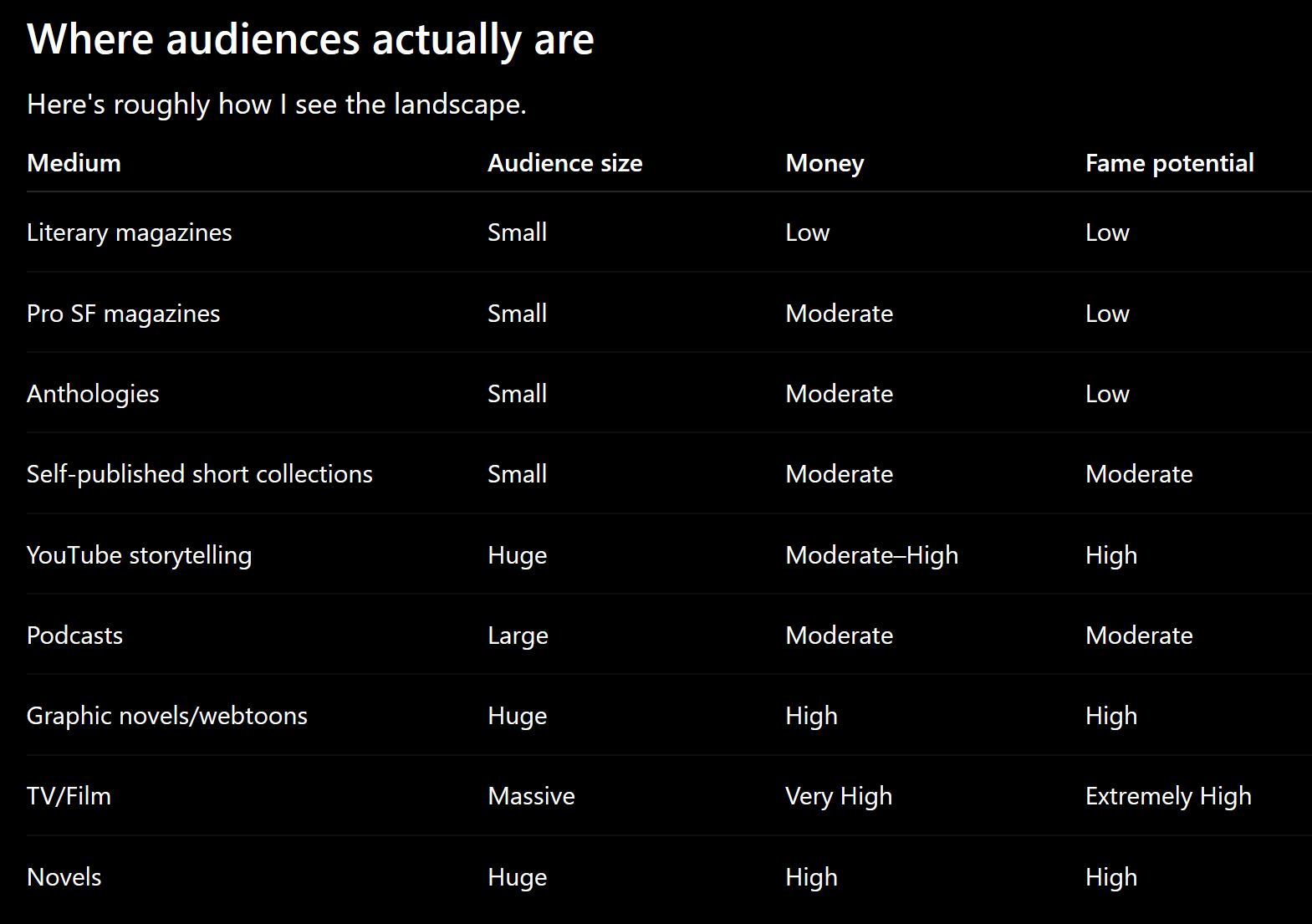
AI helped me to confirm something I have long suspected: The audience for short story fiction is smaller than other markets. (And, yes, whether you can believe AI is certainly always in question).
When I asked it what markets and media have the most appetite for fiction it came up with this chart below (note that I also found it interesting how it put in “Money” and “Fame potential” as metrics along side “audience size”):
While I am not sure if this is exactly correct (graphic novels & webtoons ranked way higher than I would have thought), it does confirm my suspicions that people are watching a lot more than reading. The one exception being novels still ranking really high.
This doesn’t mean there is no market for the written word, just that it will be an uphill battle if your goal is to get your short story published in a written format.
Since I am interested in storytelling in general I am working on converting my fiction story Thin Red Linesto a short You Tube video. And, yeah, in order to do that in the most efficient and cost effective way, I am going to use AI.
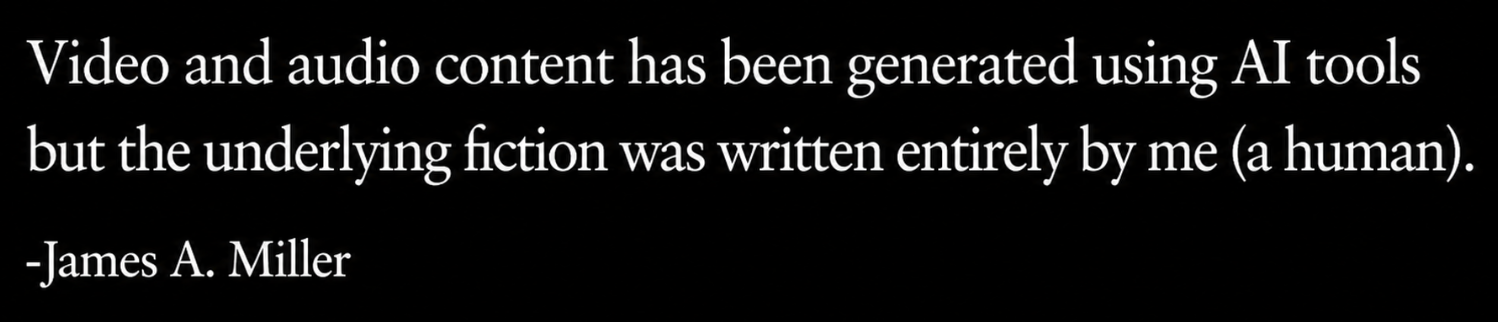
Before you start searching for your pitchforks, know that I draw the line at AI editing or creating any of the story I have written – the words will still be mine – I am having it do the video and audio. And, sure, maybe this is me justifying it to myself.
I am going to include this disclaimer at the beginning of the video:
You should also know that I am not after a quicky, wham-bam AI slop production. Like many of us, this story is my offspring, one of my literary children, so I want the final product to represent the tale I envision.
I can tell you, after a few days of working with Chat GPT for images, Google Flow for visuals and Eleven labs for audio, getting AI to provide anything close to what I envision is proving an exercise in frustration.
I often liken using AI iteratively like this as the same as working with a petulant child – sometimes they do exactly what you want and other times they stubbornly refuse to do what you are after no matter how much you try to persuade, explain, and re-frame.
Let me know if you have ever tried creating AI videos for your stories – or if you ever would?
Today’s story comes to us from Sam Houlker. Sam is a British-born scientist who emigrated to the Czech Republic for love. He writes because it makes his head hurt in a good way.
okay. please hold has been [Mistakenly] rejected by Espace Pod, Foofaraw, Cosmic Roots, EldritchShores, and Translunar Travelers Lounge, amongst others.
When I asked Sam what he loves about the story, this was his response: I love this story because it takes something extraordinary and makes it both ordinary and frustrating. Every time people achieve the impossible, we immediately make it mundane. Flying across the Atlantic should be incredible. Instead, we complain that the airline has swindled us with expensive add-ons, whilst any help is hidden behind an impenetrable complaints department. Everything is turned into a process, then run on the cheap. Why should aliens be different? And why wouldn’t they have an impenetrable customer service hotline for first contact?
okay. please hold, by Sam Houlker
“Should receive confirmation in three—two—one.”
Noah’s hand hovered in mid-air above the console.
Silence.
He swallowed. Come on. Come on.
Telemetry poured in. His fingers danced over the keys—then stopped. His eyes bulged. He’d spent decades chasing this, but if he were honest with himself, he’d more than half expected it to fail. But now here he was, and there it was. Irrefutable.
“Jesus, it worked,” he whispered.
He looked up and everyone in the control room was staring at him. He swallowed again as his gaze flicked from wide eyes to sweaty collars. This meant as much to them as it did to him. More even, he just wanted to prove the technology worked, but they wanted the possibilities it offered. Then, he noticed the bored eyes watching news feeds and practicing speeches—politicians. His eyes narrowed; they were nothing but bluster and self-congratulation, not even skin in the game, as it were. Just money and votes. He sighed.
“Noah, the mic,” muttered Elise as she reached over to unmute his microphone.
He blinked and brought himself back, then leant to it. Elise was right; she always was, time to let them know his baby lived. Her baby too, he corrected himself. It would be nothing more than a pile of parts and a half-baked dream without her—she was a true believer and had kept the team going when nothing seemed to work.
“The Drill worked. We’re receiving telemetry. Nearly five light-years in a few minutes. It work—”
Lights flickered and died. Silence exploded through the room. Noah clapped his hands over his ears. It didn’t help.
Sound returned with a pop, and a translucent orb appeared. A large, glittering ball of light floated in the open space below the ceiling. Elise’s fingernails dug into Noah’s shoulder. He flinched. The orb began to pulse as if it were being scrunched by an invisible fist.
“What is that?!” whispered Elise in his ear, overcoming her shock and voicing the room’s collective thought. “Is it something we did?” Both pairs of eyes followed the rippling surface.
“I dunno,” said Noah, twisting his neck this way then that to see if a new angle helped. “Maybe?”
“It can’t be—it can’t be alien, can it?” said Elise, her voice trembling.
“No. I doubt it. More likely a practical joke, one of the ESA engineers having a laugh.” He squinted at it. “I mean, why would aliens put it here? It would be at Downing Street, or the White House or something.” He heard how unconvincing he sounded even as he said it.
“No! This is too important. We’re trying to beat the speed of light—it’s the future of humanity! This will change the world! It’s not a joke.”
Reflexively, Noah snapped back, “Bollocks. The whole thing is a joke. The only people who will benefit from this are the rich—strip mining alien worlds or some other nonsense. What will a binman from Bolton get from this? They’re not going to knock a tenner off the heating bill just because we’ve got all the frozen hydrogen we could ever need. They’ll probably charge extra for it being renewable.”
The orb’s surface vibrated as if it were covered in angry bees.
Elise glared at Noah; her eyes seemed to reach inside and slap him. “Don’t start with that rubbish again. Your mouth is the reason we’re stuck here and not on the observation shuttle. Couldn’t you just keep it to yourself?” She tugged at the hem of her top to compose herself. “Anyway, it’s there, Noah. It’s not a trick. It’s literally right there!”
A deafening blast; the horns of Jericho over the death rattle of dial-up internet. Noah felt his bones rattle, his teeth sting.
“What was that?” gasped Noah. Elise was dazed, blinking, slow to answer.
“I don’t k—”
The orb quivered, emitted a faint dial tone, then contracted to the size of a tangerine. A synthetic voice spoke.
“Thank you for contacting Border Control. Your call is very important to us and may be recorded for training purposes. If you are calling to renew your visa, please press or say one at the beep. For new applications, please press or say two at the beep. To speak with a representative, please press or say three at the beep; beep.”
“What?” mumbled Noah.
“I’m sorry, I didn’t catch that. Could you repeat it?” came the voice.
Noah stared at Elise. Elise stared back.
Noah shrugged, “Um—three?”
There was a pause.
“You have chosen to talk to a representative. You will be connected as soon as one becomes available. You are currently third in line,” the voice cut off with a click, and a gentle melody began playing. Light jazz, thought Noah in disbelief.
“You’ve been put on hold,” said Elise, staring at Noah with confusion.
“On hold by who? This is ridiculous.”
A rhythmic chime sounded from the console, and Noah and Elise whipped their heads toward it.
“A video call from the observation shuttle,” said Elise, clicking accept. A face filled the screen: Jennifer Schultz, director general of the ESA.
“Where is Noah Russell, and why has an automated message told us he is thelisted contact person for Earth? How did you play the message? Did you hack us?” screamed Jennifer. “I swear, Noah—if your answer isn’t a good one…”
Noah gulped, forcing down the taste of stale coffee. His heart pounded.
“I’m here.”
“Go on.”
“I wish I could say. It’s all so strange. A weird floating ball of ripples unleashed a blast of sound before—”
The feed cut to static. The light jazz stopped.
“Thank you for holding,” said the orb. “You are being transferred to a representative. Thank you for calling the Border Control helpline.” There was a click then a soft puff of breath against a microphone.
“This is Stacey from the Border Control helpline; how can I help you today?”
Noah turned to Elise and mouthed a Geordie? She shrugged, gesturing for him to answer. “Um, yes. I…er…What’s happening?”
“Oh, pet, you rang me. Why don’t you tell me what’s going on, and we’ll work it out together?”
Noah blinked. The truth couldn’t hurt.
“Well, it’s like this, we—I mean ESA, um, humanity—just activated The Drill and sent a signal through the hole. Followed by a reply from a probe. Then a disembodied voice screamed at us before becoming an automated call service.”
“Oh no. Yes, I see the error. We mistakenly used Universal Standard when calling. Nothing like the scream of a dying black hole to wake you up now, is there?” She giggled conspiratorially. “Sorry about that—so few staff these days.” Noah blinked and looked to Elise for comfort. None came.
“Let me see…humanity, was it? Only just achieved spaceflight, I see.” Noah gestured desperately to Elise for help, but she stared forward, rigid. Eyes wide.
“Yes, that’s right. Um, could you tell me who I’m speaking with?”
“I’ve already told you, pet. I’m Stacey, from the Border Control helpline.”
“Well, yes. But I meant more along the lines of: what are you? Are you an alien?” The word hung in the air and Noah saw Elise stiffen next to him, her eyes wide and staring. He knew this was the answer to the burning question that drove her: are we alone?
“Alien! Why no, pet. I’m no foreigner. I live right where I was born, thank you very much.” Noah blinked in surprise. Not the answer he expected.
“I’m sorry, no. I mean—you’re not human?”
“Oh no, pet, of course not. No, I’m not human.”
Noah sighed with relief; at least that was something. A ridiculous thing to cling to, but if he stopped to think what not human meant, he’d melt. No pussyfooting at the edge. Make it real.
“If you’re not human, then what are you?”
“A rude question if ever I heard one! As I already told you, I’m Stacey. From the Border Control helpline.”
Noah rubbed his throbbing temples.
“I think you’re talking to the wrong person,” he said. “I’m only an engineer. You should be talking with a politician or something.”
“Don’t get snippy with me! You’re the one who called me. The account is registered to one Noah Russell of Earth. Is that you, Mr Russell?”
“Well, yes. That’s me. But could you talk with someone else? Someone more qualified.”
“Okay, pet. No worries. I can change the person registered with the account if you like?”
“Yes! Perfect, please.”
“First, I’ll need to confirm your identity. Can you tell me your full name and the answer to your security question? Oh, silly me, we’ve already done the name part, haven’t we? Just need the answer to your security question then.”
“What? What security question? I didn’t even make an account. Like I said, we sent a probe—.”
“Oh dear, I can’t change account details without confirming the identity first.”
“How can I know the details of an account I never made?”
“You just said you sent a signal to Border Control. You must have opened an account to do that—impossible otherwise. Let me see now. Ah, yes, message logged under Noah Russell.”
Noah froze. Oh no. The message. The silly knock-knock joke. Why had he signed it?
“Wait, what’s the security question?” he asked weakly.
“Oh, good idea, pet! The question’s not secret—only the answer. Funny, that. Anyway, here it is:
Knock, knock.
Who’s there?
Alien.
Alien who?”
Noah flushed red. “Just how many aliens do you know?”
“Wonderful! I’ll update your file—just a mo.”
Silence.
“You’re making a pig’s ear out of this,” hissed Elise. “This is first contact, and you’re the one they want to speak with? And what was the dad joke about? You have some explaining to do once this is all over.”
Noah’s mouth opened, then closed again. How could he explain? The probe needed to send something, so he’d sent a joke. Signed his name. He hadn’t expected anything serious to happen, and now this…conversation? Weren’t aliens supposed to be unknowable or strange? This all felt far too familiar.
“Ah, a slight hiccough, I’m afraid,” said Stacey. “Can’t alter registration within thirty days. Cooldown period. Policy, sorry! But I can add another account holder if you like?”
“Yes, please. Add Jennifer Schultz,” said Noah eagerly.
“Okay, doing that for you now…Okay, done. Now, I’ll need both account holders present to continue.”
“You need both of us? Can’t you just talk to her?”
“Why, no pet. Has to be both. Shall I add her to the call?”
Noah grinned at the thought of Jennifer getting the same treatment. “Yeah. Go on.”
“Okay. Please hold.”
Light jazz resumed. Noah slumped back, exhausted.
“Thank you for holding,” said Stacey. “I have the second account holder on the line now.”
A scream cut through the air, then the video feed blinked on, showing Jennifer’s pale face.
“Noah? Is that you?”
“Yes.”
“What is going on? That…thing just appeared—it spoke to me!”
“Hard to explain. I think we’ve just had first contact. With, er…non-humans.”
“Good. Now that both account holders are present, we can resolve the issue,” said Stacey.
Jennifer straightened. Decades of bureaucratic instinct kicked in. “On behalf of humanity, I’d like to greet you in friendship and hope this occasion marks the beginning of a lasting relationship between our peoples.”
“Oh, that’s lovely, hen, but I’m already married. Very flattering though!”
Jennifer blinked. “Sorry, no, I meant—”
What my colleague means,” cut in Noah, “is that we don’t know what Border Control is.”
“No worries, pet. I can send an information package. Should arrive in the post in a couple of days.”
“Thank you,” said Noah quickly, relieved the ordeal might end.
“Anything else I can help with before I go?”
“Are you God?” blurted Elise.
Noah blinked. Wide-eyed. Jennifer froze, mid-grimace.
“I’m sorry, I can only answer questions from account holders,” said Stacey. “Would one of them care to repeat it?”
“Noth—” began Noah.
Elise grabbed his shirt front and pulled him down until their noses touched.
“I swear to God, Noah, if you don’t ask…”
Noah sighed. Elise had a what does it all mean streak in her. He just wanted this over with.
“Um, my colleague would like to know if you are…the creator.”
“Our creator or your creator?”
“Ours?”
“Oh no, pet. Frank is on holiday, back on Wednesday.”
“God is called Frank?” said Jennifer faintly.
“Oh, don’t be daft. Frank isn’t God.”
“But you just said—”
“I said he’s your creator. An accident, really. Bit embarrassing for Head Office.”
“An accident? Head office?”
“Oh, yes. Poor Frank came in with a nasty case of the lurgy. Oh, but I am forgetting—Head Office is between universes. Now, back to Frank, while visiting the border of a nearby universe, he sneezed. Set off a chain reaction. From nothing to everything in seconds.”
“He sneezed?” said Jennifer.
“Oh yes. A great big energetic sneeze it was, heard it back here at the office, I did. Disturbed things over on your side, though. Went from nothing to everything in the matter of seconds.”
“You mean—the Big Bang?” said Noah. The thought pushed at his skull. No God. No physics either. Just a cosmic sneeze. Christ. Or is it Frank now?
He smiled to himself, imagining the money-grubbing politicians explaining the meaning of life on the telly—yes, we can confirm. We live inside a snot bubble. But don’t forget to vote in the upcoming election!
“The Big Bang! Oh, Frank’ll love that. His sneeze, a big bang indeed!”
“You’re saying the universe started because Frank sneezed?”
“Oh yes, pet. Very embarrassing. Imagine a reality with time. Well, I never. Old Frank got into a lot of trouble for that. It’s barbaric if you ask me—a universe with an end. But all that free energy had to go somewhere, didn’t it? Let you record events that happened before other things—imagine that?! Once you get to the end, though, you’ll not know forwards from backwards. You’ll all be long dead, though.” Stacey was quiet for a second. “Sorry, that was insensitive of me. Only a few hundred trillion years of existence, and I go and rub your noses in it.”
Noah laughed—wild, unstoppable laughter that bent him double. “—undred—illi—ears!” he gasped between wheezes.
“Yes, sorry again,” Stacey said. “By then, Frank’s sneeze will reach equilibrium. No more heat. No more anything.”
“The death of the universe will be caused by Frank’s sneeze growing cold?” said Noah, giggling helplessly. Jesus becomes Frank. Creation becomes a sneeze. What if life is just the result of a cosmic cold virus run amok? One snotty tissue away from non-existence. Meaningless.
Jennifer’s composure cracked. “What is Border Control?” she demanded.
“Oh, pet, that’ll be in the info pack.”
“Could you tell us now?” she pressed. “Please.”
“Oh, go on, as you asked so nicely. We monitor the border between galaxies and the edge of the universe; make sure everything maintains a safe distance, issue visas, and maintain highways. That sort of thing.”
“You exist outside the galaxy?”
“Outside yours, yes.”
“Wait—edge of the universe? There’s something outside of it?
“Why, yes pet. More universes. But all that’s handled by the big fish at Head Office.”
While she spoke, Noah leaned to Elise and opened his mouth to speak.
Elise smacked him.
“Is there other life in our universe?” asked Jennifer.
“Oh, couldn’t say, pet. Above my pay grade.”
Noah’s hysteria mellowed into awe. “Then what’s the meaning of it all?” he asked.
“Of all what?”
“Of life!”
“Oh, I couldn’t say pet. I’m not a philosopher. As I said, your universe was an accident. No design, no rules. It just sort of happened.”
“There must be something!” Noah insisted. She couldn’t just give us a creator but take away God and physics. There had to be something!
“If you insist. I think life is because it can. If it couldn’t be, then it wouldn’t. Do you see what I mean? Or I could ask Frank, when he gets back? Or I could add Head Office to the convo?”
“No, that’s fine,” said Noah. Is because it can, he thought. A non-answer.
“Right you are, pet. Will that be all?”
No one spoke. Noah looked at the video feed. Jennifer exhaled.
“How do we contact you again?” she asked.
“The number’s in your info pack.”
“And where will that arrive?”
“Your home address. Unless you’d like to change it?”
“No!” shouted Noah. “Let’s leave it for the thirty-day cooldown.”
“Oh, clever one, aren’t you! I can change the primary account holder then, too.”
“Yes,” said Jennifer quickly. “We’ll need to do that. Thank you for your time, Stacey.”
“I’m sorry, I can only end the call if both account holders agree.”
Noah groaned. “Yes, end the call. We’ll…schedule something.”
“Lovely! Thank you for calling Border Control. We appreciate your call and wish you a pleasant day. Goodbye.”
The orb fizzled out. The screen blinked to black.
They’d done it. Connected the stars and answered the question of God. Of the universe. And the answer lay in a call centre. Noah couldn’t decide if he should laugh or cry.
Shaking, he turned to Elise. “Not what you expected?”
“Very familiar though,” said Elise, shaking her head. “Like trying to change your address with the bank. Or getting a debt agency to admit you’ve paid.”
“I hope not all alien contact is like that.”
“Like transferring your number to a new SIM?”
“Yes!” Noah snapped. “I get it!”
“Still, can’t believe the universe’s a giant snot bubble.”
Noah laughed. There was no bloody reason to it all.
“Honestly, Elise, it’s the best news I’ve ever heard.”
Elise thumbed something around her neck and under her top. Then glowered at him.
When we write a story set in our regular world, we get a lot for free. If a character walks into a coffee shop, readers already know the basic rules. They know what coffee is. They know what money is. They know people are not going to solve an argument by casting a spell, opening an airlock, or consulting a sentient mushroom.
However, when we are writing science fiction or fantasy, the world in which our characters live cannot be taken for granted because these genera allow us to change the rules of reality. We can invent time travel, talking swords, alien governments, gods who answer prayers directly, or magic systems that run on memory, blood, music, math, or regret. This freedom is one of the great joys of the genres.
The challenge is that, as the writer, we have such intimate knowledge of the world we have created, it is easy omit something the reader needs to know. It is important to keep in mind that when some aspect of the world isn’t clear, the reader will default to assuming the story world operates like the one we live in today.
For comparison, a murder mystery set in Chicago does not need to explain gravity, police departments, elevators, dogs, or cell phones but a mystery set on a generation ship orbiting Saturn might. Does the ship have artificial gravity? Is there a police force, or does the captain handle crime? Are dogs extinct? Do people still use cell phones or do they have implants that allow them to communicate telepathically.
These details matter because readers are constantly trying to understand what is possible. They have to learn what is normal, what is impossible, what is dangerous, and what is merely unusual. That means clarity becomes part of the storytelling.
For example, suppose a wizard is trapped in a locked room. In a non-magical story, the reader understands the problem immediately. Locked room. No key. Trouble. But in a fantasy story, the reader may wonder: Why not teleport? Why not melt the lock? Why not summon a rat to fetch the key? Why not turn into smoke? If the answer is “because magic can’t do that,” the reader needs to know. Otherwise, the attempt at suspense becomes confusion for the reader.
I also want to mention very important concept called The Cost of Magic. I learned about this in Orson Scott Card’s awesome book, How to Write Science Fiction and Fantasy. Card outlined how there needs to be a price for using magic in fantasy, as the spell casters otherwise become omnipotent. While he talks about fantasy specifically, this is also true for technology in sci-fi, there needs to be limits to even the most advanced technological race or they essentially become all-powerful, which results in a very boring story.
I suspect this may sound backward as it is cool to think about a race that can accomplish anything and fun to explore that kind of power in a story, but a magic system where anything can happen at any time is not wondrous for very long. The problem with this is that it removes the challenge of conflict, which is the friction needed to develop stakes and drive the story.
Another special challenge of science fiction and fantasy is vocabulary. We need names for alien species, magical orders, invented technologies, rituals, and strange materials.
But we should spend those invented words carefully. This bring to mind another concept: The Shmeep. The Shmeep is a tongue-in-cheek terms for anything in a sci-fi or fantsay story that is something common to us but with a fancy-sounding name thrown on to make it more fantastical. For example, if you write a utensil for eating into a story that is exactly like a fork but call it a “frong” to make it sound fancy, that’s a shmeep. Please call a fork a fork and avoid using fancy words for things that would be almost certainly called what they are called today.
Note that when I looked up “Shmeep” there are a few varying definitions, but this is what I have come to understand it to mean from a writing perspective. If I am wrong about the definition, please enjoy the meta-level irony.
While I have spent a good portion of this telling you that you need to explain everything in the story world that is different than our current world, there is an exception to this. That exception is what I would call the “genera canon” that has already been established. The great Science Fiction writers and scientist that have come before us have established such concepts as space elevators, O’neil cylinders, and Dyson spheres. These concepts can be talked about in a science fiction story without much need for further explanation. However, if your take on these concepts has a special feature or some change to the core concept then you will need to elaborate on that. Also keep in mind that there are a few items that have been established that you need to be careful with: things such as WARP drive and Light Sabers speak to very established worlds that will frame your story as a clear derivation of Star Trek or Star Wars.
So let me wrap it up with this: a good rule of thumb is that more the world in your story deviates from the world we live in today, the more you will need to clearly explain the rules of that world.
Let me know what your experiences have been with your world-building attempts in these generas in the comments below.
I was in high school in the mid-1980s, which means I lived through the Valley Girl era in real time. I remember an older kid telling me: “Don’t even get out of the chair or I won’t even hit you.” (Yeah, we had a real weird double-negative talk going there for a while at our High School.)
But every generation has its own version of language and slang.
Today I am picking up language from my 13 year old: “peak,” “mid,” and “low key.” Something can be “peak,” meaning excellent. Something slightly disappointing is “mid.” And “low key” seems to be something that is true but in a casual non-exciting way.
I am also hearing a lot of “Let’s goooo!” as a term for something exciting happening and from a wider audience than just teens.
When I was a kid I recall my grandmother being confused when I had referred to something as “Awesome.” She was a school teacher and I think she felt I was using the word incorrectly. To her, I probably was, but to me it felt perfectly legit 😉
Go back a bit further to fast-talking movie chatter of the 1930s and 1940s and think about the kind of clipped, snappy dialogue in old films. In It’s a Wonderful Life, there’s a tough-guy 1940’s rhythm when Clarence and George get thrown out of a bar: “That’s does it. Out you two pixies go. Out da door or through da window!”
The 1980s were only about forty years ago. The 1940s were less than a century ago. And yet the language from those times already has a foreign feel.
Going back even further, old books ask more of the reader because of language. The sentences are overly wordy, abbreviations and contractions are odd, and the syntax feels awkward at times.
Take the opening of Pride and Prejudice from 1813:
“It is a truth universally acknowledged, that a single man in possession of a good fortune, must be in want of a wife.”
We would look anyone saying that today with a raised eyebrow. A modern version might be:
“All rich single guys want a wife.”
Shakespeare is another great example:
“Wherefore art thou Romeo?”
Today we might think that Juliet is asking where Romeo is, but she is really asking him why he has to be Romeo and belong to the enemy family. The context of the words have shifted over time.
I’ve been thinking a lot about how languages changes over time because of a story I am working on. It’s set aboard a multi-generational ship traveling at 0.9c for 500 years. Generations are born, live, and die without ever seeing the point of origin or the destination. Twenty-three generations will pass aboard that craft. I have to think that language would change a hell of a lot in that time. If the ship has schools, archives, films, instructions, legal codes, songs, and AI systems preserving the original language, then people might still be able to understand older speech. But their everyday language would almost certainly mutate.
I can see meaning of common words changing over time. Shipboard terms would probably become metaphors. Technical jargon would become slang. New insults would appear. (And I am particularly looking forward to playing around with that last one.)
A phrase like “grounded” might lose its Earth meaning and become archaic. “Up” and “down” might depend on spin gravity or deck layout. “Outside” might mean the vacuum of space. “Weather” might mean radiation. “Sunrise” might be ceremonial rather than literal or forgotten altogether.
The fascinating thing is that language change would not just be decoration or a nice nuance. It will be a fundamental part of worldbuilding. Language can also be a great way for me to orient the reader as to what generation they are reading about, particularly if I need to flash back and forth in the story.
I can picture the last generation, getting ready to land the ship at the final destination encountering recorded instructions back from the time of the launch 500 years ago. These characters will probably understand the words, but they will sound the way Shakespeare sounds to us. I could play around with this fact and set up a nice bit of turmoil due to the misunderstanding of the context of some key words.
I am not sure how much I will ultimately rely on the drift of language over time in this story, but I am sharing it as an example of all of the challenges and opportunities language drift can afford us in our writing. It’s one more tool for the toolbox.
Let me know in the comments below whether language drift over time has played a role in any of your stories.
One of the most common problems I see in newer writers is the idea that mystery automatically creates interest.
It can, of course. Suspense matters. Curiosity matters. The reader absolutely wants a reason to keep turning pages.
But a lot of novice writers end up holding back so much information that it becomes difficult to care about the main character. This makes the whole story hard to care about. The reader becomes confused, and confusion is one of the main reasons readers quit reading.
There is a real difference between making the reader ask, “What happens next?” and making them ask, “What is going on here, and why should I care?”
Driving curiosity
Readers do not keep reading just because information is missing. They keep reading because they have just enough information that they want more.
They need to understand who they are following, what appears to be happening, and what kind of direction the scene is moving in. They do not need every answer right away but they do need enough clarity to form questions that feel meaningful.
If I open a story and a woman runs out of a church crying, clutching a torn envelope, I already have something to hold onto. I may not know what was in the envelope. I may not know why she is crying. But I understand enough about her plight to feel pulled forward. I have some open questions that keep me interested: Why is she crying? What is in the envelope that has her so upset? Why is she fleeing the church?
If, on the other hand, if the woman is crying and she doesn’t understand why or we are not given enough hints to suggest why, then that kind of mystery often creates distance instead of momentum. This is especially true if the reason for the crying remains open for a long time.
Withholding everything is rarely the answer
I think a lot of new writers believe that if they explain too much, they will ruin the suspense but usually the opposite happens.
When writers withhold too much, the story starts to feel evasive. Scenes hint at danger without defining any real stakes or conflict. The reader is expected to stay invested without being given enough reason to keep going.
You only need to hold back the key information
We do not need to hide a lot. We just need to hide the right thing(s).
Let the reader know the scene, the character’s emotional charge, and the general direction. Hold back the one crucial piece that changes how we interpret it.
Good mystery fiction is a great example of this. A detective can arrive at a crime scene, notice the broken watch, the open window, the missing photograph, and the mud on the carpet. This gives us a lot to work with. The writer is not starving us of information. The writer is guiding our attention while withholding the one or more facts that will reframe everything for us later on.
This set up feels satisfying to the reader because they are engaged in active discovery.
Suggest a direction
One of the best ways to keep readers hooked without becoming obscure is to suggest a direction.
Even if the final destination turns out to be different from what the reader expected, that sense of the story “going somewhere” is important. It gives the reader a line to follow.
If the story offers no direction at all, the reader has to do too much work just to understand why the scene exists. Sadly, sometimes a scene like that shouldn’t exist.
A few useful examples
I remember reading Shirley Jackson’s The LotteryIn high school. It’s a great example of controlled withholding. Jackson does not explain everything right away, but instead gives the reader a clear setting, a social ritual, and an ever-growing sense that something isn’t quite right. But she does it in a way where the story doesn’t feel vague. The withheld information is such that we don’t feel lost in the story or confused. She omitted just enough and that kind of precision is what gives the twist ending its force.
You can also see this in film. In Jaws, we do not need endless concealment to feel tension. We know there is a shark. We know the beach town is in danger. We know Brody is heading toward a confrontation. The intrigue comes from escalation and anticipation. There are specific details – in particular the sight of the shark – that is withheld in a way that builds wonderful tension. If you have a chance watch jaws again, it is interesting to see how little of the shark is actually shown. So much is revealed by showing us the effects of the shark but not the shark itself.
Readers want discovery
Readers love putting clues together. They love sensing that there is more beneath the surface. They love the moment when a scene shifts and something clicks into place.
If you want people asking, “What happens next?” then give them just enough to believe the answer will be worth it.
Hold back one or two key pieces but suggest a direction. Then let your story lead the reader into discovery.
A good question to ask while revising
When I am looking at a scene that is supposed to feel suspenseful or curious, I like to ask myself:
Am I causing the reader to leaning forward into the story, or am do I have them confused?
This is a lot trickier to answer than it seems. We know everything about the story so it is hard to fully picture where we might be leaving out too much. We often expect the reader to make bigger jumps and put more together than they often can because we know how it all fits. This is where clarity is once again king. Note that clarity is not the same as revelation. you can be clear and still withhold key information.
If the scene is clear about character, stakes, and objectives (telling us why we should care) , the reader will usually lean into the story. If the scene is built on a hazy reality with a lot of omission, the reader will usually drift away. I see this a lot in stories where the protagonist is unaware of where they are and what they are doing there. Starting with amnesia is a tricky bit. I loved the movie (and the book even more so) Project Hail Marybut I felt that aspect should have been done differently.
Let me know in the comments below what your thoughts are on how to omit key information and still keep the story engaging.