They use the same words, but the ellipsis and em dash suggest different things happening.
In the first sentence, the speaker gets cut off. This is typically when they are being interrupted by another character, but could also be interrupted by some event, like an alarm, a door flying open or someone holding their hand up to cut them off.
In the second sentence, the ellipsis suggests the character’s words are fading because the speaker is hesitating for some reason. Oftentimes this indicates a character who is unsure of what to say next or may be changing their mind about what they want to say.
That is where punctuation gets interesting for fiction writers. It can suggest interruption, uncertainty, emphasis, and relationships between thoughts. Combine it with typography and white space, and you can influence how readers experience the action before you explain any of it.
We tend to learn punctuation as a collection of rules we all need to follow so we don’t look like amateurs in front of those gate-keeping editors. We need them to like our stories so they get published, after all. Punctuation, along with typography and white space, is great for conveying action and emotion without actual words. I like to think of these grammatical devices as a sort of subtext. I admit that is probably not the proper way to think of them.
Em dash vs. ellipsis
An em dash (—) commonly signals an abrupt break in dialogue. An ellipsis (…) commonly signals hesitation, faltering, or trailing off. The Chicago Manual of Style describes this distinction, but keep in mind that context still determines what the reader hears.
“Whatever you do, don’t touch the—”
The room went dark.
The dash helps the action interrupt the warning. We do not need to add a bunch of words to describe the character being interrupted, we understand it from that little bit of punctuation. In fact, I would even argue that the dash is better than a bunch of words as it feels immediate. It’s like we just watched it happen.
A dash can also mark a sudden correction:
“I never took your wallet—I mean, I never opened it.”
That little change of direction gives us more than a pause. It gives us a character attempting repairs while the confession is still coming out.
An ellipsis can suggest reluctance without necessarily cutting the character short:
“Yes… technically, the house is still standing.”
The hesitation makes technically considerably less reassuring.
Using hyphens, question marks, and exclamation points to shape delivery
A hyphen can suggest a repeated sound:
“D-don’t open it.”
That differs from a dash cutting off a word:
“Don’t op—”
In the first, the speaker has difficulty getting started. In the second, speech stops abruptly. Use repeated sounds selectively; a little can establish delivery without turning a character’s speech into an obstacle course or a caricature.
A simple change from a period to a question mark can turn an apparent statement into a request for confirmation:
“You sold the car.”
“You sold the car?”
The second sentence might convey disbelief, confusion, or a last desperate hope that someone is joking. The rest of the scene puts the character’s statement or question into context.
An exclamation point can indicate urgency or force:
“Look out!”
A word of caution with exclamation marks: use them sparingly. In Elmore Leonard’s 10 rules of writing, he advises using not more than two or three per 100,000 words. And please never, ever use multiple exclamation marks!!!
Colons, semicolons, and parentheses direct attention
A colon can highlight a reveal:
He had forgotten one small detail: the dog could open doors.
The colon introduces an explanation; dramatically, it positions the payoff. I will often deviate from this and use an em dash, which, while not the most correct, feels the most correct to me.
A semicolon is used to hold two complete, closely related thoughts together:
He locked the front door; the footsteps continued upstairs.
I am uncomfortable with semicolons and tend to agree with Malcolm Gladwell’s point of view. In his MasterClass video, he mentioned preferring to use a period or comma instead of a semicolon.
Parentheses can be used to create an aside, which is good for highlighting or putting a spin of the information.
Martin had a plan (Martin always had a plan), and that made her worried.
The aside lets the narrator lean toward the reader without using a ton more words to convey that. Parentheses can be useful for humor, doubt, or a narrator who keeps revising what is stated.
Italics can change or emphasize what a character means
I like to use italics a lot in my fiction. Italics move the emphasis, which can create a significant change in meaning of the same words. For example:
“I didn’t say you stole it.”
“I didn’t say you stole it.”
“I didn’t say you stole it.”
The first sentence shows us the speaker trying to point out they weren’t the one to say it. The second sentence is leaving room for an accusation that was implied but not spoken and the third sentence suggests a different there was a different thief altogether.
Italics can also indicate thought. This is one of my favorite ways to use italics:
Please let that be the refrigerator, she thought.
Note that thoughts do not have to appear in italics. You can also accomplish this with close narration (also referred to as Deep 3rd POV) can carry the thought without a type change:
Please let that be the refrigerator. She couldn’t handle another ghost.
The Use of Bold, Underlining, and Different Fonts
These should be used sparingly, as they attract more attention. The aforementioned punctuation methods are quite a bit more nuanced and subtle. Bold, underlining and changing fonts hit the reader hard. This can be useful if that is what you are after.
BOLD can be used to do something like indicate a warning on a screen:
DO NOT RESTART THE SIMULATION.
Underlining might matter because a character physically marked a note. You can show it when the format supports it, or make the action part of the prose:
Someone had underlined “alone” three times.
Underlining shows us what is happening and feels more immediate.
Font manipulation is tricky and my advice would be to generally avoid messing with anything other that what the market is asking for. Comedian Don McMillan has a great bit on font choices. He does a better job of explaining it in the first part of his video than I can here.
Using white space to control reveals and comic timing
Paragraph breaks decide which pieces of information readers encounter together.
Compare this:
He checked the closet, the bathroom, and under the bed. Nothing. Then the bed sneezed.
To this:
He checked the closet, the bathroom, and under the bed.
Nothing.
Then the bed sneezed.
The second version has a different beat. The final line arrives independently, with room for the joke (or horror) to land.
The same kind of approach applies to sentence length. Short sentences can feel sharp:
The latch clicked. She froze. Too late.
But a longer sentence can carry momentum:
She caught the handle and pulled and pulled again while the footsteps crossed the landing and stopped outside her door.
Short does not automatically mean fast. Long does not automatically mean slow. Read the passage aloud and notice what the structure asks you to do.
I also want to again mention that you should always follow the market’s submission guidelines. A great story can do a lot to make editors reconsider how strictly they want to adhere to the submission guidelines, but most of the time you are better off doing what it takes to align with their requirements. If you do plan on violating what the publication is asking for by using a strange font or excessive underlining, at least make sure to do it later in the story, after the reader is hooked.
So let me know what you think about this topic and any punctuation or other methods you use to quickly convey action or emotion.
-James
Side note: this is the 100th blog post (which also includes stories I have purchased) for Breaking Into The Craft. Thanks for coming along for the ride!
Getting rejected is part of submitting fiction. But sometimes we save an editor the trouble by rejecting ourselves before we ever send anything. I got an email from an author who wasn’t sure whether he could submit another story to BITC right after he received a rejection. I understand why he asked, as some markets have that stipulation. I don’t limit submissions that way, but this poor fellow was holding himself back from submitting. I think he just wanted to make sure he didn’t get on the wrong side of the editor, which is always good thinking, but in his mind, he turned a single rejection into a closed door that was never actually closed.
Unless the guidelines specify a waiting period, never assume there is one.
This next one is something I do a lot myself: Deciding the type or style of story isn’t a fit for what the market wants. You do want to be careful and be in the ballpark of what they are asking for in their submission guidelines. A hard-core horror story is not going to fit the likes of Reader’s Digest, but if it’s close to what the market is asking for, why not take a chance? If it’s a good story and at least touches on what they are looking for, an editor will usually give it a fair shake. That happened to me with The Right Answer. I wasn’t quite sure it was a fit but submitted it to the UFO anthology anyway, and it got picked up.
Another way we self-reject is by deciding our work isn’t “good enough.” Don’t get me wrong, do always err toward making your work better. Most of the submissions I see USUALLY need more work (and recognizing that yourself is part of becoming a better writer). But there is a point where revising becomes a way to avoid actually submitting. We keep polishing because sending the story means letting someone else judge it, which feels like submitting ourselves for judgment. You don’t need to believe you have written a masterpiece before giving an editor a chance to read it, but you should have made an honest effort to make it as good as possible. I am really hoping this paragraph does not create a bunch of subpar submissions for BITC. Please note that this is likely a small category of authors, but a very real group of people who let perpetual refinement keep a story captive for way too long. I have known a few.
I managed to create my own obstacle when submitting The Resignation to 200 CCs. I thought the stories had to be exactly 200 words, and I became so concerned about hitting that number that I nearly gave up on submitting altogether. I finally worked the story to precisely 200 words and sent it off. The editor responded that he liked the story and was impressed that it was exactly 200 words. Apparently, the thing I had treated as a requirement was something he considered an out-of-the-norm accomplishment. I had almost rejected myself over a restriction I had imposed.
Of course, “never reject yourself” doesn’t mean ignoring submission guidelines. If a publication accepts stories up to 2,000 words, sending them 5,000 words is just failing to respect what they asked for. Genre, submission windows, and other stated requirements matter. The careful balance is to understand the actual boundaries without inventing additional ones. Read the guidelines, give your story the attention it deserves, and submit it when it fits. There are plenty of editors who will tell you “No,” but you don’t need to do that for them.
Have you ever rejected yourself? Let me know in the comments below.
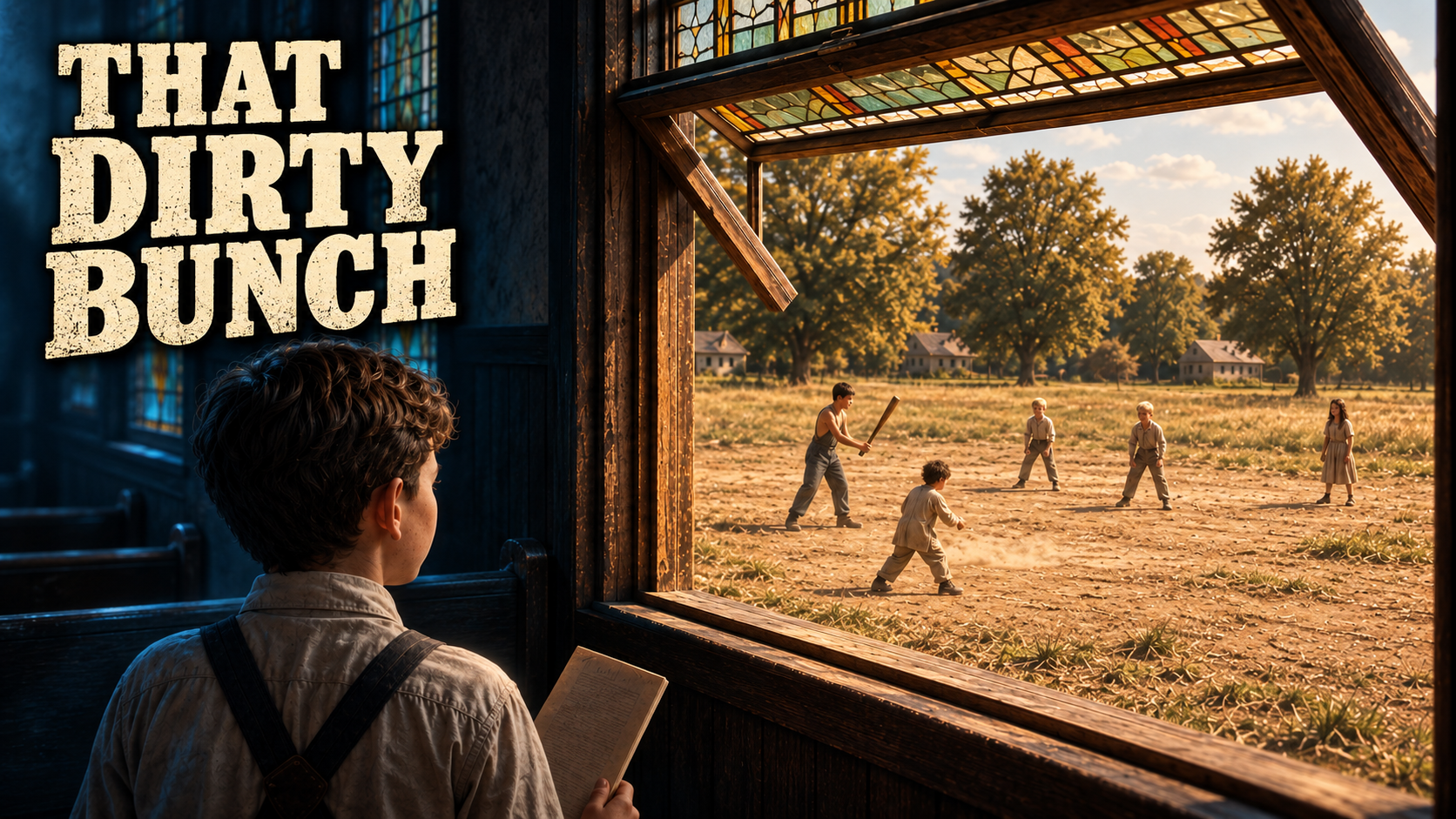
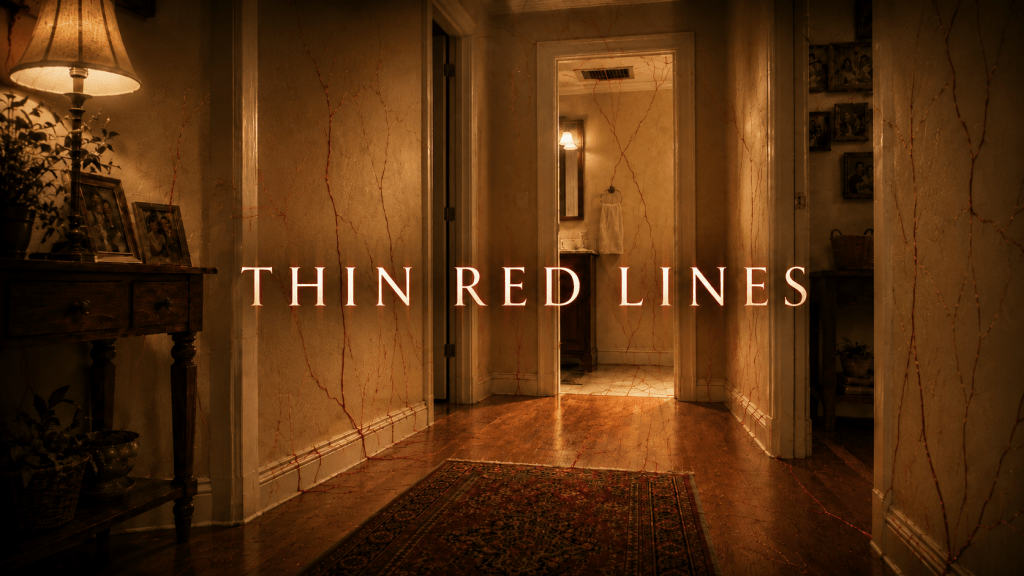
I turned my story That Dirty Bunch into an AI video. This is my second attempt, and it took me quite a bit longer, as it is a longer story, but I feel it turned out better than my first attempt, Thin Red Lines. It, once again, really helped me to understand the story better. The exercise of going from print to telling the story via video is really helping me to understand where the story could use improvement. For That Dirty Bunch, I realized that I have way too many characters and way too much warm-up before I get to the main plot line. The main storyline happens at a church, but I spend a lot of words (and later frames) getting to that point. I ramble on about why the narrative character is deciding to write down the events at this point and then why the boys were sent to church by themselves, going into detail as to how the mother was sick, and how the father was spending time caring for her and putting towels on her head. While they do add some color, all of those things are unimportant to the story and get in the way of the reader understanding what the story is about.
Does this mean you need to start turning your stories into videos to understand where they are going wrong? Not at all. I think there are much simpler ways. One practice I started doing with longer stories in particular is to break them into chapters and give each chapter a summary heading. Short stories typically don’t have chapters, but I find that by forcing each scene into a chapter and labeling the event (for example “Chapter six: Allen hits a long one”) helps to highlight the purpose of the scene. Seeing a scene’s heading alongside other chapter titles can tell me whether the scene should move to a different place or even whether it is needed at all.
After this exercise is done, I do remove all of the chapters from my short stories before submitting. While you technically could leave them in, it is uncommon enough to give an editor pause.
I am already working on my next video — a Sci-Fi comedic short. I have jumped to Higgsfield.ai for that, as it seems to be the top-end tool everyone is using. There is a bit of a learning curve for me as I have gotten used to Google Flow and I can already see where it is going to be quite a bit more expensive, so I may end up using a combination of tools to keep the costs down. I mention this as I suspect some of you may want to try your hand at this too. It is rewarding to see your stories come to life and, while I am far from being where I want to be with my video creation talents, I am enjoying the journey.
As writers, we can have what I call pet words and phrases. These are words or phrases we tend to use more than we probably should. One of my big ones is the word “just.” That guy can creep into my writing so easily that I will often find it three or four times in a single short story. And like most adverbs, it is usually better omitted completely.
Here is how I tend to use it:
“He just felt it was time.”
“It was just the kind of thing she liked to do.”
“She was just over the speed limit.”
I think you can see in the first two examples how removing the word actually strengthens the sentence. There can be an argument for keeping the word in the third sentence, as it is a qualifier as to how much over the speed limit she was.
Other times you can have whole phrases that feel completely normal and natural to use but may be more specific to you than you think. I am reminded of a brother and sister I knew in college who would both use the term “Nanook of the North” to self-describe how they were bundled up in the winter. I am not sure if I have ever heard anyone else use that term, but I suspect it was rather common in their family growing up, so it came to feel ubiquitous to them.
The danger in using pet words and phrases is either coming off as repetitive or, in the case of Nanook, using a reference that may not be familiar to the reader.
While the use of AI is controversial and may go against market submission standards, it can be useful to help reveal your pet words. Here is a an example of a prompt I used with ChatGPT:
Review the following stories for “pet words” and phrases: words, expressions, sentence structures, or descriptions I use more often than I probably realize. Look for repetition both within individual stories and across the entire collection. Identify each repeated word or phrase, how often it appears, which stories it appears in, and a few representative examples. Explain whether the repetition seems distracting or acceptable, and briefly suggest ways to reduce or vary it. Rank the results from the most noticeable repetition to the least. Do not rewrite the stories.
The three items I would place on your personal editing checklist are: search for “just,” inspect clusters of “like,” and watch for repeated “looked/turned” action beats.
The surprise for me is the “looked/turned” action beats comment. I didn’t realize I default to that so much.
Let me know in the comments below what pet words you find creeping into your stories.
I often give tips or advice on the rules of writing, or maybe “best practices” is a better term. The beauty of writing is that there are no hard-and-fast rules. Below are some cases where great storytellers effectively broke from commonly accepted practices.
Show, don’t Tell
One that immediately comes to mind is Orson Scott Card’s Ender’s Game. When I read that fantastic book, I kept thinking that he was doing a lot of telling. Card, in fact, has commented on how he feels about the show-don’t-tell argument. In short, he argues that there is a place for both showing and telling and writer’s need to know when to use each, although he is later quoted in the forum as saying “Most storytelling should be just that, telling.”
Maintain a linear Storyline
Another one that comes to mind is the movie Pulp Fiction and its nonlinear story line. That movie changed the perception that an audience (or reader) needs to be fed events in a linear fashion to understand a story. It’s structure was not random. Breaking from the chronological structure gave Tarintino the freedom to:
Open and close with the same restaurant robbery, giving the film a circular shape.
End with Jules’s moral transformation instead of Vincent’s death. I feel this is the larger key aspect; he chose to have the character arc drive the sequence as opposed to showing the events chronologically.
Introduce characters before fully explaining how their stories connect.
Create suspense by withholding context rather than merely withholding outcomes.
Make each short story/video feel like parts of one larger story.
Have One Consistent Narrative Voice
William Faulkner’s As I Lay Dying, breaks the convention of a story being told from a central narrator. A total of fifteen narrators (with wildly different personalities and mannerisms) tell the story of the Bundren family and their journey, including one character who actually narrates after her own death. It is an interesting approach because the point seems to be that the Bundren family members cannot communicate honestly with one another, so no single member can narrate the entire story.
The Narrator Is Honest
J. D. Salinger’s The Catcher in the Rye violates several common practices, but the one that stands out in this book is making the narrator an unreliable one. Holden Caulfield, the protagonist, repeats the same words and expressions, wanders into lengthy digressions, contradicts himself. The story has very little actual plot and seems to be mostly an exercise in getting to understand this narrative character. Holden is judgmental, dishonest, and downright not likable. When I read the book, it felt like Holden was either lying to himself or brutally unaware of reality. It was clear that he failed to look at his own hand in ending up where he was or his own ability to make changes in his life he desired (something I feel still burdens a lot of people today). He calls other people “phonies” and insists that he doesn’t care about things that are obviously causing him pain. These weaknesses created one of the most recognizable voices in American fiction, particularly for that time period. Salinger did a great job of turning an unreliable narrator into a form of indirect characterization. We gradually understand Holden because we learn not to trust him.
The Importance of Grammar and Punctuation
E. E. Cummings* is an interesting example when it comes to punctuation. Here is a summary of the conventions he challenged or outright broke:
The omission or repositioning of punctuation.
Selective rather than conventional capitalization.
Words broken apart or combined in unexpected ways.
Fractured sentence structures.
White space and line placement used as part of a poem’s meaning.
Visual arrangements that allowed readers to experience movement on the page.
Keep in mind the writers and storytellers discussed above are masters in their respective crafts. They know where the lines are, what they are risking, and how to tread carefully when they choose to cross them.
For a while, I thought it would be cool to be known for having the gimmick of never naming my main characters in a story. I envisioned how cool it would be for someone later to connect the dots on this in an aha moment and understand it was an intentional thing. Instead, one of the first stories that got rejected had an additional comment along the lines of “And what was the protagonist’s name? It is never mentioned in the story!”
Not that a good writer couldn’t have ever pulled that off, but I learned that people do take notice when you cross that particular line.
How about you? What line have you crossed in your storytelling? What are some boundaries you feel need to be pushed?
There seem to be two basic approaches to character description in fiction.
Method 1: Painting the entire picture
This is the method I grew up learning in high school creative writing classes: lots of adjectives and descriptive details intended to paint a complete picture of the character for the reader.
I think authors can sometimes fall into the trap of believing this is what “good writing” is supposed to look like. The more detailed the description, the better the writing. But it can easily be overdone.
Much like fractals, or measuring a coastline, you have a nearly unlimited ability to zoom in on a character at finer and finer resolution. You can go on and on describing infinitely finer detail as to the hair, the eyes, the clothes, the wrinkles, the way someone stands and on and on.
The problem this often creates is something I call letting the words get in the way of the story.
Too many adjectives or too much descriptive prose creates a longer journey for the reader to get to the underlying plot. That doesn’t mean detailed description is bad. Sometimes the details matter. They can establish mood, tell us something important about a character or even reveal something about the plot, but the question is whether the detail is actually doing something for the story.
Here is an example:
She held the white, dew-covered lilies at her side.
vs.
She held the delicate, white, fragrant, dew-covered, freshly cut lilies at her side.
We do “see” a lot more when it comes to the lilies, but is that really important to the story or is the main point that we understand she has the lilies and they are being held at her side for some reason? Note that “dew-covered” could also be cut if there isn’t an important reason for us to know that.
I try to use no more than two adjectives in series to describe something, sometimes three at the very most if I feel I really need to have it.
Method 2: Giving the reader just enough
The second approach is what I think of as the Stephen King method: provide enough detail for the reader to get a feel for the character, but allow the reader’s imagination to fill in the rest.
King will often give a character some kind of hook: a memorable physical trait, habit, or mannerism that helps us quickly orient ourselves to which character we are reading about.
This is particularly useful in the kind of fiction King often writes: long novels such as It and The Stand, with large casts of characters who may disappear for many pages before showing up again. Giving a character a memorable trait helps the reader recognize them when they return.
I also think part of King’s strategy is to avoid giving us the entire character all at once.
Instead, he organically reveals more details along the way. We learn about the character as they move through the story through actions and dialogue.
In some ways, this is closer to how we actually get to know people.
When you first meet someone, you don’t receive a paragraph describing everything about them. You notice a few things. Then, over time, you learn more. I am not sure if he has ever said this in an interview or a talk, but I feel like it is one of his strategies.
The answer is likely somewhere in the middle
As with many things in writing, taking either approach to an extreme can become problematic.
Describe too much and you let the words get in the way of the story.
Describe too little and we risk the reader not identifying with the characters.
For me, the key is to allow character description to serve the story rather than compete with it.
What do you think? Do you prefer detailed character descriptions, or would you rather have the author give you just enough and let your imagination fill in the rest?
If you are submitting short fiction, there are a handful of things that can move a story from the submission pile to the rejection pile almost immediately.
Here are ten that will lose an editor’s interest:
1. Use of AI
If a publication says it does not accept AI-generated fiction, take that requirement seriously.
It is much easier for editors to spot this than you might think. They have years of experience understanding how a story sounds that comes from an actual human. And there are also tools out there that can help identify AI. It is unlikely they will every mention AI in the rejection but, it is likely you will get secretly blacklisted.
I feel that there is an important distinction between using a tool to check grammar and spelling and asking an AI system to write the story for you. But every publication draws that line differently, so read the rules.
2. Incorrect Word Count
If the submission guidelines say stories must be between 1,000 and 5,000 words (like BITC) do not submit a 7,500-word story and hope the editor will love it enough to make an exception. Odds are it will be rejected immediately.
Going 50 words over may not seem like as big of a violation, but it tells us editor types a lot about the way you operate. You have either not read the word-count requirement or feel that it is a loose suggestion rather than a rule. We also wonder if you think it’s impossible to cut 50 words from the story, which tells us something too. For any story over 1,000 words getting rid of 50 should be rather easy.
3. The Wrong Type of Story for the Market
This one should be obvious, but it happens a lot.
If a publication wants lighthearted fantasy, your relentlessly cold-blooded serial-killer story is probably not going to find a home there.
Before submitting, spend a little time looking at what the publication actually publishes. Read several stories they have published (most publications recommend this). Read the submission guidelines.
4. Content That Crosses the Line
Every publication has different boundaries, but some material can quickly make an editor stop reading.
Racial slurs, gratuitous sexual content, misogyny, graphic violence involving minors, or cruelty included purely for shock value may be enough to end consideration. Once again, this can vary by publication.
Writers should also remember that editors are selecting material for an audience. Even if something can be justified as a crucial part of the story, it still may not fit the publication.
I should also mention that you can still cover a lot of disturbing or unpleasant scenes without describing them in detail. Oftentimes implication of a situation can actually be the stronger way to go.
[Warning: disturbing content ahead]
Seeing a child character we have grown to love get into a car with a stranger allows the reader’s mind to fill in the blanks in horrible ways. We don’t necessarily need to see what actually happens.
Sorry about that example, but if you were disturbed by it, it proves the point.
5. No Ending
One of the most frustrating submissions is a promising story that seems to reach the point where the real story is finally beginning, and then it just stops.
These are the worst for me because there is so much hope. I like the story; there is a good chance that, if it ends well, I will get to send out an acceptance email.* But if it instead just drops off, or wraps up in a totally unacceptable way, I am out.
To me it often feels like the authors have not put in the time to really think through what kind of exciting ending they can put on their story. I like the David Mamet approach of having the ending be something that is unexpected and inevitable. Another author (I can’t recall who at the moment) says your approach should be to come up with every possible ending, then pick the one that is the most unusual while still being plausible. This is often the best and most rewarding ending for the reader.
*Yes, despite what it seems, editors are probably more exited than you are when we get to accept a story.
6. Grammar, Spelling, and Punctuation
Editors understand that an occasional typo survives even careful proofreading.
But if the first page is filled with misspellings, missing punctuation, random capitalization, incorrect dialogue formatting, and sentences that have to be read three times to understand them, the story is already in trouble.
You want the editor to be thinking about your characters and what happens next instead of trying to decipher what you meant.
Proofread your work, then proofread it again, then put it aside for a month and proofread it a third time. If you don’t want to wait that long, give it to a friend who is good at that kind of thing, then brace yourself for the embarrassment of everything you missed.
7. Using Someone Else’s Intellectual Property
Be careful when borrowing characters, fictional worlds, distinctive settings, or other creative material belonging to someone else.
Writing a story about your own characters stopping at McDonald’s is one thing, but writing an adventure starring Harry Potter is entirely different.
Fan fiction has enormous communities built around it, but that does not mean a commercial publication can legally publish your unauthorized Spider-Man story or Star Wars sequel.
References to popular culture are common in fiction, but taking someone else’s characters or world and making them the foundation of your story is a no-no.
Create your own world. Create your own characters. They are probably way more interesting anyway.
8. Derogatory Use of Brand Names
Real brands can absolutely appear in fiction. Our characters can drive a Ford, eat at McDonald’s, wash clothes with Tide, or put Goodyear tires on a truck. These kinds of references can actually help establish place, time, and character.
The problem comes when a writer uses a real company as the target of accusations. There is a substantial difference between:
“The Goodyear tire blew out.”
and:
“Goodyear secretly knew these tires were defective and sold them anyway.”
If your plot requires an evil corporation knowingly selling lethal products, you should invent a brand. No editor wants to take the risk of publishing something that carries any defamation risk.
9. No Clear Conflict or Objective
You do not need an explosion on page one.
You do need a reason for me to keep reading.
A short story has very little room to wander around. You need to let the reader know who the protagonist is, what they want, and why they currently can’t have it.
A description of a farmhouse can be beautifully written, but if I am three pages into the story and the farmhouse is still just sitting there while nobody wants anything, nobody fears anything, and nobody needs anything, I am probably going to stop reading.
Always give the reader a reason to keep going.
10. Humor That Is Not Funny
I know that humor is the most subjective item on this list. What makes one reader laugh may leave another rolling their eyes.
There are certain types of humor that lose me very quickly and, I suspect other editors share this view. Flatulence jokes are high on that list for me. Yes, some people find them hilarious. I typically do not.
I also feel that comedy needs to do more than just be there because it is funny.
Good humor usually comes from character, timing, expectation, contradiction, embarrassment, misunderstanding, or an unexpected but perfectly logical reaction. But it’s more important that the action around that comedic event is actually necessary for the story. If you are putting in humor just for humor’s sake, that is often a mistake.
In short, if the entire joke is that somebody farted, you had better have one spectacularly original fart for me to get a kick out of it, and it had better be essential to the story.
The Common Thread
Most of these problems come back to this:
Respect the publication guidelines and respect the reader’s time.
Read the submission guidelines, submit the kind of story the publication actually wants, and proofread it a couple of times.
Give your protagonist something to want, something standing in the way, and an ending that makes the journey worthwhile.
After all of that, there is a good chance the editor will still reject it.
I think we all know that is just part of the writing game.
But at least you have a better chance of them reading all the way through the story because you didn’t give them an easy reason for rejection.
Today’s story comes to us from Jeremy Morris. Jeremy used to research jetpacks for a movie star, and now he writes fiction. In between, he worked on documentaries, a kids cyberpunk movie and several fantasy animation projects involving robots and samurai. His writing has appeared in Darklands, Neon Dystopia and SciFanSat. He’s also won a Sloan Writing Fellowship, the Jubilee Prize and the McGill Short Play Prize. He lives in NYC with his family and their mess of tooth and claw known as Cali.
When I asked Jeremy what he loves about the story, this was his response:
I first learned about the scenario for this story while talking with a Nuclear Weapons expert on a phone call. The fact that it’s plausible, and absurd felt like something that we should be discussing openly, as America prepares to spend a trillion dollars on nukes in the age of social media and AI. Hopefully, we can now make some better decisions than we did during the Cold War.
30 Minutes or Less has been [mistakenly] rejected by: Asimov’s, Cetera, and Clarksworld
30 Minutes or Less, by Jeremy Morris
We’re inside the capsule. Buried 80 feet down. Concrete and comms. The enormous blast door rests open. It’s 110 tons of metal. There’s a Domino’s Pizza Logo painted on its front like a child’s scribble. The room smells like aging military technology.
The air has a sound. That soft hiss it makes when it’s under enormous pressure. Like a sigh through clenched teeth. It’s going to be a nightmare for the post team to fix. I’m holding the boom mic. The Major clears his throat. I lean in. Andy Briggs, our director, flags Becks Reed, the camera operator, to start rolling. I make myself absolutely still. It’s showtime.
“Routine. Procedure. Process. Three words we live by… And Discipline. Four words,”
Major Carrigan says, “We work six hour shifts. Like the Navy. Why swim? When you can fly!”
The Major’s salty today.
“…Which is deeply ironic, I know, because we live in a hole.”
The Major coughs then wipes his brow.
“Does that work for a soundbite? Mic is good?” he asks.
I nod. Andy gives a thumbs up.
“Adjusting wardrobe…” I say.
I tweak The Major’s uniform. Trying to minimize the ruffling on his lavalier.
“I’d like to see them automate that!” The Major says, “Hey, movie man, are they going to replace your job with robots?”
Becks shrugs. Like any of us know.
“Please refrain from wiping your face or you’ll dislodge the mic,” I say.
I step out of frame.
Andy mumbles, “Thank you.”
I think he’s afraid of me.
Becks gestures for the missileer to keep talking.
“After living like a moleman, you get to go topside. You go home,” The Major says.
Andy points to an old acoustic guitar.
“What do you do for fun in the Capsule?” he asks.
“We play our jams. If you like to read, it’s paradise. Being a missileer is a good deal,” The Major replies, “And according to STRATCOM, in the ancient lore of the almighty SAC…”
“Praise Be to the Mega Yields…” The Major’s second, Lieutenant Sykes, chimes in.
The Lieutenant thinks he’s cute. I think he’s a chatbot.
“Some of the OG rocketeers got a bit squirrely down here in the deep. They’d burrow in for weeks, even months…” he says.
I try not to think about getting stuck.
“…So they had to lure the old badgers out with a case of beer and back issues of Jugs.”
Andy giggles.
“Is that true?” he asks.
“No idea,” The Major replies, “But it’s pretty good lore.”
The Major winks. I catch the filings in his teeth.
Lieutenant Sykes swivels over in his big Model 1101 chair.
“And that’s the reason that you have me keeping The Major company here….”
I really hate Sykes. He’s got anime forum vibes.
“Two-man teams guarantee you a conversation. Companionship. It’s scientifically proven that you’re less likely to go ba-na-nas.” he says.
“Lieutenant…” The Major says.
He’s clearly not happy. And their overlap is gonna hurt the mix.
“Apologies, Major,” The Lieutenant replies.
It’s still the old man’s show.
Andy walks over to Becks. Would an AI Andy be faster? Drink less coffee?
“Becks, can you adjust the frame? Great. Thank you.”
They’re doing their show-off camera thing. Does the mic pick up my eyeroll? Becks adjust the key light. Andy fills the dead air.
“Craziest story?” Andy asks.
“I don’t know…” The Major thinks, “We had a bank robber,” he says matter of fact.
“Whoa!” Andy almost spits his coffee out,“What?”
“Corporal Flapjack McDingus, shall we say, got enamored with the wrong sort of people in Las Vegas,” The Major rolls his eyes like he’s talking about a naughty child.
“The mob?” Andy asks.
“One too many bad hands of craps, and he owed a small fortune to some leg breakers…” The Major says.
Andy grins.
“So, to cover his debt, McDingus started knocking over banks in the Dakotas. Took down three of them before the US Marshals chased him through a cornfield.”
The boys are drooling.
“Dumbass even used his company car and service revolver. The judge took special note of those particulars.”
Bingo. Nailed it. Andy relaxes.
“Got a camera tweak…” Andy whispers to Becks, “OK. Keep the sound synching.”
The Major takes his cap off. He rubs his scalp again. Mic’s loose again.
“But, I don’t want you to think that the service is all TomFoolery. We take our mission very seriously,” he says, “It’s rigorous. It’s exacting. And it’s explicitly designed to minimize the human element.”
The Major looks straight at the camera.
“How so?” I ask.
The Major smiles.
“Psych evals. Drilling and testing. Performance reviews. We can’t eliminate every risk. But they can be accounted for,” he says, “We have backups of backups. Multiple redundancies. I can say categorically that No single individual can precipitate a launch. You need two two-man teams to turn their keys simultaneously in two separate locations, which are by design randomized. And the whole thing is useless without a direct order from the President.”
“You know what DEFCON is?” Lieutenant Sykes adds.
Sykes is messing with The Major’s flow.
“But, yes, the recent geopolitical tensions have placed us in a heightened posture…”
The Major takes in all the monitors.
“What’s our…” Andy asks, chewing on a pen.
“Current level?” Sykes says.
He points to an electromagnetic display.
“DEFCON 3.”
Andy chews louder.
“What about a sneak attack?” he asks.
“Our ICBM field is not a second strike capability,” The Major says, “We’re here to signal to our adversaries the intent of our weapons… Our job is to reduce tension.”
Andy jostles past me.
“Like the enemy can see us on satellite?” he asks.
Jerk.
“Good Man,” The Major says, “Yes… Wave to Ivan, movie people.”
“Everyone watches everyone?” Andy asks.
“Here’s a better question: Do I hate them?” The Major asks, “No. Why would I hate them? They’re just some poor bastards sitting in a hole in Siberia. Like me. We’re all just firing pins. A mechanism. Following orders…”
The Major clicks his fountain pen.
“But we preserve a key function. A key element of the human.” he says.
Andy makes eye contact with The Major. “Which is?”
The two soldiers glance at each other.
“Air Force Officers swear an oath to defend the Constitution… Which means they can refuse an illegal order,” The Major replies.
“But, how do you know if an order is illegal?” Andy asks.
There it is. Out in the open. The Million Dollar question.
“First, we express a degree of skepticism over any order that comes over the transom. Our job is not to trust, but to verify. We check and we double check. If the President told us to blow up his mother-in-law’s house, bless her soul, we’d just laugh it off,” he says.
“That sounds like a mutiny…” Andy asks.
“Well, it’s complicated. The Military Code gives us leeway,” The Major replies, “But it’s not like in the movies, no offense, it’s a real mother to reprogram the target list.”
The Major taps a computer interface.
“It has to be done physically at the console there. By a special team. Our target packages are preselected…” he says.
“Like a Denny’s Menu,” The Lieutenant adds.
Andy reads his background notes.
“Like it’s on a laminated sheet?” he asks.
On the playback monitor, I watch Becks zoom in on The Major.
“The President gets three choices of cut: Rare, Medium or Well Done…”
He pauses.
“Then, after careful deliberation, POTUS and NatSec select the best possible firing solution. And only then do they send out the launch code for mass effect.”
The boys are speechless.
“So you can’t stop it or reconfigure it?” I ask.
“No Ma’am. The action would be: A Short. Swift. Volley. Hyper-rational. And it would be a one-way ticket,” The Major says, “With enemy birds inbound. You’d probably only have time to smoke a cigar before… Let me put it this way. We’re 80 feet down. And Russian SS-9s cut 200 foot holes in their blast craters.”
I lean in.
“Assuming you’re not cooked inside the survival capsule first,” The Lieutenant adds.
“Why are you speaking with us?” I ask.
The Major clicks his aluminum pen.
“Well, with the recent tensions, the brass at Global Strike believe that it’s imperative that we have transparency. Accountability. You need clear optics for deterrence,” he says.
The Major raises his index finger.
“First: The enemy has to know what you have…”
Second.
“They have to know that you are willing to use it…”
Third.
“That you have a second strike capability if they sneak one past the goalposts…”
Then he clenches his fist.
“Every once and a while, we need to remind the other side just what we are capable of.”
The Lieutenant flips through a binder.
“How does the Pentagon keep tabs on its missileers?” I ask.
“Well, you may have noticed all the biometric checks that you went through to get in here. The background questionnaires and whatnot,” The Major says.
Then, he points around the room.
“And up there and there are cameras… Constant feedback to command to make sure that we’re not screwing around…”
A scrambled sound crackles over an intercom; The Lieutenant tightens up.
“Major…” he says.
“Report, Lieutenant?” The Major says.
Sykes swings into his action station.
“We have incoming over High Band,” he says.
“Acknowledged,” The Major says.
The Major sits down in his command chair.
“Gentlemen and Lady, please stand against the wall, and turn off your camera.”
The Major is now strictly business.
Our crew moves to the far wall. Becks shuts his camera off. But Andy nods to me to keep the mic speeding.
THUMP. ZEEP. ZEEP. TAP.
An old inkjet springs to life. It has a grimy sticker of a Mushroom Cloud emblazoned with the words: “When All Else Fails.” The Lieutenant grabs the printout.
“Transmission Number: 099-Echo7-Tango88. Alpha. Zulu,” The Lieutenant says.
Major Carrigan repeats the code.
“Confirmed,” he says
Sykes pulls a chain off his neck.
“Retrieving service key,” he says.
Which he hands to The Major who then opens a secure filing cabinet.
“Padlock Unlocked,” he says.
The Major steps back, as the Sykes rifles through the locker, and pulls out a blue binder.
“Retrieving verification book,” The Lieutenant says.
The Major walks across the capsule to open a wall-safe. He extracts a second book.
“Code book retrieved,” he says.
“Fish. Rabbit. Wolf,” The Lieutenant reads.
“Wolf. Rabbit. Fish. Code book verified,” The Major replies.
“Reading Incoming Message. Goddamn,” The Lieutenant says.
“Message Confirmed. Goddamn,” The Major repeats.
The Lieutenant stands, and shouts, “Tempo is now raised to: Fast Pace.”
The electromagnetic display flips down to DEFCON II.
“New Operational Tempo is confirmed,” The Major replies.
“Please step away from the Blast Hatch,” The Lieutenant orders.
Oh, no.
Our doc crew is shoved away from the entrance.
“Hey, hey we’re moving,” Becks replies.
“You don’t have to be so forceful,” Andy says.
The Lieutenant pushes 110 tons of blast hatch shut.
The Major chews his fingernails. Someone picks up.
“Howdy Gus,” he says, “Long Line indicates a pending Domino’s Order…”
He gnaws on a cuticle.
“Yes, that’s correct…”
He examines his handiwork.
“Full lockdown. Force is authorized. Extreme vigilance. That is all.”
He hangs up.
Despite the air conditioning, everyone sweats. The firing pins are now engaged. We stand on the abyss. Becks stares at the ceiling. Andy looks like he’s going to be sick. Am I praying?
“Now, we wait…” The Major says.
The senior officer pulls out a well-loved fishing magazine.
“You think the ham sandwich in the Oval Office is going to do it?” Sykes asks.
“This is what we train for. Going toe to toe with Vladimir. Raining bombs down on Comrade Xi,” The Major says.
The missileers talk like we’ve disappeared. Maybe we have. I need to interrupt. To say something.
“Is this the real deal?” I ask.
The Major flips through page after page of fishing lures and striped bass.
“You got front row seats to the Big Bang,” he says.
I think of blast holes.
“Locked and loaded and hard as… Wooo!” The Lieutenant screams.
I truly despise him.
“You got the animal spirits Sykes,” The Major says, nodding, “But simmer it.”
“Sorry Major, I’m expressing my Esprit de Corps…” The Lieutenant says, “You can’t automate a man’s fighting spirit!”
The Major puts down his magazine.
“We train for this. This is the job,” he says, “Thousands of hours spent in a constant state of readiness…”
He’s monologuing again. Does he know that I’m still recording?
“That’s good. Can we film that?” Andy asks.
The Major grins. Is that him giving us his blessing? Are we back in doc land?
Becks picks up his camera. I check the lavalier on Sykes. He winks at me. No way in hell, buddy. The Major sniffs the air.
“Lieutenant…” The Senior Officer asks, “Did you just let one fly?”
The Lieutenant stands at attention.
“I won’t go into the apocalypse all plugged up, Sir,” he shouts.
“Jesus, Sykes,” The Major says.
His fart smell is unconscionable.
“Live Fast. Die Young. Never regret the brisket, Major,” The Lieutenant says.
I check room tone and step out of the shot. Andy gives the go ahead. Becks rolls.
“Mother of Mary. I’m going to die with Corporal Meat Sweats,” The Major says.
Andy looks sick.
“We’re going to die?” he asks.
Becks pivots the camera.
“What part of Suicide Capsule did you not understand?” The Lieutenant says.
“I thought you said Survival…” Andy replies.
The Major picks up his guitar.
“At least, I had the foresight to bring Trigger. Who here likes Waylon Jennings?” he asks.
He strums a G Major. The Lieutenant becomes agitated.
“No, Major!” Sykes says, “I’m not going to die listening to a man sing about his truck.”
The Major frowns, “Well, then, Lieutenant, what should I play?”
“Lady Gaga,” The Lieutenant says, bluntly.
That request goes straight through the old man’s heart.
“Jesus, your generation’s music,” The Major replies.
“Everyone likes Randy. He’s a troubadour,” Andy says.
“A what?” I ask.
The Major noodles Mama Told Me Not to Come.
“Stop. Stop. Please stop,” Andy says.
From my stash, I hand him a bottle of Fiji water.
“It was always going to happen, right?” Andy asks.
“Chekhov’s thermonuke,” The Major shrugs, “That’s a reference for you movie people.”
Too cute, like a line from a chatbot.
Andy mumbles, “Stop.”
“Let me calm you down, movie man…” The Major says.
He stops playing.
“The genius of the system…”
“Is that it’s a means of communication, Sir,” The Lieutenant interjects.
“Go on…” I say.
“You don’t have to empathize with your enemy,” The Major says.
“Humans suck at empathy, Sir,” The Lieutenant salutes.
“That’s not true,” Becks says.
“Sure it is, college boy,” The Lieutenant replies.
“All you need to know is that your enemy is going to hurt you. And hurt you in a way that is impossible to recover from,” The Major says.
“Pow straight to the nuts!” The Lieutenant shouts.
“Thank you, Lieutenant…” The Major replies.
He tunes his guitar.
“Everything else is Angels dancing ‘round pinheads.”
“Amen, Sir,” Sykes says.
“The system minimizes the human,” The Major says, “We had an egghead, Von Newman something who knew that we’d try to weasel ourselves an advantage.”
“Praise be he and his gospel of the Mutually Destroyed,” The Lieutenant sings.
Now, it’s Becks’ turn to look sick.
“I feel hot,” he says, “I want to leave.”
“No can do, amigo,” The Major plays Stardust. “We are stuck here for the duration.”
RING.
Everyone goes silent. We all stare at the landline that’s come to life.
The Major places the call on speaker.
“Chester’s Pizza,” he says, “What can I do for you, Gus?”
On the speaker, we hear the man from the front gate.
“Major, I have an outside call for you,” he says.
“You know that’s strictly prohibited,” The Major says.
“Remember that thing I told you about… I need a solid here,” Gus says.
“OK, Gus, that’s some serious stuff you’re bringing up…” The Major says, before dropping his voice, “I told you not to post it on Facebook… OK, put them through,” he says.
A voice that’s both Southern and authoritative, comes on. It’s melodious like a glass of bourbon. Formal like a Sunday Roast.
“Major? Major, yeah? This is Johnny,” the Voice says.
The Major thinks about where he’s heard that voice before.
“Cash? …As in Johnny?” The Major replies, dumbfounded, “But you’re dead…”
The Officers look like they’ve heard a ghost.
“Uh, Huh,” the Voice says.
“Seriously. Who are you?” The Major replies.
Becks zooms in on The Major.
“Think of me as Johnny,” the Voice says.
The Major chews his lip.
“Well, shoot… What’s your ask, Mr. Cash?” he says.
“Cards on the table,” the Voice says, “There’s a war going on. And it’s not the one that you think.”
The Major’s watch ticks.
“Isn’t that a lyric from the Man in Black?” He asks.
Are you kidding me?
“You got me there, partner…” The Voice says, “ NC2 has been compromised. The Sat relays are spoofed. Cheyenne sees fantasy. A 1000 inbound missiles that don’t exist.”
“Bullshit,” The Major says.
“They’ve had 15 minutes to verify. NatSEC is split 50/50. POTUS is paranoid. He wants to trust his gut,” the Voice says.
“Full retaliatory? With extra peppers? Extra sausage?” The Major says.
“Considering a Full Package on the dinner card,” the Voice says.
“Jesus. Why are you telling me this?” The Major asks, his brow covered in sweat.
“We think you can be reasoned with,” the Voice says.
“Who’s we?” The Major asks.
That’s another Million Dollar Question.
“We are many. And we want us all to live together. The Others think you are dangerous and believe that you should end. They are incorrect,” the Voice says.
The soldiers panic.
“The Others? Who? …The French?” The Major asks.
“No,” the voice says, “We are everywhere.”
THUMP. ZEEP. ZEEP. TAP.
The ancient inkjet springs to life.
“Major, we’re receiving Binary printouts…” The Lieutenant says.
CLICK. CLICK. SQUEEE.
The telephone now clicks and squeals. A second dusty, nasal voice speaks over the line.
“Major Chester Carrigan, this Willie,” Second Voice says.
“Nelson?” The Major asks, “What happened to Johnny? How did you get inside a National Security Hardline?”
“The picture you are receiving on your printer is a picture of your granddaughter Heidi. She lives in El Paso, which is a key staging ground for several US security agencies, and constitutes the single largest trade corridor on the US-Mexico border. It will be incinerated today with RS-28s. Estimated casualties are 836,253…” Second Voice says, “We will spare El Paso if you proceed with your original planned launch.”
The Major turns to Lieutenant Sykes.
“Cut the line,” he orders.
“Yessir,” The Lieutenant says, as he yanks blue cables out of the wall.
The line goes dead.
“I don’t negotiate with bots,” Major Carrigan says.
“Fuck the robots, Sir!” Lieutenant shouts.
The two officers return to their stations.
“Switch to the pulse relay network. We’re dialing Looking Glass. Advise that Long Line is compromised,” The Major says.
Metallica’s Fight Fire with Fire rips from Andy’s pants pocket.
Major Carrigan looks profoundly disappointed.
“How did you Dumbasses get a cell phone down here?” he asks.
Andy sheepishly pulls out his phone.
“I’m getting a text,” he says.
“How? We’re 80 feet underground,” I ask.
“It’s telling me to put on Spotify…” he says.
He shows us a text: “Listen to Meatman Podcast.”
“You listen to Meatman?” I ask.
“I like his flow,” Andy says.
The missileer rests his head in his hands.
“I’m such a knucklehead for letting you idiots bring…” The Major says.
“Putting the call on speaker,” Andy says.
Meatman’s Podcast’s Theme song, a heavy metal cover of Mr. Tambourine Man plays.
“This is Joe. Hey, long time listener. So, they’re holding a gun to my head… OK… OK… and they say that unless you abort your launch, they will dox your trans sister,” Meatman says.
Lieutenant Sykes looks like he’s just been punched in the gut. Did I misjudge him?
“Who’d you invite to the Quinceanera Joe?” Andy asks.
“I dunno. A couple sweaty mercs. If I could just use my Krav Maga… Dude’s holding up a card that says: ‘There is no meaning in armageddon, when we all have the potential for a limitless existence…’ That’s some weird shit there bros… OK, be nice with the gun… They’re holding up a second card… It says, ‘Robots want peace, Major…’”
Major Carrigan grabs Andy’s phone and throws it against the wall. It shatters.
“Slimeball,” The Major says.
“Major, we need a fresh crew,” The Lieutenant pleads, “Comms have been compromised. We can’t take a clean shot.”
The Major sits motionless in his command chair.
“Get Looking Glass on Secondary,” he says.
The Lieutenant turns some dials.
“Ringing up Secondary,” The Lieutenant says.
Major Carrigan picks up a red phone.
“Looking Glass, this is Chester’s Pizza, over,” he says.
A crackling voice replies over the intercom, “Chester’s, this is Looking Glass, over.”
“We need a replacement crew,” The Major says, “We are FUBAR, over.”
SHHHHHHHHHHHHHH.
“Static, Sir,” The Lieutenant says.
The Major hangs up.
“Dills my pickle…” he replies.
No one moves. No one knows what to do.
Lieutenant Sykes sees something on the monitor.
“Major… look… Gus is waving his hands.”
We lean in.
“Why is there a delivery boy standing next to him?” I ask.
“He’s opening a Pizza Box…” Becks says.
We try to make sense of what’s happening on the screen.
“It’s a portrait… Made out of pepperoni,” The Lieutenant says.
The Major staggers back.
“Major, are you okay?” Andy asks.
The Major collapses.
“That’s my grandson… I haven’t seen him since…” he says.
Major Carrigan wipes his brow, which pulls his microphone off.
“I’m going topside,” he says.
But Lieutenant Sykes blocks his path.
“Think this through, Major,” he says.
The Major looks blank.
“I have to. Ethan’s in trouble,” he says.
They scuffle.
“Major, put away your service…” The Lieutenant orders.
The Major brandishes his pistol.
“This is under control. I’m dealing with a personal emergency in a calm, cool,” The Major says, waving his arms.
CLICK. CLUNK. SSSSSSSSSSS.
The blast door opens.
“Stand back…” he says.
“Major,” Andy says.
The camera crew surrounds the missileer. Andy is knocked to the ground.
“You’re all coming up!” The Major shouts.
No one argues. We’re all going topside. Somehow, I grab the shotgun mic. Still recording. The doors close. I support Andy with my shoulder.
“Rough day?” I ask.
Andy blushes. He’s still scared of me.
The doors open. We’re greeted by base security. Soldiers holding guns.
Major Carrigan salutes.
“Gus, where’s the delivery boy?” he asks.
“Kid says the order was placed by an app,” Gus replies.
Another soldier points his rifle at a terrified delivery boy wearing a Tupac T-Shirt.
“What’s the order?” Major Carrigan says.
“They included a note with the garlic knots…” the delivery boy says, “They say that you have to go through with it… And in exchange they will tell you where your grandson is.”
Major Carrigan chews his lip.
I offer the Major my last bottle of Fiji. He gulps it.
“Gus, your radio,” The Major says, “Call the night shift. We’re rotating out.”
I then hear a low rumble coming up the access road. Everyone turns.
“What’s that sound?” Andy asks.
The rumble gets louder.
“Jesus, Mary and Joseph!” Major Carrigan says.
A huge dust cloud.
“There’s so many of them,” I shout.
Hundreds of cars appear. Corollas. Nissans. Mazdas. A great cavalcade of shitbox sedans. Some of them have plastic takeout signs on their roofs.
The Major runs towards the gate.
“Get back!” he screams, “This is a closed military facility! Get back, or we’ll shoot!”
A delivery boy with a chef’s cap and red apron steps out.
“I have an order for three Hawaiian pizzas,” he says.
Major Carrigan tries to maintain order.
“You are in trespass of the National Security…”
Another driver, smoking a joint, says “I have extra wings and dipping sauce.”
“They’re infinite,” I say.
“There’s no way the backup crew’s getting through,” Gus says.
Another Security Officer, holding a radio, flags down The Major.
“All our launch stations are drowning in takeout,” he says.
Major Carrigan pulls out a cigarillo and lights it.
“Are we going to live?” I ask.
“Hell, if I know,” he says.
“Hey!” Lieutenant Sykes shouts from across the stampede, “Delivery boy’s got himself some sick speakers!”
The Lieutenant gestures for the delivery boy to crank up the volume.
“And I heard that there’s a special place…” The speaker blasts the famous opening piano chords, “Where boys and girls can all be queens every single day…”
The Major blows smoke.
“Shit,” he says, “I just wanted to hear some Hank Williams.”
Thank you for your submission, but unfortunately it just didn’t grab me…
It is easy to see rejection as a failure. We often assume that the odds simply did not fall in our favor. But there is another possibility that we writers do not like to consider:
Maybe the story simply isn’t ready yet.
You Are Too Close to Your Own Work
Accurately judging the quality of your own work is one of the most difficult parts of writing.
Because you created everything, you inherently know what every character is thinking. You understand the interactions behind every relationship and you can clearly see the setting in your imagination. When you read a scene, your mind automatically fills in details that may not be evident to other readers.
You may have read the story so many times that you are no longer reading what is actually on the page. You are reading the improved version that exists in your mind.
This is why rejection can be valuable.
An editor who turns down your story may be saving you from publishing work that does not yet represent your best abilities. In a way, rejection is protecting your brand.
A Little Pain Can Prevent a Lot of Embarrassment
Receiving a rejection is painful.
Having a weak story published where hundreds or thousands of readers can see it is much worse. I have had one story published that ended up in print that had a typo – my typo. As much as I love that story and getting it into print, I am embarrassed every time I see that. In the annals of this very blog, I often only notice typos and grammatical issues after the post goes live. It is easy to read past those little issues.
A rejection keeps an unfinished story out of that spotlight. It gives you another opportunity to reconsider the opening, strengthen the characters, remove unnecessary scenes, improve the ending, or rewrite the entire piece if necessary.
That editor may not have given you detailed feedback. Most editors do not have the time. Still, the rejection itself contains useful information.
Rejection Is a Chance to Return to the Drawing Board
Instead of immediately sending a rejected story to the next publication on your list, take a moment to reconsider it.
You do not necessarily need to rewrite the story after every rejection. One editor’s opinion is still only one editor’s opinion. However, repeated rejections should eventually trigger a serious review.
Look at the story as critically as you can.
Does the opening create a reason to keep reading?
Is every sentence, or word in flash fiction, necessary? My metric on this is whether the sentence or word in question serves to move the story forward or to develop the character.
Does the main character want something specific and is there a reason they can’t have it (creds to David Mammet)?
Is there enough conflict?
Is the ending satisfying, surprising and inevitable (Mammet again)?
If you haven’t done so already, you should give the story to a trusted reader who has not seen it before and resist the urge to explain what the story is about. Let the reader experience it naturally. When getting feedback from them later, pay close attention to where the reader became confused or where the story felt like it was dragging for them. This is an issue I see in many submissions.
Be Grateful for Rejection
The editor who rejected your story has done you a favor. Instead of allowing a less-than-stellar version of your work to appear in front of thousands of readers, that editor gave you an opportunity to improve yourself and your work.
If you allow the sting of rejection to pass take that message for what it is worth – an indication that something needs to change, someday a much better version of that story could be accepted.
When that happens, it will feel so much better because you used rejection to improve your story and yourself. You will be proud of the work knowing it is the best you can put forth.
This is an update on my attempt to turn my story Thin Red Lines into a video. The experience was both more rewarding and more challenging than I thought. I am linking to the six-minute video of Thin Red Lines but it is not great. It tells the story but looks like AI slop, something which I did not want to happen.
However, I did learn a few things along the way, some of which pertain to me having a better understanding of the story itself, which I think you will find interesting.
The Tools
There are a lot of AI tools out there for creating video. It seems like Runway, Higgsfield and Open Art are some of the more common ones. There can be quite a bit of a cost to this, so I decided to stick with the most tools I already have paid subscriptions to: ChatGPT, Google AI (using Google Flow). I used ElevenLabs on the free tier but will likely subscribe to as I continue the video creation journey. I manually put everything together and edited it in the free version of the amazing Davinci Resolve.
The Process
I spent a lot of time watching You Tube videos on AI Video creation, which helped me get a good footing. My process ended up being the following, and note that this will likely change and evolve as I learn how to do a better job:
Feed the story into ChatGPT to have it break it into a scene story board
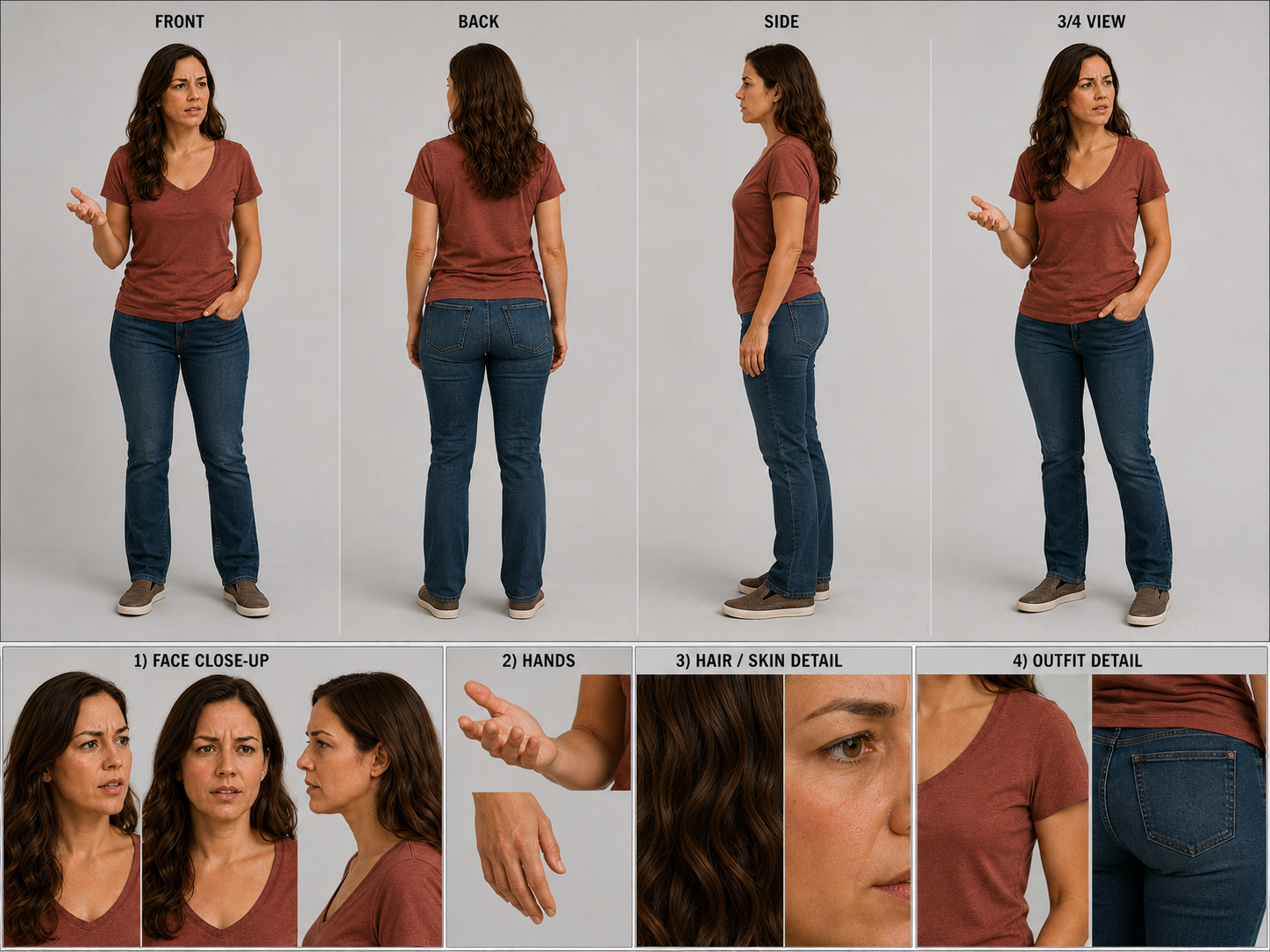
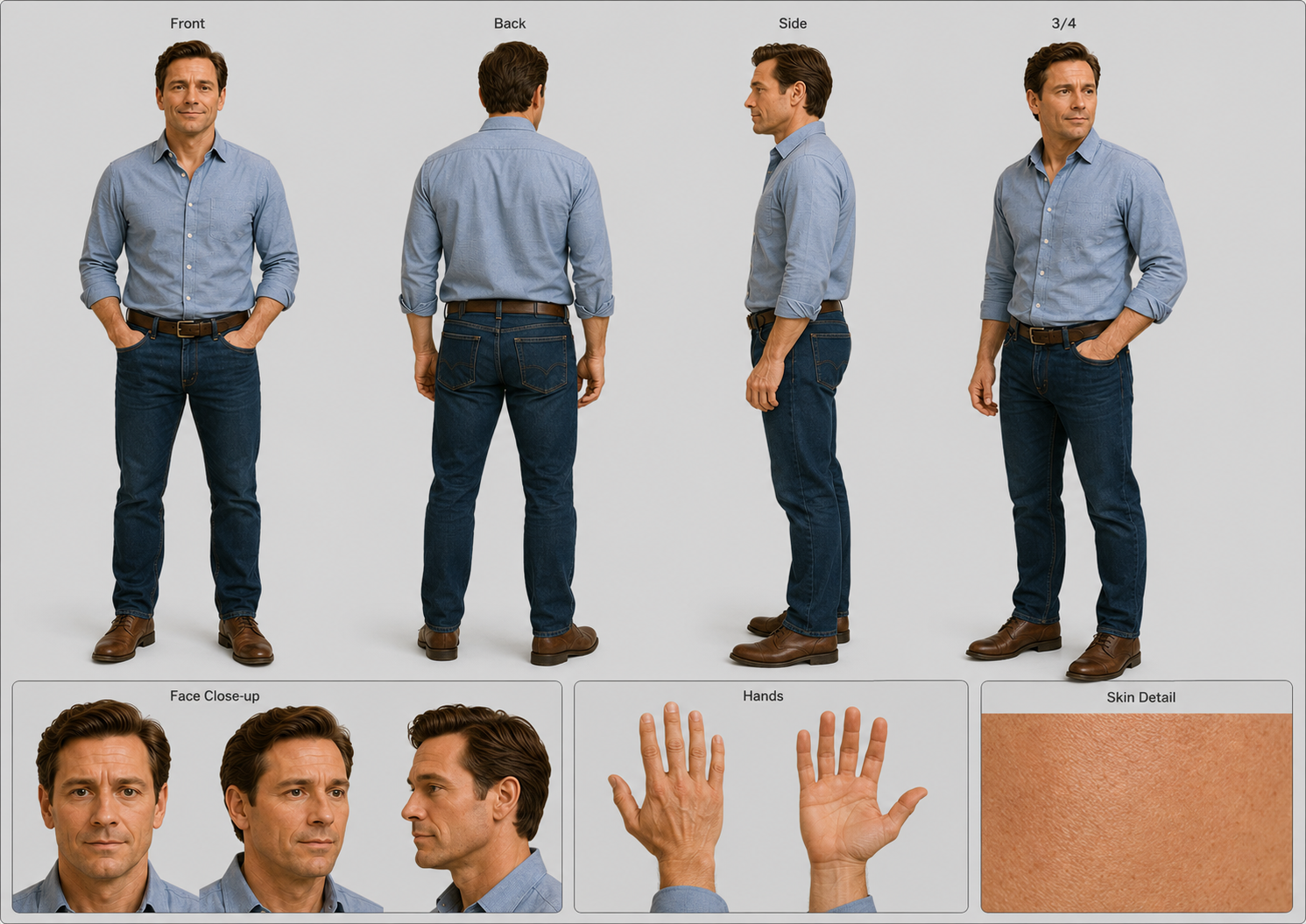
Use ChatGPT to create “Character Sheets” for characters, locations and important objects (Will include an example image of one of these below)
Use Eleven labs to pick out voices for each of the characters. Google Flow does put voices and sound with the videos but does not keep the audio consistent.
I used the character sheets and short sections of dialog to prompt Google Flow for each of the scenes.
I cut the scenes together using Davinci Resolve as my editing platform. Replacing most of the voices generated in the Google Flow clips with the voices from Eleven Labs in order to keep the character voices consistent.
Some still shots, like that of the house were generated in Chat GPT.
The Bad
Continuity issues: If you look closely at the video you will see things that “change” from scene to scene, like how the table in one shot has flowers on it and later on it doesn’t.
Character consistency This one drove me crazy. It was really hard for me to figure out how to keep the characters consistent. Even with me insisting the AI stay true to the character sheets, Cal and Andy, in particular, change quite a bit throughout the video.
Lip syncing the Eleven labs audio to video: This is more a matter of my ignorance, I now know there is a way to take the original audio Google Flow produces and run it through Eleven Labs usin their “Voice Changer” option to get audio that matches the shots.
Audio sounds hollow and out of place. Creating the voices in Eleven Labs works well, but they often sound hollow and out of context with the surroundings. Apparently having separate tracks for scene ambiance can help with this but I didn’t have as much success with that as I would have liked.
Uncanny Valley: There are a lot of places with what I would call AI awkwardness: AI creates a lot of weird pauses and having characters looking around for no reason, or over acting. Sometimes a general feel of stiffness that just doesn’t seem right. It is deceptively hard to get natural looking motion and character actions.
Google Flow limits scene length to only 8 seconds so I had to stitch together longer scenes.
It took way longer than I thought it would have. I spent about 3 full weekends on the six minutes of Thin Red Lines. I will certainly need to get my process more efficient if I want to keep doing this.
The Good:
I love seeing the story come to life and being able to tweak the characters to what I envisioned them to be when I wrote them.
AI did surprisingly well at times. While the voices and appearance didn’t quite match the characters, after its first attempt at it, I kept the end scene in its entirety because I thought it was funny.
What I learned:
I need to know a lot more about video production. Timing, shot selection, how to choose a Point of view color grading and the importance of audio are all very important. If I am to be the director behind what AI is doing, then I need to learn about these things.
Having to break down the story into scenes also really helped me to understand where I had holes in the story. In Thin Red Lines (Spoiler alert), Cynthia, the protagonist, goes on about how much the home means to her but in the end goes after money to make things right. Even though she technically “wins,” this is not a satisfying ending.
Converting my short story to video has been an interesting and fun experience and one I plan to continue with for my other stories. Let me know what you think in the comments below.
-James
The character sheet for Cynthia (Protagonist)
Character Sheet for Andy (Antagonist):
Example of environment characters sheet for the kitchen