There seem to be two basic approaches to character description in fiction.
Method 1: Painting the entire picture
This is the method I grew up learning in high school creative writing classes: lots of adjectives and descriptive details intended to paint a complete picture of the character for the reader.
I think authors can sometimes fall into the trap of believing this is what “good writing” is supposed to look like. The more detailed the description, the better the writing. But it can easily be overdone.
Much like fractals, or measuring a coastline, you have a nearly unlimited ability to zoom in on a character at finer and finer resolution. You can go on and on describing infinitely finer detail as to the hair, the eyes, the clothes, the wrinkles, the way someone stands and on and on.
The problem this often creates is something I call letting the words get in the way of the story.
Too many adjectives or too much descriptive prose creates a longer journey for the reader to get to the underlying plot. That doesn’t mean detailed description is bad. Sometimes the details matter. They can establish mood, tell us something important about a character or even reveal something about the plot, but the question is whether the detail is actually doing something for the story.
Here is an example:
She held the white, dew-covered lilies at her side.
vs.
She held the delicate, white, fragrant, dew-covered, freshly cut lilies at her side.
We do “see” a lot more when it comes to the lilies, but is that really important to the story or is the main point that we understand she has the lilies and they are being held at her side for some reason? Note that “dew-covered” could also be cut if there isn’t an important reason for us to know that.
I try to use no more than two adjectives in series to describe something, sometimes three at the very most if I feel I really need to have it.
Method 2: Giving the reader just enough
The second approach is what I think of as the Stephen King method: provide enough detail for the reader to get a feel for the character, but allow the reader’s imagination to fill in the rest.
King will often give a character some kind of hook: a memorable physical trait, habit, or mannerism that helps us quickly orient ourselves to which character we are reading about.
This is particularly useful in the kind of fiction King often writes: long novels such as It and The Stand, with large casts of characters who may disappear for many pages before showing up again. Giving a character a memorable trait helps the reader recognize them when they return.
I also think part of King’s strategy is to avoid giving us the entire character all at once.
Instead, he organically reveals more details along the way. We learn about the character as they move through the story through actions and dialogue.
In some ways, this is closer to how we actually get to know people.
When you first meet someone, you don’t receive a paragraph describing everything about them. You notice a few things. Then, over time, you learn more. I am not sure if he has ever said this in an interview or a talk, but I feel like it is one of his strategies.
The answer is likely somewhere in the middle
As with many things in writing, taking either approach to an extreme can become problematic.
Describe too much and you let the words get in the way of the story.
Describe too little and we risk the reader not identifying with the characters.
For me, the key is to allow character description to serve the story rather than compete with it.
What do you think? Do you prefer detailed character descriptions, or would you rather have the author give you just enough and let your imagination fill in the rest?
Monti’s story was previously [Mistakenly] rejected by: Fractured Lit, Flame Tree Press, Psychopomp, The Final Girl
Bio:Monti is a New Zealander living in London with her two rescue dogs, Echo and Whisper. She’s previously published with Nature Futures, The Fantastic Other, and Indie Bites.
When I asked Monti what she loves about this story, this was her response:
I love how well the themes of this story work together: it captures growing up in New Zealand, combined with the natural anxieties girls face as we progress to adulthood: desire for belonging and fear of what womanhood means for our safety. The girl in this, like most tween-age girls (although taken to a wild extreme) is both her own best champion and worst enemy.
Talking to Other Girls, by Monti Sturzaker
I hear the front door slam open and my hand slips with the knife, catches the edge of my finger. The sounds of Livvie’s Glassons jacket. Shoes against tiles in the entranceway. I breathe a sigh of relief; she and her friends have made it back safely. The house inhales cold air. My spine pricks.
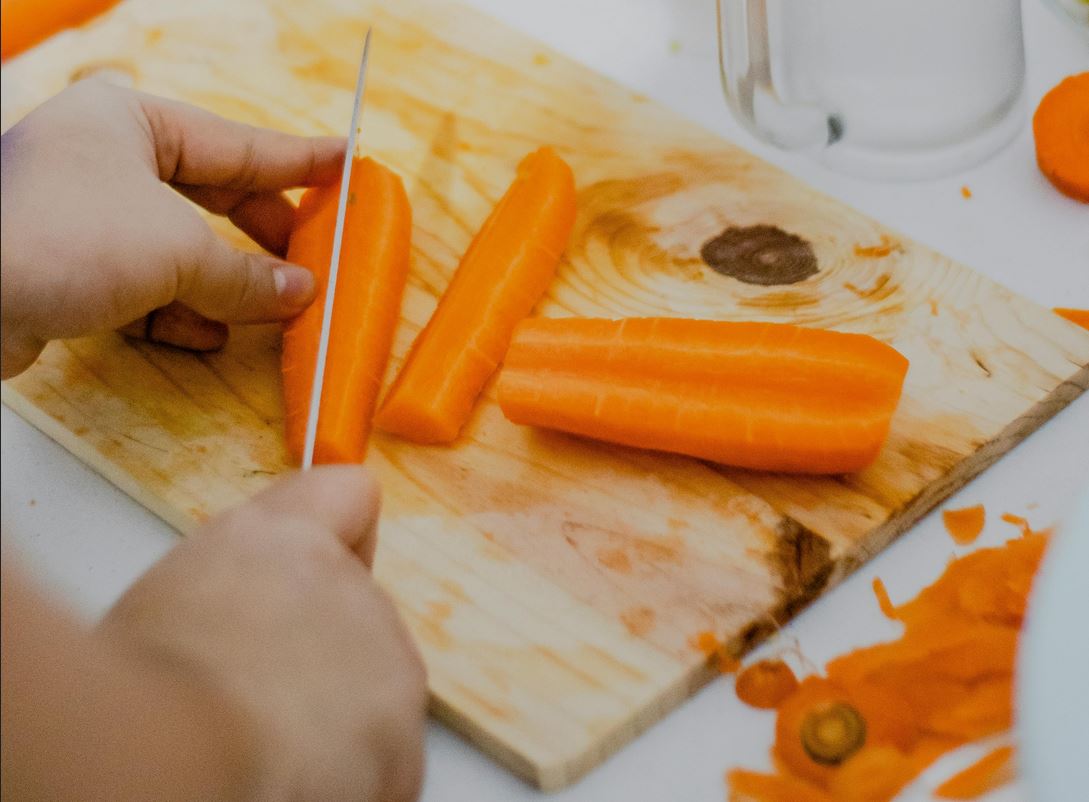
“Hello girls,” I call. A bead of blood blossoms on my skin. I run the tap, washing crimson down the sink. A murmur of response, footsteps retreating up the stairs. The light flickers in the kitchen. I think to follow them, eager to greet Livvie’s friends – but it’s better to meet teenagers armed with snacks. I cut the rest of the carrots carefully into sticks, out of time with that thomp thomp of my heart.
The Otago Daily Times’ headline glares at me from the counter, and I feel a twinge of guilt. The latest missing girl stares at me from the front page. Five, now. Most are from Columba Girls, Livvie’s school. The police don’t know what to do. After number three, the opinion columnists started flooding in: the town is haunted, they say. Books flying off shelves, doors slamming shut. Spectral figures looming near the girls’ houses. Livvie’s obsessed with the stories of ghosts. Their poor parents, I think, staring into the chilly brightness of the refrigerator. Hopefully the police will find them soon. Carrot sticks, dip, kiwifruit, apple wedges. Are they too old for fairy bread? I try to remember what I liked at her age.
I unwrap the loaf of bread and lift the margarine out of the fridge. Healthier than butter. My heart thrums a jagged rhythm I can’t interpret. Livvie’s first sleepover. I feel free and giddy – and weighted and anxious. All churning up inside. Gotta get this right. She’s an unpopular kid, I know. Always by herself, poking at dead bugs and pushing those big glasses up her nose. It’s my fault too, not trying hard enough to get her into dance or drama or gymnastics – something to get her talking to other girls. Other girls talking to her. Perhaps I should have given her a sibling. Why was she never interested in other girls, I wonder?
Fifteen. Soon she’d be a young woman. When she’d announced she wanted a sleepover I’d been caught off-guard. Agreed too quickly. Her face had soured and I couldn’t stop the guilt. You don’t think I can have friends, she’d said, flat affect. A statement. How does one refute a statement? Instead, I’d asked her more questions: what snacks did she want, what time would they be coming over, did she want me to pick up some movies from the video store? None, 5pm, no, the answers had come. They’d go to see a film at Rialto first, she said, pick up food on the way. Don’t disturb us, Mum.
Perhaps I’m wrong to let her have a sleepover; collecting a lot of girls in one place might be akin to tempting fate, I think, sprinkling the hundreds and thousands across the sliced bread. But Livvie has friends! She’s been so interested in witchcraft books lately, I wonder too late whether these girls are even friendship material. Should I have rung their parents, reassured them that Livvie might be odd, but she’s also sweet? Could’ve sought the same reassurance in return. I eye the food, nervous about meeting her friends. Is she at that age where parents are embarrassing?
I pause, listening to the reassuring chatter from upstairs. Livvie’s voice, still high-pitched and girlish, rises and falls with the fervour of a story. I’m surprised to find tears pricking at the corners of my eyes, my heart swelling with emotion. A twinge of guilt at feeling joy for my child when so many parents are worried about theirs. Collecting the plates of snacks and a bag of chips, I trod carefully up the stairs, savouring Livvie’s muffled voice through the walls. The temperature drops suddenly, and I shiver, anxious not to spill the food. It must be quite a story, there’s not a single peep from any of the other girls. I open the door.
My Livvie’s back is to me, her hands raised in oration. Around her are five whispery, ethereal forms. Candles drip wax onto the floor. I drop the tray, fairy bread and carrot sticks skittering away. Livvie turns.
“Mum,” she starts, the I-can-explain dying on her lips. My heart resumes beating; each beat pulsating thickly in my veins. I’m freezing. A pentagram charcoaled on the carpet, a ghost at each point, risen from thick locks of their hair.
“Did you do this?” my voice trembles: from fear or anger I do not know.
Girls. Their faces all paint the same picture, eyes widened into orbs, lips pressed shut, terror exposed. Apple wedges strewn across the floor. Five other girls.
“You wanted me to have friends, Mum,” – accusatory, whining. I stare at her.
Spectral; Livvie’s open curtains and lime walls visible through their too-skinny bodies. The full moon highlights the scene with grotesque silver. I recognise the ghosts from their headlines.
“I never… They didn’t like me. They didn’t… I… This was the only way… You don’t understand…”
My mouth opens and closes, useless. What can I possibly say? She did this to them, I realise, the shock striking like lightning. My hands shake. Bile rises in my throat. Livvie sighs.
“They never wanted to play,” she says, petulant, truth spilling like blood from a wound. “Everything they had to say was boring and I wanted friends that would do what I wanted to do and listen to what I wanted to say and play what I wanted to play.”
The ghosts look at her, their eyes pleading. Kiwifruit crushed into the carpet.
“But… but isn’t this what you wanted, Mum?” she smiles, fragile. My daughter. My Livvie. My eyes find the girls’ faces again, blood thick in my chest.
The ghosts’ lips aren’t pressed shut, they’re sewn.
Writers often let luck play a hand to move their story forward. A flat tire strands the hero in the wrong town. A missed phone call leads to a disastrous misunderstanding. A dropped key exposes a secret. Bad luck is one of the handiest storytelling tools we have as it can instantly create conflict.
But there’s an important rule experienced storytellers follow:
Luck can get your character into trouble. It should never get them out of trouble.
Why Bad Luck Works
Bad luck is a powerful tool for fiction because it creates problems.
Stories thrive on obstacles and conflict that drive rising tension. Often times back luck comes when we think everything is going to turn out fine. This creates what some call the “all is lost” moment, which is a situation that seems impossible for a character to get out of.
Bad luck makes the situation worse, which is great for storytelling.
Why good Luck is cheating
Now imagine the opposite. Your hero is cornered by the bad guys and escape seems impossible. Then suddenly:
An police officer randomly comes by to help.
The power goes out at the exact moment our hero needs it.
One of the bad guys suddenly turns on the main villain, shooting him dead.
Sure, these things could happen. But if you work the protagonist out of a scrape this way, readers will feel cheated because the protagonist didn’t earn the victory.
As readers, we want to see the character struggle, then work their way out of a problem. If random good fortune solves the problem for them then the story loses its emotional payoff.
The Satisfaction of an Earned Solution
Satisfying endings happen when the protagonist escapes trouble because of something they did.
A good rule of thumb is to let bad luck create problems, but make your hero solve them.
Storytelling is a promise between writer and reader. Don’t let the improper use of luck take the reader out of the story just when it is getting interesting.
Today’s story comes to us from Martin Lochman of Malta.
Martin’s story was previously [Mistakenly] rejected by 5 venues: Interzone, Not One of Us, Clarkesworld, Cryptic Frog Quarterly, and Pulp Asylum.
Bio:I am an emerging Czech science fiction author, currently living and working as a University librarian in Malta. My flash fiction and short stories appeared (or are forthcoming) in a variety of venues, including New Myths, Kzine, Theme of Absence, XB-1 (Czech SFFH magazine), and others. My debut space opera “All Quiet in the Milky Way: Ray M. Holler’s Adventures vol. 1” was published in 2023. You can find me at: https://martinlochmanauthor.wordpress.com/, Facebook: https://www.facebook.com/people/Martin-Lochman-SF-Author/61552596028127/, or Twitter: @MartinLochman.
When I asked Martin what he loves about this story, this was his response:
First and foremost, this is one of those stories that I improvised from the beginning to the end (unlike most of my work, which is usually meticulously outlined and planned out before I even write the first word). What actually inspired me to write it was a dream I had one night – my memories of it were (naturally) quite fuzzy the next morning, but I distinctly remembered stands, vendors, and a pond with a giant crocodile in it. My overactive imagination filled in the rest and The Market was born. Another thing I love about the story is the fact that, despite being self-contained, it provides only a quick peek into the world within – which means I can explore it in subsequent writings.
The Market, by Martin Lochman
The sun had barely peeked out from behind the horizon, but the market was already filled with people. Locals and tourists alike moved from vendor to vendor, examining merchandise, negotiating prices, or committing to a purchase, all the while doing their best to stay out of each other’s way.
David stood at the edge of a stall on the outskirts of the market, frowning at a crate writhing with pitch-black insects the likes of which he had never seen. Every so often, their numerous limbs or antennae poked at the one-way force field at the top of the container, producing a semi-transparent, yellowish ripple.
They were about fifteen centimeters long and best resembled an oversized flying ant. The problem was that they possessed five pairs of legs, a twin elongated stinger, and what could be best described as half-formed claws on the upper thorax, just below the head. In a nutshell, they looked like something straight out of a B-horror movie concept art.
“Titanomyrma gigantea,” the vendor answered from behind a small counter before David could ask, enunciating slowly as if talking to a child. He was a thin, lanky man with a thick mustache and almost unnaturally blue eyes.
“They are the largest species of ants to have ever existed on Earth. If you’re interested, they are ten credits a piece, but I’ll give you a ten percent discount if you buy ten or more.”
“No, they are not.”
The vendor narrowed his eyes.
“Pardon me?”
Someone bumped into David from behind, causing him to lose his balance. Instinctively, he stretched his arms out in front of him… and nearly ended up burying them in the pool of the mysterious insects. Fortunately, he managed to land his hands on the opposite edges of the crate at the last possible moment.
Presumably, the same someone mumbled a half-hearted “Sorry!”, but by the time David steadied himself, they had already disappeared in the crowd.
Relief turned to irritation as he looked back at the vendor and saw the corners of his mouth curved up in amusement.
“What I mean is that these are not Titanomyrma gigantea,” David said coldly.
The man’s gaze hardened.
“I think I would know what I am selling. I collected them myself.”
David folded his arms across his chest.
“The real Titanomyrma was at best half the size. Didn’t have that many legs or a dual stinger. And don’t even get me started on whatever it is growing right under their heads.”
A hint of alarm flashed in the corners of the vendor’s eyes, but his face remained thoroughly impassive.
“You some kind of paleontologist?” he hissed, then, not waiting for David’s reaction, added, “Look, it’s not like we have discovered every single animal or plant in history. Even if we can literally visit it. Not my fault you don’t recognize this one.”
David shook his head.
“If you don’t like what you see, you can just move on. Plenty of other stands on the market,” the vendor insisted. A vein appeared in the middle of his forehead, indicating that his patience was wearing thin.
His irate demeanor didn’t escape the attention of several visitors who stopped to lurk behind David.
“I think you mean a paleo-entomologist, but no, you’re not that lucky,” David said, staring the vendor down.
“Lucky? Who the hell do you—” the man stopped abruptly, realization overtaking his features. “Oh no. No? No!”
“Yes,” David smiled, savoring the swift change in his counterpart’s attitude.
“This is not what it looks like,” the vendor offered weakly, raising his hands, palms toward David.
“It’s not?”
Putting on an exaggerated expression of surprise, David gestured toward the crate: “You mean these are not some genetically engineered abominations you are selling as genuine prehistoric specimens, breaking six different federal laws in the process? Is that what you are telling me?”
There was a gasp, an expletive muttered under the breath, a triumphant aha!—but these were just the reactions from the slowly growing gathering of lurkers around the stand. The vendor himself stayed silent, steadily turning pale.
“Keeping quiet won’t do you any good now,” David pressed on, a subtle warning underscoring his words.
For a long moment, the vendor just glared at him, evidently considering his options or questioning his life choices. Or both.
“Okay,” he said finally, looking away. “You are right. These are not the Titanomyrma. But I swear to God I didn’t make them. And—” he beckoned David closer.
David reluctantly leaned forward, careful to stay well clear of the crate.
“—they are not the only fakes here,” the vendor finished in a low voice.
David frowned. The guy was obviously grasping at straws, but that didn’t necessarily mean he was lying. And if he weren’t, then, well, David might end up spending more time at the market than he had originally planned.
He took a deep breath and straightened. Turning around, he addressed the onlookers: “Move along, people. Nothing to see here.”
The less curious dispersed almost immediately; the rest needed an additional encouragement. Begrudgingly, David withdrew the badge from his pocket and waved it around, causing two or three people — who looked so similar to one another they had to be related — to openly express their displeasure with authorities. In the end, however, it worked, and the unwanted audience dispersed.
As soon as the flow of the river of bodies past the stand resumed, David walked around it and joined the vendor in the back.
“Well, I am all ears.”
“Na-ah,” the man said and pressed his lips together. “I want to make a deal.”
“A deal?” David repeated, incredulous.
“Yeah. I give you the supplier and point you in the direction of their clients, and, in exchange, you let me off with a warning.”
The vendor jutted his chin out in defiance, though his eyes betrayed uncertainty.
“Do you really think you are in a position to make demands?” David said sharply. “I can just go and find the fakes myself, just like I found yours.”
“You can. And I am sure you’ll have no problems spotting the easy ones. But—” the vendor smirked. “—you should know that the merchandise I got is—how do I put this—on the lower end of the price range. The high-end stuff? You won’t be able to tell the critter isn’t real unless you run a full damn DNA analysis.”
He paused, shrugging. The gesture almost looked nonchalant.
“Besides, you won’t know who’s manufacturing them in the first place.”
David gritted his teeth.
“Tell you what,” the vendor continued, capitalizing on David’s hesitation. “I’ll give you the first one for free. See that Airstream over there?”
He waved his arm in the direction of a bullet-shaped trailer parked about fifty meters away. A long table was set up in front of the vehicle’s open door, and on it, opaque cubical containers about the size of shoe boxes were stacked one next to each other. A large, bearded man stood behind the table, gesticulating frantically at a group of bystanders.
“The guy will tell you he’s selling Deinosuchus eggs, but in reality, he just modified a common alligator to grow three times its normal size and sprinkled in some minor cosmetic details to make it look distinctly different.”
David closed his eyes for a moment and took a deep breath. He exhaled slowly through his nose and reopened his eyes to the vendor’s hopeful face.
“How much did you make on these?” David asked slowly. “In total?”
“About four hundred credits,” the man replied, hesitantly.
Raising an eyebrow, David tilted his head to the side.
“Maybe five?” the vendor offered, before sighing. “Fine, it’s seven-fifty. Not a fraction over seven-sixty, I promise.”
“And you haven’t downloaded any to your personal account?”
David indicated the terminal, which was secured to the counter with a smart lock to prevent theft.
“No, sir. It’s all there.”
David nodded, taking another deep breath.
“Okay, I’m keeping the credits you made on these, of course. And you need to give me the names of everyone you know who is selling the fake crap, plus the manufacturer, then I’ll forget you were ever here. ”
Relief swept across the man’s face.
“But if I ever see you at one of these, I’ll remember really quickly who you are and exactly how much your illicit sales garnered.”
The vendor’s eyes flicked to the terminal. For a moment, it looked like there was a question at the tip of his tongue, but ultimately, he likely thought better of voicing it.
“Right. Got it.”
Less than ten minutes later, the stand stood empty. David had made the vendor take his abominable merchandise with him and safely dispose of it. Even with the crate’s force field, it’d be irresponsible to leave them. The the man hadn’t been very happy about it, but ultimately had no other choice but to accede to. David watched him drag the trolley with the crates stacked on it in the direction of the nearest teletransport station, and once his tall frame disappeared from view, he leaned against the counter, letting out a small laugh.
Seven hundred and fifty credits for what had it been — ten, fifteen minutes of work? And they said his doctorate in paleontology was as good as one in gender studies in the era of time zoos, prehistoric safaris, and public markets where you could literally buy yourself a pet trilobite.
David patted his jacket pocket, feeling the hard contours of the appropriated terminal inside, then considered the file on his wrist computer, hastily put together and transferred by the vendor. David was sure the incriminating information on it would be of great interest to the real inspectors, so the right thing to do was to make sure they received it. He could slip them an anonymous message, nudge them in the right direction… of whoever it was who was manufacturing the fakes.
Today’s story comes to us from Glen Engel-Cox. Glen thinks more about authors and writing than anyone outside of the offices of The Paris Review, who has never published him. He emails a daily newsletter about literature as part of his Patreon account: join for free at patreon.com/gengelcox. His novel, Darwin’s Daughter, and a non-fiction compilation, First Impressions, can be found at A Major Annoying zero-paying online site, while his short fiction is available for free in The Daily Tomorrow, Phano,, LatineLit, Utopia, and elsewhere.
Glen’s story has been [Mistakenly] rejected by Clarkesworld, Asimov’s, Apex, Solarpunk, Utopia, and a few others.
When I asked Glen what he loves about this story, this was his answer:
What I love about this story is how it’s a kind of a throwback to the 50s SF of writers like Fredric Brown, where the aliens are cute and the stories are a bit cozy. So much SF now (well, and maybe always has been) is dystopian, dark views of horrible futures and I wanted to see if I could bring a little joy to the world.
The Mass Market and the Madness of Crowds, by Glen Engel-Cox
After being jostled for the third time by the crowd in the vendor’s booth, Jean lost her temper and swore, causing the entire room to chuckle at her loss of decorum. Even though she towered over most of the crowd by a meter–too much time spent in zero-G–most of the crowd pushing her weighed at least twenty kilos more than she did and some of them a lot more.
As an asteroid field miner, she had grown accustomed to isolation and the fact not many human women chose the profession, but it still galled her when she had to deal with the crowds that inhabited most spaceports. On board her ship, as small as it might be, everything had its place. She had difficulty dealing with movement that didn’t follow predictable paths, which meant anything with intelligence, or what passed for the same by her fellow miners. She couldn’t avoid the spaceports, either, because that’s where ore was sold and where she had to refuel. She needed some dense mass to power her entropic drive, and the cheapest way to buy some was in the open market. In too many ways, being a miner and having to buy mass was ironic. The ore in her hold, however, was unrefined, and she knew from the mass spectroscopy that it only had trace amounts of heavy metals.
This particular market was called the Masshole, situated in the center of an orbital Altarean habitrail. It dealt in things other than mass, but, really, when it came down to it, everything was mass, wasn’t it?
“Wait your turn,” said the vendor. That’s not why Jean had sworn, but it wouldn’t do any good to complain. She turned on her heels and left the booth, likely to more laughter. The market had plenty of vendors and she was damned if she was going to spend any more time in this one.
Jean really shouldn’t have gotten annoyed but she hadn’t had much luck in finding what she needed, not at a price she could afford. Realizing she needed to calm down, she sought out a lunch place with food she could eat. Given all the different alien communities on this habitrail, she found that almost as difficult but eventually she found a noodle shop off one of the main passages. The inside was crowded as well, but, unlike the last vendor, this line moved fast. She sat down at a table outside and proceeded to slurp up her meal.
Across the way, she watched an altercation break out between a very short, stocky alien who looked like an asteroid with spiderlimbs and a real bruiser of a human, one of those brawny miners who swaggered down the hallways without giving any room to others. Jean couldn’t tell if the human had stepped on a limb or pushed the alien out of the way, but given the way it gestured, she felt a fight was imminent. She glanced around, but those around her seemed to be ignoring the rapidly increasing tension. She swore under her breath, but got up and walked over and put herself between the two of them and yelled, using her height to get them to focus away from each other and up to where she glared at them.
“Stay out of this,” said the human. “This pebble needs to learn a lesson.”
“Crack you,” said the alien.
“Both of you should turn around and go your separate ways. We don’t need a interspecies war starting here.”
“Who made you the judge?”
“You did, right now. Now go.”
He glared at her, but he had shifted his focus away from the alien, which is what had to happen to get him to settle down. She held his eyes, then flicked her hand away. He grunted and turned, knocking into her with his shoulder as he moved down the hall, hands on his hips as he took even more space as he left, others in the hall giving way.
When he was outside of hearing range, she knelt down on one knee and asked the alien, “Are you hurt?”
“Hurt? What hurt?”
“Damaged? Injured?” She looked at him, trying to find what it used as sensory organs but only seeing crags and crevices.
It waved one limb, a thin, black multi-segmented chitinous thing. “Crush this.” She could see some segments that seemed flattened somewhat.
“Do you need medical assistance?”
It flexed the appendage. “Fix self.”
Well, that was good. The human must have stepped on it accidentally, not unsurprising in these crowded halls if you didn’t pay attention to those around you.
“Alright, then. You be careful. You have to watch after yourself around here, you know.”
Jean went back to my noodles, finding in her absence the proprietor had come out and topped the dish off so they were still hot. They nodded to her as she sat down. “That was a nice thing you did there.”
She shrugged, looking back over at the alien, who had now been joined by another of its kind and they waved their spindly arms about in agitation.
“So who are they?” Jean asked.
“Miturarnians. Came aboard about sixty, seventy cycles ago. Great maintenance workers. Not only are those appendages of theirs extremely flexible, they don’t seem to breath air so can go out into vacuum without bulky suits.” Given there had to be over a thousand-odd space-faring species inhabiting the nine galaxies, it was impossible to know them all in detail, and more seemed to pop up everyday. “Most all ETV work has been given over to them and it’s been a good deal, as far as I understand. Other hab authorities are desperate to get them to move and take work with them, but there’s only so many of them, it seems. Anyway, I better get back to cooking.”
Jean watched the two aliens while she finished her lunch. They had stopped gesticulating and now seemed to be frozen in place forcing the hallway traffic to divert around them.
#
She went back to seeking a mass dealer whose idea of profit was something less than a two-hundred percent markup. But they seemed to sense her desperation, even reveled in it, increasing their prices from stall to stall. She suspected they had a private network where they communicated, her mug shot stamped online with big letters RUBE.
After hours of this, she stopped at an outside bar and took inventory. She had a commitment for some platinum, but it would hardly be enough to power her beyond one trip and if something went wrong…well, she didn’t like to work with those margins.
She felt something tug on her trousers. She looked down and saw a mituarian retract a pincer.
“You mine?” it asked. She couldn’t tell where it made the sound from, but it had a grating quality to it like ore being ground.
“Yeah.”
“Have need. Take job?”
Jean looked around the bar, but no one was paying attention to them. She said, “I work for myself. Freelance, you know. Hit the asteroid belt, hope to hit a jackpot someday. I don’t work for anyone else.”
“Pay good. What want?”
Jean chuckled. “What I need is some really dense mass for my entropic drive so I can go further into the fields without constantly coming back here to refuel.”
“Have mass! Much mass!” It tapped itself with its appendage.
Jean shook her head. The little being didn’t understand. “Not mass like you or me, but dense stuff.”
“Big mass. I have.” It motioned for her to follow it. She told it to wait while she finished her drink. No need to waste decent alcohol in case this was some wild asteroid chase.
Following the mituarian, she watched as it moved down the hallway, its appendages basically rolling it along the hall. No wonder one of them had been stepped on earlier. The alien shifted to the right or left constantly rather than moving straight. It led her into the heart of the Hab, the center point where the centrifugal force didn’t act on you to provide gravity. She activated her mag boots, finding her own movements awkward while the alien’s locomotion now had a fluidity indicating how accustomed they were to weightlessness. Finally, it motioned for her to enter what she took to be its berth.
“Big mass?” Jean asked.
“Most big. And dense.”
Jean stepped inside. Inside the small room not much larger than the interior of her mining ship, the mituarnian made a ceremony of retrieving and unveiling a casket lined in exquisite fur with half-a-dozen orbs nestled inside, each the size of Jean’s hand and made of pure black. Jean’s eyes went wide. She couldn’t believe what she was seeing. Now she understood why it brought her here. The weight of those would tunnel a hole in the floor or walls in the market area with its normal gravity.
“Told you. Dense. Big mass.”
“SubQ?” Jean asked, hardly daring to speak the name. Hab maintenance work must pay well if this alien could afford to own SubQ.
“You know. I got. What worth?”
A fortune. One of those orbs would power her ship for a lifetime and beyond. Jean shook her head. “More than I got.”
“You need?”
“Badly.”
“You mine?”
“Yes, I’m a miner.” She thought they had established that already.
“I need. We go. I show. You mine. SubQ yours.”
Jean squinted at the mituarnian. She normally worked solo. Having someone on her ship made her nervous, especially a client telling her what to do. But for an orb of SubQ? She didn’t hesitate. “Deal.”
#
The coordinates it gave her took them to a double-star on the edge of the Altar system. Following the jump, which the mituarnian efficiently paid by providing her with a pebble of platinum, it directed her toward a planetoid, unusual for its multiple rings rather than a singular one on the elliptical.
The mituarnian then activated a homing beacon, directing her to a specific spot in one of the inner rings. “Here.” The one it chose did look different than the others, an oblong rock about half the size of her ship with spider veins visible on the surface. “Take care. It fast.”
Fast in space was a relative term, but Jean thought she understood its warning.
She matched the orbital speed of the asteroids circling the planet, each ring moving at a different velocity, so she had to deftly maneuver in and around the deadly rocks until finally getting to the specific one the mituarnian wanted mined.
“What are we mining for?”
“You see. It fast. You hit. It break. Then fast. Suck up. NO GRIND.” The last it said with great emphasis.
“Ok, ok.” She showed it the grind mechanism control. “With this off, it will just collect and won’t grind the ore.”
“Not ore,” it said. “Mass.”
Whatever, Jean thought. “Any particular spot to hit?” During the jump, the mituarnian had told her not to use her drill, but to use the particle hammer.
“Here. Or there. Your pick. But hard. Hard hard.”
She activated the gravity collector, directing the hammer to use maximum force while firing the ship’s plasma engines to counter the reaction from the force used. As soon as the impact occurred, the asteroid cracked, each spider vein suddenly red and then nonexistent, the rock splitting and resplitting into thousands of tinier asteroids, which were then sucked up into the hopper by the collector. She had seen nothing like it.
The mituarnian watched with delight. “All! All!” it exclaimed, the collector gathering up every bit of the asteroid in seconds.
“We see. Come come.” It led her to the hold, now sealed against space after the collector had finished. “Open open! We see!”
Jean popped open the hatch and looked inside. She had expected a collection of rocks. Instead, the hopper was filled with tiny miniature mituarnians screaching and clambering over each other. An asteroid hatchery. Newborns.
“Much mass! It good. SubQ yours.”
She felt light-headed watching the baby aliens. So many of them she couldn’t see the floor or the sides of the hopper. It was madness, but Jean didn’t care. If being midwife to mituarians enabled her to seal her future, she would learn to like some crowds.
This week we have a non-fiction guest post from Y. Len.
Sticking withe the theme of this Blog Y Len’s non-fiction post has been [mistakenly] rejected by CRAFT, Writers Digest and Authors Publish.
On the F***ing Garden Path in Fiction, by Y. Len
To a reader:
Note 1: The word in the title that caught your attention is “Forking” and NOT what you thought;
Note 2: Contrary to what you may be thinking now, this isn’t about Borges’s “The Garden of Forking Paths”;
Note 3: Read on if you consider yourself a contrarian. If garden variety sentences are your cup of tea—fork off onto your own path.
Garden path sentences are a tricky kind of phrase
They lead you to a dead end as you try to parse their ways
They start with words that seem to make a clear and simple sense
But then they twist and turn and leave you hanging in suspense
The rules of writing castigate garden path sentences—what better reason for taking a closer look and perhaps using them to break into the craft?
A garden path effect in writing is achieved by weaving a semantic ambiguity into a sentence. While being read, the sentence leads the reader toward a seemingly familiar meaning that is actually not the one intended. That’s where/how the “forking” happens. When read to the end, the sentence seems ungrammatical or makes no sense and requires rereading so that its true meaning may be fully understood after alternative parsing.
The horticultural label for this linguistic phenomenon hails from an old saying “to be led down (or up) the garden path”, meaning to be deceived, tricked, or seduced. In a century-old “A Dictionary of Modern English Usage” (1926), H.W. Fowler describes such sentences as unwittingly laying a “false scent”.
In late 1970s–1980s, Lyn Frazier and Janet Dean Fodor developed the “Garden Path Model” of sentence processing. It argued that readers use simplest-structure-first heuristics. When those heuristics fail, readers experience the garden path effect. Later research argued that multiple cues (syntax, semantics, context, frequency of usage) all interact.
The old man the boats. The old man… here is first taken as a noun and a verb is expected next. Correct parse:The old [people] man (verb) the boats.This popular example illustrates how word class ambiguity (noun vs. verb) tricks the reader.
The horse raced past the barn fell. The horse raced past the barn… here feels complete. Correct parse:The horse [that was] raced past the barn fell. This, one of the most cited examples in the literature, shows how readers “commit too early” to a sentence structure and must re-analyze.
Fat people eat accumulates. Similar to the above example, intentional missing relative pronoun (that) prompts misanalysis.
Hard to argue the “expert” opinion that garden paths have no place in academic, technical and business writing where clarity rules. In case of fiction in general and certain genres of fiction in particular, the answer may not be as straightforward.
The optimist in me believes that not all readers are content with garden variety sentences. Some may enjoy cracking open verbs and nouns to attribute agency where others wouldn’t expect it, and/or stringing together phrases that tell stories with their structure, as well as with their content. Yes, the complex prose demands a mental effort when constructing the images or navigating the linguistic possibilities that it presents. Yet the payoff of doing so is (i) the immediate satisfaction (“Aha! That writer ain’t no slouch, but I got it anyway!”) AND (ii) an expansion of the boundaries of language and the enrichment of what one can imagine on the page.
Remember your inexplicable affinity for that IKEA piece you put so much time and frustration into putting together after putting so much time and frustration into understanding the accompanying instructions given in tiny font in multiple languages with English seeming only slightly less bewildering than the others? Similar satisfaction may result from reading “some assembly required” prose.
Another off the cuff example would be Hitchcock’s films that make the audience jump to conclusions that are inevitably incorrect. Doesn’t a garden path sentence do the same on a micro level? By momentarily misleading the reader, it can create a sense of mystery and intrigue.
At their core, garden path sentences manipulate the reader’s expectations. They present a surface meaning that sooner or later collapses under grammatical or semantic pressure, demanding rereading and rethinking. This small act of disorientation can be scaled upward: in fiction, a writer might mirror a character’s confusion, instability, or unreliability through similar linguistic detours.
For instance, in a psychological thriller, sentences that shift direction can echo a protagonist’s fractured mental state, forcing the reader to share in their uncertainty.
In my adventure/murder mystery “The Bloodvein River Monster,” the adult character is recovering from mercury poisoning that affected his mental ability.
The five-year-old boy with the runny nose woke thirsty and lay in the dark, listening to silence. No flashing colors, no frightening voices in his head. A clean scent of resin and wood told him where he was and that he was no longer that boy.
He had no idea how long he’d slept, only a vague memory of stumbling through the forest. It was still night. Or already? His body felt weak, but there was no panic. Thoughts drifted, bumping softly one into the other, yet he could hold on to them long enough to finish each before the next arrived. He scooped handfuls of snow into his mouth, the chill numbing his tongue but easing his thirst, and drifted back into sleep.
Next time Ezra woke with the feeling the dream left.
The last sentence of the excerpt carries the drifting, dreamlike atmosphere established earlier even after the character wakes—the garden path phrasing itself is deliberately ambiguous (Ezra woke, feeling that the dream has left or he woke with some unspecified feeling left by the dream?) inviting the reader to share in Ezra’s uncertainty. The psycholinguistic effect of a single short sentence here is comparable to that of the entire first paragraph that achieves the similar result as it starts with the character as the five-year-old boy only to end by denying that very fact.
The garden path technique also offers rhythmical and aesthetic value. “Traditional” prose strives toward clarity, smoothing the reader’s ride over the (often intentionally) bumpy roads our characters take. By contrast, garden path structures may introduce hesitation and slower reading, break immersion and compel attention to the mechanics of language itself.
The last but not least, garden path sentences can serve as thematic devices. Stories about deception, shifting identities, or supernatural interference gain resonance when their very sentences enact misdirection. The language performs the subject matter: just as a character may be fooled, so too is the reader. In this sense, garden paths may become not just ornamental puzzles but enactments of the story’s underlying concerns.
Of course, as with almost everything in life, restraint is essential. Overuse your rake in your writing and you’ll risk reader’s frustration, turning prose into a riddle rather than a narrative. But strategically placed—like a topspin serve à la Pete Sampras in your otherwise bland pickleball game—a garden path sentence or two of them can create surprise, deepen psychological realism, and remind readers that language itself is a valuable writer’s tool.
Have fun in the garden!
Garden path sentences are fun to read and write
They challenge your grammar and the depth of your insight
They show you how the English language can be full of tricks
And how a single word can change the meaning in a flick
You’ve written a story. You’ve poured your heart into it. You’ve rewritten sentences, perfected metaphors, and shaped characters you care deeply about. You’re sure it’s good, hell, maybe it’s even great. Yeah, the big names will want this one. It’s probably worthy of The Atlantic or the New Yorker. This could even be the one that finally nails the Pushcart Prize.
Then the wind goes out of your sails when the first person to read your masterpiece points out how you spelled the name of your main character differently in two places in the opening paragraph. How could you have missed that? You must have read through the story a hundred times with all the rewrites. It’s embarrassing and aggravating.
And it’s one of the most fundamental truths in writing: it’s incredibly hard for us to see the flaws in our own work. Here’s why:
We’re Too Close to the Story
Writers live inside the world they’ve created. We know every motivation, backstory, and all the subplots. The backstory that isn’t on the page lives in our heads “rent free” as the kids say. We mentally fill in all of the things we know about the story as we read through it. Your brain fills in the gaps, smoothing over inconsistencies and connecting dots that were never actually drawn and not clear to other readers.
We’re Emotionally Invested
We writers form emotional bonds with our characters and often fall in love with select scenes and phrases. This emotional attachment can make us blind to, or cause us to push back against, needed changes. Cutting scenes and characters, also known as “Killing our darlings” as the saying goes, feels like a loss to us even though it usually makes a story stronger.
Sometimes we don’t really know the Story We’re Telling
We often begin writing with an idea but no clear theme. Or we have a theme but it gets lost in the logistics of plot development. The result is a story that meanders or contradicts itself. I also tend to see a lot of what I call “lopsided stories” where way too many words are spent on things that do not advance the plot or develop the character.
Hard Work Doesn’t Make It Good
We sometimes confuse “I worked hard on this” with “This is the best it can be.” But hard work doesn’t guarantee a polished end result. Rewriting, re-envisioning, and sometimes throwing everything out and rethinking it from the ground up, often lead to better storytelling.
Our Brains Want to Be Done
Writing is hard. Getting through that first draft is a triumph. So when we type “The End,” part of our brain wants it to be done. The desire to move on and submit makes us less critical of our work. We stop interrogating where the story doesn’t work.
So What Can You Do?
Time: Step away from your draft. A few weeks or even months can give you enough distance to see it with fresh eyes. Sometimes when I go through my “false starts” that I haven’t touched in years, I am surprised at what I see. It often feels like someone else wrote the words I am seeing. (and I mean that in both in a good and bad way). This is the ideal kind of distance you want from your work, where you have forgotten about the story entirely and are coming at it completely fresh. Unfortunately that isn’t always practical.
Read your work out loud: A more immediate solution is reading your story out loud. In Steve Martin’s Masterclass he talked about how he reads his work to his cat. I will even record myself reading a story so I can play it back later and really listen. Hearing your story often reveals awkward pacing, unclear dialogue, or tonal shifts you might miss otherwise.
Re-outline: After the first draft, take the time to outline what you actually wrote. It often differs from your plan and can reveal plot holes. One trick I have learned, especially if if I have “pantsered” a story is to force chapter breaks and title those breaks in the story as though they were chapter headings. I do this even though I am mainly writing short stories, which don’t usually have chapter titles. It really helps me to see the plot progression and where I have sections that repeat information previously covered. It also really helps me to see where I can cut.
Get feedback from others: Other people have a fresh set of eyes and the advantage of knowing nothing about the story. No preconceived notions, no biases (other than these people are likely your friends so they might be softer on you than you need). Issues we tend to read past will stand out to them like a neon sign.
Recognizing that we have literary blind spots is the first step toward better writing. Every great story was once a messy draft, written by someone who couldn’t see the flaws, until they eventually found a way to work through them, often by giving a story time and/or getting feedback from others.
We often talk about the craft of writing as if the words on the page are the story. But that’s not quite true.
What you write isn’t the story, it’s the framework used to trigger an imaginative experience inside the reader’s mind. The real story happens inside the reader’s head.
Every reader brings their own experiences, biases, memories, and emotional context to your work. When two different people read the same story, they don’t actually experience the same story. One reader might see a character’s silence as deep introspection, another might read it as passive aggression. A setting described as “dusty and quiet” might evoke peaceful nostalgia for one reader and tension or dread for another.
It’s one of the challenges of storytelling. You have to structure what you write so that your readers fill in the blanks with their own intelligence and intuition in the way that provides the experience and emotion you intend.
This is where reading is very different from going to see a movie. When watching a movie, all of the images and sounds are pushed to us, predefined with little room for our own creative interpretation. Because of this, the story inside the head of every member of the audience will be very similar.
When reading, a story only happens when a reader engages with your words and transforms them into sights, sounds, feelings, and meaning.
I subscribe to the theory that most of what we are trying to do when we tell a story is get people to feel. Emotion is what makes people care about what happens to the characters in the story and that keeps the pages turning.
I also like to think of it in terms of writing to create an experience.
Be intentional, but not controlling. You can guide the experience, but you shouldn’t dictate every detail. The reader is your collaborator.
Embrace slight ambiguity. Sometimes, the most powerful moments are the ones left just a little open-ended, allowing the reader to land on their own truth. Be careful here, clarity is still king, don’t omit too much and leave the reader confused. Confusion makes the reader put down the story and walk away.
Revise with the reader’s interpretation in mind. Ask yourself: Will this paragraph spark the right images and emotions? Or am I over-explaining and closing down possibilities for the reader to work with my words to make the story their own?
A story only lives when someone interprets in within the context of themselves.
“Andy knew this was his last chance to make things right with Cindy.”
With just one sentence, we’re already leaning in. The stakes are clear; there’s a relationship on the line. We don’t know the details yet, but we already care.
This is the power of starting with stakes.
When readers pick up a story, they’re subconsciously asking, “Why should I care?”
That doesn’t mean you need a car chase on page one. It means the story must immediately communicate that something is at risk, and that it matters deeply to someone. Stakes create tension.
Early Conflict = Early Investment
Going back to our opening line:
“Andy knew this was his last chance to make things right with Cindy.”
From this, we immediately understand:
There’s a broken relationship.
There’s urgency: a last chance.
There’s emotional weight: he wants to “make things right.”
We don’t know what Andy did and we don’t know if Cindy will forgive him, but we already want to see what happens.
The Mistake to Avoid
Too many stories start with background instead of conflict. A little background is fine. It helps to orient us as to what is going on and color in tone and setting. But often times I see stories where the author goes on for pages describing the setting or a scene before for we get to anything that matters to the character. The quicker you can get to the core conflict or stakes, the better.
Try This Exercise
Take the first paragraph of any story you are currently working on. Ask yourself:
What’s at risk here?
Does the character know it?
Will the reader care?
If the answer to any of those is “not yet,” consider revising to make sure these questions are answered.
Stakes are a promise to the reader
Keep in mind that starting with stakes is a promise to the reader. When we mention Andy’s situation in the opening line in the way we did, we are committing to our reader that by the end of the story there will be answers as to how Andy got into that situation and what the outcome will be for him.
Stakes make us care what happens and that keeps us reading.
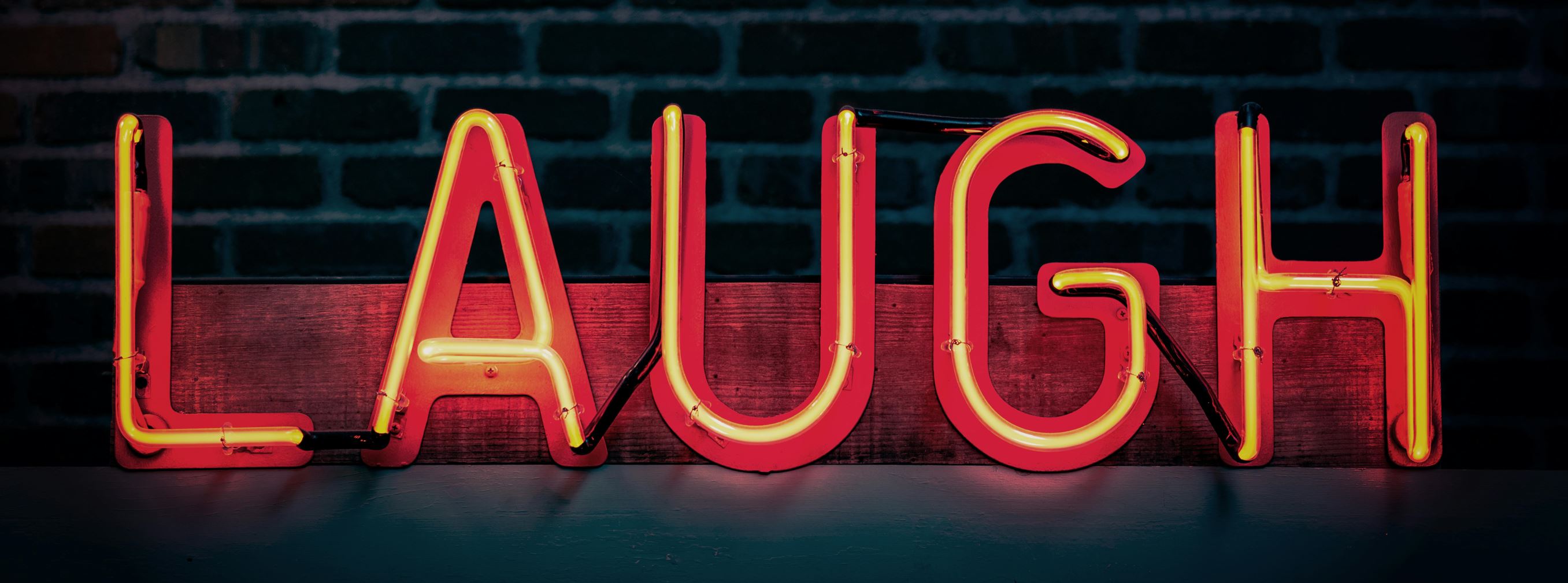
Let’s face it the world’s a little rough around the edges right now. We’re all just trying to hang on with a sense of dignity and maybe some semblance of joy. What better way to bring that spark back than through laughter?
Humor in writing isn’t just about cracking jokes or tossing in a punchline here and there. It’s also about making people feel a little more hopeful. When you get someone to laugh—really laugh—you’re giving them a moment of relief, and that’s no small thing. In a world full of stress, division, and doomscrolling, writing that makes people laugh is practically a public service.
But Humor Writing is Hard
Yes it is. Humor writing is an art form that often doesn’t get the respect it deserves. It’s not easy to be genuinely funny on the page. Timing, voice, rhythm all has to be just right. It took me several tries and multiple submissions before I landed a humorous list article in Chortle
It’s true that there aren’t a lot of markets explicitly dedicated to humor fiction but that doesn’t mean the world isn’t hungry for it. We live in a content-rich era where new voices and niches emerge every day. If you’re funny and you can write? That’s power. That’s potential. That’s brand-building magic.
Look at the Legends
Let’s talk about The Simpsons for a second. When that dysfunctional, animated yellow family debuted in 1987, there really wasn’t a flourishing market for adult animated comedy. But now we have Family Guy, South Park, Archer, Rick and Morty, BoJack Horseman, and even Futurama (RIP) They all owe a nod to that one oddball show that made us laugh and essentially started a whole market segment. That one funny voice became a cultural juggernaut and opened the doors for countless others. Humor doesn’t just entertain it expands what’s possible.
So What’s the Takeaway?
We need more funny people in the world right now. If the geopolitical landscape is telling us anything at the moment, it’s telling us that we need clever observations to remind us not to take it all too seriously. We need stories that make us laugh and forget our troubles for a few minutes.
So go forth and write something hilarious. Be brave enough to be funny. Your sense of humor might just be someone’s favorite moment of the day.
Side note: I am going to be a first reader for Alex Shvartsman’s UFO anthology again. He is up to number 10. I believe submissions will be opening up around April 2026, so start working on those humorous Sci-Fi stories!