Trying not to be intimidated

I am currently crafting a story with the working title “Economic Robin Hood.”  It’s about a guy who is on the self appointed mission of finding people that are abusing government handouts and badgering them, (Read: Beating them up) until they get their life in order.

A big part of the story is showing the fallacy of the main character’s assumptions.  Which I am sure I do to try to not come off as a middle-class white male who writes stories bashing people on welfare.

It’s the kind of thing that would probably make for a great screenplay/movie due to the potential for some action scenes.  But for all the thrill of knocking out another story, I am not completely happy, as the content is really off of my main venue of Sci-fi. It’s more drama with an element of crime.

So I am kind of kicking myself a bit for not sticking with my chosen genera, when I get to read through the start of a story that my friend Matt is working on.

That Bastard.

It’s an awesome, insanely creative, Sci-Fi tale with some very cool characters. I would love to tell you more about it, but I am not sure how much he would want revealed. You just need to know it’s the kind of thing I am really, really, jealous of.  Like “Why didn’t I write this?” and “OMG he is going to get a Sci-Fi story published before I do.” kind of jealous.

But then I realize Matt doesn’t have the responsibilities in his life that I do. Matt’s only got the wife and two kids and farm to worry about. I have priorities, like spending hours on end playing Call of Duty Modern Warfare II with Jeff.

And it’s hard not to play when Jeff when he is getting so dammed good at killing the Juggernaut.

But Jeff’s not the type to get too excited about how I am doing on my writing and I really can’t blame him. When it comes to video games, I don’t get too excited about writing either.  I mean, I wouldn’t mind talking to him about it, but I don’t ever see myself saying “Hey, let’s just put down the controllers and see if you find my characters descriptive enough.”

He’s a sport and would totally do it, but I know it’s not his thing so I don’t put him through it.

I’m instead left with a twisting feeling in my gut that Matt is a better writer than I am, and maybe I am just not cut out to write Science fiction.  Or write at all.

Later on I am also put off a bit when I see a guy being interviewed on a documentary about the Universe and they credit him with something like thirty published Science Fiction novels.  I have never heard of this author, yet am very impressed with the number. Thirty novels is a ton. I haven’t even written thirty stories, let alone get any of them published.  And according to Matt’s wife, Penelope, the only real reason to be writing stories seriously is as a gateway to getting a novel published.

The concept of a novel just seems daunting to me. You can see how my Blog posts meander; imagine me trying to keep on point for two hundred pages. It’d be like trying to climb a mountain blindfolded while wearing roller blades; maybe not impossible but it’s gonna be one hell of a long trip.

I gather up my insecurities, stuff them away into the “ignore for now” storage unit in the back of my mind, and decide it’s better to not let the accomplishments of others keep me from taking my literary baby steps, no matter how absurdly gigantic those accomplishments might be or how close of a friend they are.

Because the worst thing I could do is to stop trying.

James
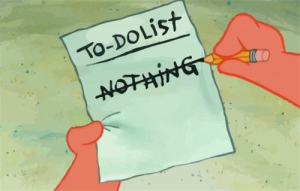
TO DO I Didn’t.

I take a nap on Saturday at about 2:00 in the afternoon. Although, I guess you can’t really call it a nap when it lasts six hours.

I end up staying up all night and feeling pretty worthless, partially because I only did two out of twelve things on my weekend “TO DO” list (dishes and laundry), but particularly because I hadn’t written any fiction in a while.

I make a pot of coffee so I don’t go back to sleep, as sleeping would throw off my cycle off so bad that I might not make it into work on Monday.  It’s happened before.

I am about 2/3 of the way through the coffee when something, maybe the hallucinogenic mix of caffeine and over-tiredness, gives me an idea for a story. By 9:00 AM Saturday I’ve banged out a 2300 word short, which makes me feel a lot better about myself. I feel so good in fact that I continue to ignore my TO DO list, and get in two games of Starcraft II before I finally fall asleep about noon.

This time I keep the nap to a more respectable five hours and feel rested enough to mow my lawn (TO DO #3), but not quite good enough to weed trim (TO DO #4).

I read a bit of Terra Lemay’s live journal. She talks about how she keeps a log of the number of words she writes, and even has a cool little graph.  I find that to be a stellar idea and add a worksheet called “Word count” to the Excel writing file I have set up to track my submissions.

I enter in my one word count data point and wonder if this is going to be the type of thing I stick with, or if it will end up like the treadmill, a dusty embarrassing reminder of how, if I were a racehorse, I would be summed up as “good out of the gate but dies at the first turn”.

I feel pretty tired Sunday at midnight, but do manage to get in two more hours of StarcraftII before finally hitting the sack.

James

Encouragement enough to send one off

I read a story in Apex magazine by Terra Le May. At the end of the story is a link to her site/blog, so I decide to check it out.

I am encouraged by her as it seems she has just recently started getting her stories sold.  She also seems to be an interesting person as her full time job is a tattoo artist, and the name of her blog, Rarely Tame, is an anagram for “Terra Le May”.

I write her an e-mail telling her that I liked her story and ask her if there is a stack of rejection slips in her life or if the editors saw genius and picked her up right away. I resist the urge to include a link to this blog, as I don’t want her to think I am just trying to drum up traffic.

Of course I see nothing back from her all day.

I think maybe she is already too popular and receives a ton of e-mail, but then realise that, more than likely, I am just being impatient.

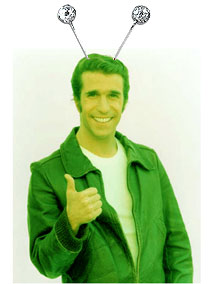
Inspired by how easily the remote possibility of being published seemed to happen for Terra, I repackage my Little Green Fonzie story, changing the title to “The Right Answer“.  I make the name change because I want the whole Fonzie aspect to be more of a surprise within the story than something expected right from the title.

As ANALOG had recently declined the story, my intention is to send it off to Fantasy and Science Fiction Magazine.

I get halfway through addressing the 9″X12″ envelope when I see that, under their guidelines page, F&SF  has a bullet point stating, “We prefer not to see more than one submission from a writer at a time.”

Shit.

I already have a story called “The Closet” sitting with them that I just sent out on 8/5/10, only nine days ago.

Screw it.

Being human and impatient, I shove the story into the envelope and send it out anyway.  What’s the worst that could happen? They reject both stories?  There’s a dammed good chance of that anyway.

Magazines have an insane amount of rules that they ask you to submit by. I can understand the need for rules, as I am sure the editors are inundated by submissions from wide-eyed dreamers such as your’s truly.  I am also certain that they are constantly beating down the ever growing slush pile, but I have to think that if it’s a good story, a truly worthy tale,  it could show up on their desk, typed on hot pink paper and stuffed into an old tennis shoe and they would accept it.

So does it really matter how many stories I send in at one time?

Or where the commas go?

Or if I spell everything exactly right?

James

UPDATE:

I was just being nervous and paranoid. Terra e-mailed me back the next day.  It was easy to tell from the e-mail that she is a super nice person.

She did tell me that she has about 50 rejection slips sitting at home, and how that wasn’t as many as a lot of the writers she knows.

I also found out that she has gotten a Locus review of her story, and that she is a member of a couple writer’s organizations.

A Little Competition

I have started wondering how I stack up, how I compare to the rest of world writing skills wise, that is.

Comparing is a tough thing to do. You know right off that you likely aren’t the best. If you were you probably wouldn’t feel the need to compare in the first place. In fact, I figure that’s likely true of the top ten percent of anything.

So that puts me under the ninetieth percentile right away.

But then, I have never been published, that is the whole point of this blog, chronicle my struggle to get published.  And there are A LOT of books out there, so if I face the fact anyone who is currently published automatically has me beat, well, that puts me down the ranks quite a bit further.

And I also know that my grammar and punctuation skills leave a lot to be desired. That’s gotta drop me below all of those unpublished English teachers.

But before I hit rock bottom, I realized that there are a lot of people in the world who don’t write fiction at all, and there are illiterate people, and still others who didn’t even graduate High School. I doubt that they’re writing the great American novel.

I would think that makes my fiction better than at least half the people in the world; the ones who haven’t written, the ones who can’t write, and those others who sign their name with an “X”.

Then I remember the idea that my friend Matt put to me one day:

“I think it’s a bad idea for parents to tell their kids that they are better than other kids.”

“What do you mean?”

“Well, if you start them thinking in terms of a hierarchy, then the kids will have to know, that while they are better than some of the kids, there will be other kids that are better than they are.”

And I always thought a little competition was a good thing.

When Matt and I had a contest to see who could write the most, as in total word quantity in a week,  I won with 14,580 words.  I don’t have a record of what final word count he had, but both accounts were way more words than either of us had previously put to paper in a week.

Yet it still didn’t seem like a lot of words.

I mean, I am sure I could do better if I pushed.  There were two days in there where I spent the evening with friends, and lots of time when I was just too lazy to write.  But it was a weird feeling, that nagging in the back of my mind that while I was on the couch watching TV, or out having a drink, Matt was likely gaining ground on me, pecking away at his laptop.

But before you think that I bested Matt, you need to know that he has ALREADY been published.  Yeah, the check-in-hand kind of published I am shooting for.  And that, my friends, is the real contest.

But then like a lot of things, it’s not really against the other kids, is it?  It’s really me against myself.

And those dammed gate-keeper editors…

James

Fate Forward

Fate Forward is a story I wrote about a private investigator type guy searching for a mysterious device. It’s later discovered that the device can manipulate luck. The story goes on to reveal how this man beats the odds to retrieve the device and his internal battle as to whether he should return it or use it improve his own station in life.

I submitted this 6700 word story to Asimov’s Science Fiction Exactly one month ago, 7/11/10, via their online form.  Here is the e-mail rejection I received today:

Thank you very much for letting us see "Fate Forward."  We appreciate your taking the time to send it in for our consideration.  Although it does not suit the needs of the magazine at this time, we wish you luck with placing it elsewhere.

Please excuse this form letter.  The volume of work has unfortunately made it impossible for us to respond to each submission individually, much as web

Sincerely,

Sheila Williams, Editor
Asimovb

Sheila, what kind of ending is “much as web”?  You must REALLY have a volume of work to end the e-mail so abruptly.

Did you find out the bacon was burning while typing and just hit the “send” button anyway?

The sad part is that the letter refers to itself as a “form” letter, so this is apparently what everybody who failed to place a story is getting.

I am not sure what “asimovb” means at the closing either. Perhaps some sort of secret code?  Maybe I made it to grade “b” in the rejection pile or something.

The part I did think was cute was how the letter wished me “luck” in placing it elsewhere. I am sure it’s just a coincidence, but the story I sent in revolved entirely around the concept of luck.

James

Fonzie gets rejected

On 6/29/10 I sent off a 2700 word Sci-Fi story called “Little green Fonzie” to ANALOG magazine.

I had a lot of hope for this story as it was about and Alien dressed as The Fonz, that comes down to earth to bestow knowledge onto the human race, provided the person he picks can explain why we are worthy.

The story contained a good amount of humor, which I thought would buy me some browine points with the Editor, but unfortunately, this Saturday (8/7/10) I received back my SASE with the default rejection slip inside.

And no personal note of any kind.

It makes me wonder if a story is accepted and they cut you a check, do they would still use the SASE I provided?

I am guessing that payment probably happens via accounting and they use their own envelopes for that.

I really want to see one of those envelopes in my mail box.

Genesis

I have been writing for about four months now (since about May of 2010).

In that time I have submitted nine short stories to various magazines with each story averaging about 4000 words. Of those, I have received back three rejections.

The highlight was when I received a rejection slip from ANALOG magazine. At the bottom of the page there was a handwritten note signed with the initials “S.S.”

Being an avid reader of ANALOG, I of course knew that the note was from Stanley Schmidt, editor of the magazine since 1978.  The head cheese himself.   To fill you in, this is a man who had taken the torch from the great Ben Bova.  And this is the magazine that published such literary giants as Arthur C. Clark, Issac Asimov, Robert Heinlein, Frank Herbert, Ray Bradbury and one of my favorite authors Orson Scott Card.

I shuddered with excitement. Sure it was a rejection, but Stanley Schmidt had taken the time to write a note to ME about MY story.  I was certain it would be something to the tune of “I really liked this, trying changing “X” and send it to me again.” or “Develop the main character a bit more and I think you really have something here.”

Instead it read:

“Always number your pages! S.S.”

It said exactly that and only that.  And yes, even with that angry exclamation mark on the end.

If I had made an impression on the Editor, it was to show him what novice I am by not numbering my pages.

And that little exclamation mark told me it had also pissed him off.

I could only imagine how many manuscripts this man must read through each month, religiously searching for that needle in the haystack, that one gem of a story that speaks to him like God to Moses, and how my story was just another turd for him to trip over on his quest for yet another Holy Grail of Science Fiction.

Well Stanley, I am sorry about that.

But I do learn from my mistakes. I read manuscript preparation by Vonda McIntyre and now submit using her advice, unless of course, the magazine specifies otherwise.

So while my future will undoubtedly hold a few more rejection slips, I am hoping to avoid the dreaded exclamation mark.

James