Here are ten common tropes that have been used so often they’re usually better avoided. Also, I have to admit that most of these are seen more in movies, but I still consider that storytelling so, let’s just go with that and let me get away with it this one time. Thank you.
1. Crawling Through Air Vents
This one shows up constantly in action movies and thrillers. A character escapes or infiltrates a building by climbing into the ventilation system and crawling through ducts like they’re made for human travel.
In reality, most air ducts are thin sheet metal that won’t support a person’s weight. They’re also cramped, and if they are heating ducts would get pretty hot and probably cause you to pass out.
Once you think about how unrealistic this trope is, it becomes hard not to laugh when you see it.
2. The “Knock Someone Out for a Few Minutes” Trick
This is where a character knocks the guard unconscious with a punch to the head. The victim wakes up later with nothing worse than disorientation or a milk headache.
In reality, a loss of consciousness lasting more than a few seconds is a serious brain injury. If your character regularly knocks people out this way, they’re probably leaving a trail of permanent neurological damage behind them. I would much rather see some chloroform on a rag get held in front of the guards mouth and nose, or a taser disable them for a moment.
3. The Conveniently Overheard Conversation
Your protagonist just happens to walk past a door just as the villain is revealing his entire plan.
No effort required. No investigation. Just perfect timing. (see also my post on what role luck should play in fiction)
This trope removes agency from the main character and replaces it with coincidence. Information in a story like this should come from effort, not luck.
4. The Villain Explains the Entire Plan
This works for me in the Bond movies because it sort of “is what it is” in those. I feel like those movies define the whole trope and I give them a pass for it. But even then it’s still clear that this kind of exposition exists purely as an information dump. If these were real villains, monologuing their evil plans would be very careless. There is really no advantage to doing that, unless you want to compromise the 4th wall and let the audience (or in our case reader) in on something.
5. The Countdown Clock
A bomb is set to explode in exactly ten minutes. We can tell this from the red LED display conveniently visible to the hero. Being a very technical person, this one has driven me crazy for years. Bomb timers based on old-style alarm clocks where the alarm goes off and there is a physical contact closure built into the bell mechanism, yeah, that makes practical sense. Spending extra money and design time to put a digital LED read-out into something that will blow up seems like a lot of unnecessary cost and work. It’s good to have a metaphorical ticking clock that provides pressure for the protagonist but it’s doesn’t have to be a real one and it rarely makes practical sense to have a LED display.
6. The Instantly Hacked Computer
A character types furiously for ten seconds and announces:
“I’m in.”
Complex computer systems do not collapse instantly under a few keystrokes. Real intrusion involves research, social engineering, and patience.
I also see this kind of instant solution when a character in a movie goes to hotwire a car – they put two wires together and have it running in a matter of seconds. I guess we are just supposed to ignore the fact that it would take more wires than that and the fact that the steering wheel is usually locked.
7. Guns That Never Run Out of Ammo
You see this when characters fire dozens of rounds without ever reloading. I have to admit this has gotten better in movies lately but you do still see it. The new foul is that they change magazine so often now you wonder where they were keeping all of that heavy ammo when the chase scene was happening.
In fiction, running out of bullets is often times more interesting than having an infinite supply.
8. The Totally Useless Security Guards
In many stories, guards exist only to be knocked out or distracted.
They rarely communicate with each other, never notice obvious problems, and seem completely unaware of their surroundings.
A competent security system has multiple guards, cameras, procedures and can create much more interesting obstacles for your characters than the cardboard cut-out guards we usually see.
9. The One-Line Medical Miracle
A character receives a serious injury but is fine after a quick bandage and a few minutes of rest.
Broken ribs, stab wounds, and gunshots tend to have a much longer recovery times than a few minutes. Think about the last time you were injured in anything more than an inconvenient way and how much that slowed you down. I literally had my back go out when I was turned wrong and sneezed one time and I was basically disabled for three days, bordering on tears when I went to put my socks on. I have to imagine being shot in the stomach would slow me down quite a bit more than that.
Injuries that actually affect a character’s abilities make stories much more believable and raise the stakes.
10. The “It Was All a Dream” Ending
Few endings frustrate readers faster than discovering that the entire story didn’t really happen. Now, I did just see the Wizard of Oz at the sphere (which I equate to Disneyland in the expense and “gotta see it at least once” factor) and I am giving that movie a pass at this but for every other piece of fiction, you have to realize that dream endings are a cheat. They erase consequences and invalidate the emotional investment the reader made throughout the story.
Unless the dream itself is the point of the story, this trope almost always a bad idea.
The Real Problem with Tropes
The problem comes when tropes becomes so familiar that the stop feeling like a story choice and start feeling like lazy writing.
Readers enjoy stories where events happen for believable reasons, where characters solve problems through effort and skill and where the world behaves in ways that feel authentic.
If you find yourself reaching for one of these tropes, ask a simple question:
“What Could really happen instead?”
The answer is often surprising and far more interesting than the cliché. Spend a bit more time thinking through potential endings and as David Mamet would say, “make them surprising and inevitable.”
Stories vary in the amount an author receives for publication. One of my stories, The Right Answer, has provided a lot in return for the amount of time it took me to write it. And that return has been more than just financial.
The financial side was good, as far as 3000-word fiction goes anyway. I initially published it in Alex Shvartsman’sUFO 3 anthology (still available on Amazon, BTW) then later as an audio “reprint” on Escape Pod and Tall Tale TV. I received a small payday each time it went live.
This is pretty good considering I wrote the story in one sitting. I did do a bit of editing later and then had to reshape it based on the feedback the market provided but as stories go, this one had a lot less of my time into it than some of my stories that have never been published.
But the most rewarding “return” I got was being able to see the feedback from those who read it. I recall a highlight for me when it was initially published: A woman from Australia emailed me to tell me how much she enjoyed the story. She was eating cereal while reading it and nearly shot milk out of her nose at one funny part. It’s an indescribable experience to know that I tickled the funny bone of some stranger, on the other side of the planet, so much that they felt they needed to reach out to me.
Only recently did I notice that Escape Pod has a discussion forum (and do check this out) for stories they publish. It is thrilling to see people talking about the words I have put together. There were a few people that didn’t like the story, which an author never likes to see, but there are many more who enjoyed it very much. The story is [meant to be] a comedy and tastes can vary quite a bit, so I do expect there to be some that give it a thumbs down.
Let me know in the comments down below what your experiences have been with feedback from those who have read your work.
First off, I am not an attorney, so this is not legal advice but rather my understanding of what “First Serial Rights” generally means with regard to writing.
If you are like me, I care a lot less about what rights I am giving up and more about just getting my stories out there. I do realize that isn’t the best attitude. It may not matter to me as much when most of my short stories fetch less than $100, but if Netflix ever stumbles onto something I’ve written and wants to serialize it a la Love, Death & Robots style, I’d be very concerned about what rights I’ve given up.
My understanding of first rights make me mentally fall back into my days as a landlord:
I own the property, but the lease agreement (contract) gives someone the right to use it for a given amount of time.
The “first” part is like saying “This property is newly created and you will be the first to live in it.”
For authors, once a story is published, the “first” part is used up so you can no longer sell “first rights.” When selling it again later, you need to market the story as a reprint.
Note: for a story to be considered unpublished, that usually means it has not been previously publicly available anywhere. This includes blogs and social media.
The term “serial” comes from the nature of periodicals being published repeatedly on a schedule. It may not come into play on something like an anthology, but I suppose it’s also possible you would still see that language.
Location:
If you just see “First Serial Rights,” you should probably assume that covers publication anywhere in the world, unless territorial language calls out an area specifically. This, as opposed to, something like “First North American Serial Rights ” where you could potentially sell the story to a non – North American market simultaneously.
Exclusivity period:
Watch for this term in the contract. It calls out how long the story is “locked up” before you can sell it as a reprint elsewhere.
Words to watch out for:
Look for language that could lock up the story indefinitely. Terms such as: “All Rights”, “perpetual exclusivity”, and transfer of copyright or transfer of ownership language.
First Serial Rights vs. First Publication Rights:
This can imply broader control of your work and may include publication in other forms outside of online or print, such as audio rights, translation rights, and inclusions in anthologies. This doesn’t necessarily make it something you should reject outright, but is something you need to be aware of. Personally I would be thrilled if a story I sold for online publication also made it into a print anthology, but this language could mean you might not get paid any more for it to be in the anthology.
Common Add-ons:
Depending on the publication, you might see some of the following terms and language.
Electronic rights – Now typical for online publication
Archival Rights – They are able to keep the story live on-site indefinitely. Often seen in sites that allow people to see back issues. I have this in my contract as I continue to host the stories I publish on my site.
Audio Rights – There are some online site that publish audio only or, as in the case of Tall Tale TV, audio within YouTube’s video platform. This is normal if it’s their native format, but if it’s normally an online “print” format and they are asking for audio rights, just be aware you are giving away something more.
Translation Rights – Can be common for some markets that have a worldwide presence.
Excerpt rights – This allows the publication to use small bits of your story for promotion.
First Serial Rights means you’re selling a publication the right to be the first to publish your work, but not to own it forever
As long as you are OK with the exclusivity window, and avoid any tricky language that lets a market hold onto your story indefinitely, first serial rights is typically a standard, author-friendly deal.
J.R. Blanes is the author of the novel, Portraits of Decay, from Ruadán Books. His short fiction has appeared in Allegory, Tales to Terrify, The No Sleep Podcast, and Thirteen, among others. He lives in Chicago with his wife and their neurotic dog. You can visit him at https://jrblanes.com/ or https://ruadanbooks.com/
J.R.’s story has been [mistakenly] rejected by: Planet Scumm, Infinite Worlds, Interzone.
When I asked J.R. what he loves about this story here was his response:
I’m awful with technology. My wife calls me a luddite. So, in a way, I have irrational fears of where it’s leading society (AI scares the crap out of me). When I write stories—mostly horror related—I often pull from what frightens me and use it to deal with my anxiety. But I also love this story because it was a chance to springboard ideas off my wife who is in tech. She assisted me with the research and corrected many mistakes I made about coding. A perfect editor for feedback.
Injection Code, by J.R. Blanes
Warning! 409: Conflict.
The error response status flashes on my screen in bright red letters. I slam my fist against my desk. Fuck! Not again. This shit’s been going on for hours.
I rub my eyes with the fleshy balls of my palms then blink away the floating spots. I’ve been staring at this code so long I think it’s split my brain into fragments.
Outside the eighth-story office windows, Chicago celebrates the coming New Year with a parade of floats and colored lights and street music. A light dusting of snow falls from the night sky in true holiday fashion. I watch the festivities for a moment, wishing I was out there—or anywhere but here. Around me, dual-screen laptops on cluttered desks weave a maze that, from where I’m sitting, appears to have no exit. My colleagues left hours ago to get ready for the “Big Party.”
Evolve’s hosting a shindig at Innovation, a private events venue operated by the company, and a springboard for some of our newest inventions: a fully equipped self-operating dance club with robo-servers and cocktail-mixing machines and a smart kitchen. Everyone’s raved about it for weeks. And here I am stuck with this stupid bug.
Bing!
An alert dings on my video chat. A telegram from Mr. Deadline himself, the Program Director, Brad Goldacker. I consider ignoring it, but I know if I do, he’ll just keep calling. I have to give the prick one thing: He’s persistent.
Brad’s digitized face fills the screen, the software imagery smoothing his pre-middle-age wrinkles and deleting the acne scars from his cheeks until he’s picture perfect. His hair swoops into a massive wave off his forehead and down into two finely trimmed sideburns that end at the cliff of his chiseled jawline. He’s popped his collar to hide the scrawny chicken neck I often imagine strangling.
“Waylon, my friend, how are things?” Brad asks in a tone programmed to sound sympathetic but comes off passive aggressive.
I motion at the cubicle maze around me. “Still at the office, Brad.”
“I can see that.” This time he doesn’t hide his disappointment. “What’s the timeline on fixing this bug. The last thing we want is it getting into our operating system and crashing our entire program. Unhappy consumers make for unhappy investors, if you know what I mean?”
I know exactly what he means.
Evolve designed its cloud-based platform to operate a variety of products across the globe from a single location. Smart Homes, AI monitoring systems, humo-maids. You name it, Evolve runs it. Every device built to speak to our internal infrastructure, otherwise they’re deadweight. We control your lives through a series of instructions written in 1’s and 0’s. You can’t drink your morning coffee or fold the laundry or wash your ass without our services. Which means if there’s a flaw, well, let’s just say, we could easily ruin your day.
“There seems to be some kind of concurrency issue. Looks like too many threads competing for the CPU’s attention,” I say.
“Layman terms, Waylon.”
Not surprising, Brad has no clue what I’m talking about. “Do you know what happens when demand exceeds available supply? Service failure. Is that clear enough for you?”
“I know it’s a service failure,” Brad says to prove he’s not stupid. “What I need to know is how you’re going to fix it. Did you roll back recent updates?”
“I did, but it’s not helping. Old code, new code, it all shakes out the same when I try to compile it. It’s as if every change I make is being countered by another part of the program.”
Brad clicks his tongue, pretending he’s thinking, but I know better. The son-of-bitch specializes in product, not programming. He wouldn’t know his front end from his back end.
“Look, Brad, I—”
“You’re talking like the bug is alive.”
I shrug. “I mean, it does control robots. Who’s to say we haven’t crossed the line of automation versus intellig–”
“I’m not here for a philosophical conversation, Waylon. It’s New Year’s Eve for Christ’s sake. Roll it again. Make the code more readable if you must.”
“The changes might affect the application.”
“I’m more concerned what’ll happen if we don’t get the software up and running within the next hour. Evolve plans for this party launch to go off without a hitch. Catch my drift?”
In layman terms, my ass is on the line.
I’ve worked at Evolve for three years as a low-level software engineer. Essentially, I’m an exterminator. My job is to kill any bugs found burrowing into our network, which is why I’m still at the office at 7 pm on New Year’s Eve. But if I don’t fix this problem soon, I’ll be ringing in the New Year unemployed. And if that happens, I might as well unplug my computer permanently. No tech company wants to hire the engineer who’s blamed for a software meltdown. I’ll be back living in the burbs with my parents and working for MicroCenter.
“I’ll take care of it.”
“That’s my boy. Now I’ll be at the party, but if you have any issues shoot me a telegram.” Bradley fires finger pistols. “And remember, Waylon, at Evolve we’re committed to…?”
“…committed to progress.”
“You got it, hot shot.”
Soon as his face disappears, I flip Brad the bird. Until I get the application up-and-running, I can forget about going anywhere.
#
For the next thirty minutes, I try everything to push this damn bug out of its hidey-hole: check for random generators, run performance tests to identify any components that are not keeping up with our systems, attempt to locate the threads accessing the CPU. After I clean the code up from top to bottom, I run it through the compiler and relaunch the script in my virtual test rig.
A new error pops on the screen. 403: Forbidden.
What the fuck?
For some stupid reason, the server refuses to authorize my request. It doesn’t recognize my credentials. But that’s impossible. They were properly authenticated. So why is the database denying me access?
The request must be tripping an alarm. The only option to see is to disable the Intrusion Detection System. But that’s a huge risk. It’d leave the server vulnerable for attacks.
I lick sweat from my upper lip. What the fuck would Brad do? Not take the risk. But I did tell him I’d take care of it. I disable the IDS.
The electronic doors in the office slam shut—I jump out of my chair—and the locks switch from green to red. The security alarm unleashes a piercing squeal. It’s like the high-pitched ringing after a concert, but at twenty times the decibels. I fall to my knees and cover my ears. Scream for the alarm to stop. Minutes away from bashing in my skull on the floor, the alarm shuts down with a fading whine. The lights above flicker. Darkness swallows the office, illuminated only by the soft glow of the computers.
I mime my way through the maze to the exit. Pull at the doors. They’re locked. Slamming my fists against the glass, I shout for help. There’s probably no one inside the building but me. It is fucking New Year’s Eve.
My telegram alert dings again. It’s probably Brad calling to ream my ass for breaking the whole system. Better not answer. Let Mr. Company Man chew on Tums until I can figure this shit out.
But when I return to my desk, I see the message is from Imara. Why isn’t she having fun at the party? I run my fingers through my hair and tuck my shirt in before answering. “Hey!” I say, attempting to sound cheerful. “What’s going on?”
Imara leans against a snow-lined balcony, a picturesque view of the icy Chicago River and a classic art deco building behind her. She’s tied her wavy hair into a braid, a few loose curls falling alongside her slender neck. Gold tassels dangle from her tiny ears. Blush adds a pinkish color to her high cheekbones and blue eyeliner reflects her sapphire eyes. Seeing her brings a smile to my face…
…until I remember I promised to meet her at the party.
“Are you kidding me? I dressed up for you.” Opening her peacoat, Imara offers me a glance at her off-the-shoulder cocktail dress, an outfit miles away from the tech-geek t-shirts and cargo pants she normally rocks.
“You look terrific.”
Imara wraps her coat around herself. “If I knew you were going to ghost me, I wouldn’t have put in the effort. I could be home watching the latest episode of Star Trek: Voyage Beyond.”
Hearing her disappointment stirs my animosity for that shit, Goldacker. “I can’t leave until I fix this bug.”
“Can’t it wait ‘til Monday?”
I flop in my chair. “You heard about what’s going on out there? Brad says customers are beating on the door and waving torches, complaining their smart homes aren’t working. He’s ready to offer me as a sacrifice.”
Imara snorts. “Yeah, he’s been freaking because the elevators are having issues.”
I jab a thumb at the doors. “The office locked me inside. We’re having some kind of outage.”
“Is that why you’re sitting in the dark?”
“No, I just find it sets the perfect mood for programming.”
Imara suppresses a laugh. She can never stay mad at me for long. I’d like to think it’s my boyish charm, but it’s really because I’m her only male colleague who isn’t a total tech bro.
“Too bad you’re going to miss—” From her phone, Imara shows me a panoramic view of the packed club. My coworkers walk through interactive AR environments that change to compliment their collective mood, drink cocktails crafted to their taste buds, and dance to personalized setlists playing in their earbuds. “Guess I’m going to have to have fun without you.”
Imara’s remark nettles. “You know what I could really use?” She raises a slender brow. “A rubberduck.” I cross my fingers underneath the table, hoping she’ll accept. “And I can’t think of anyone better to talk out my issues.”
Imara scoffs at my thinly veiled cry for help. “Now way, Jose. You have way too many issues and I’m not your therapist. Besides, tonight, I plan to paar-taay.” She shakes her hips. “So why don’t you hurry up, fix your little buggy-bug, jump in an auto-cab, and get your khaki wearing buns over here?”
“I can’t.” Disheartened, Imara’s smile slumps into a frown. Fucking Brad. Sticking me with this shit job. If I miss my chance with Imara I’ll never forgive the bastard for the rest of my life. Probably won’t forgive him anyway. “I want to be there, I really do, but unfortunately, this isn’t a little bug.” I relay the incident.
As she listens, Imara’s expression changes from disappointed to irate as seamlessly as the club’s AR environment. She seethes through her teeth.
“What is it?”
She looks around to make sure no one is listening. This is worrisome. “I hate to tell you this, Waylon, but Brad is setting you up for the shitcan.”
“What? No, he wouldn’t. Are you kidding? It’s New Year’s Eve.”
Imara nods her head solemnly. “Remember Amanda Kites? She turned Brad down for a date. The next week he asked her to implement a last-minute update without giving her time to validate the code properly.”
“Fired her right then.” I flop back in my chair. “What the fuck am I going to do?”
Imara lowers her voice. “We’re going to fix this problem.”
“We?”
“Yes, we. You don’t think I’d let you get fired. Then who’s going to listen to me fangirl about my dreams of intergalactic space travel?”
I perform a shimmy beneath my desk.
Once again, Imara glances around at the party. “I’m going to need to find somewhere quiet. It’s a zoo in there.”
Before I can thank her, she clicks off.
#
When she reappears online, Imara is squatting on a toilet, locked inside a stall in the woman’s bathroom. She hits a button on her phone and it flips open into an iPad. The sounds of flushing toilets and running water and muted conversations about everything from designer handbags to horrible cramps streams over the speakers.
“That’s the quietest place you could find?” I ask.
Imara taps into the system. “You want my help or not?”
I hold up my hands in apology.
Imara slips on her glasses into programming mode like a superhero changing out of her secret identity. “Give me an update.” .
“The code looks fine, but, for some reason, won’t compile. Then when it does work the applications won’t launch or authenticate. Whatever’s happening, the bug has burrowed in like a trapdoor spider waiting for a line of data to waltz by. Chomp! Chomp!”
“Our spiders crawl, Waylon, they don’t pounce,” Imara says, all business. “Anyway, you have me now. Time to weed out and eradicate.”
Imara’s one of the best developers at Evolve. She has a utility belt of tools for any given situation and an intuitive understanding of the company’s database. Now that she’s come to the rescue, I’m confident this issue will be resolved in no time, and we will soon clink champagne glasses in victory.
“Have you tried recreating the bug?” she asks.
“If I could recreate it, I would’ve been gone hours ago. But the thing’s impossible to reproduce.”
“This isn’t science fiction, Waylon. We can reproduce any bug. Some are just elusive.” But because she’s so good, sometimes Imara can be obnoxious. I try not to take the insult personally. “Let’s do it again. Verify the threads. Make sure they’re doing the correct job.”
I put the threads asleep and execute one at a time. On Imara’s advice, I once again note all web server configurations on the virtual host to confirm they’re running the correct applications. I can’t believe what I’m seeing. “You’re shitting me. It’s created multiple code paths that are executing at the same time, corrupting the memory for its own purpose. Like it’s trying to control the system.”
Imara’s eyes swell behind her glasses. “That’s not possible. Loop the code and search for patterns. We might be able to track and isolate the bug that way.”
Something scurries behind me, feet pitter-pattering across the carpet. I turn around. Nothing’s there. Whatever it was sounded too loud to be a cockroach or a mouse. Though I wouldn’t doubt if the building is infested. This is Chicago, after all.
A rodent size shadow races across the floor a few feet in front of me. At least, that’s what I think it is. Though it’s more shaped like a spider. I go to check it out.
“Where are you going?’ Imara asks.
“I’ll be right back.”
I creep through the maze toward the back row, listening for the sound again, but all I hear is the hum of the radiator and my own shallow breathing. Am I just being paranoid? Does this dark, empty office have me spooked? As I pivot toward the glass-encased boardrooms, I slip and fall on my ass. A waxy streak trails from a computer to an electrical outlet on the opposite wall. The oily paste sticks to my fingers. I sniff it. It has a harsh chemical odor. I wipe it off on my pants, but it won’t come off. What the hell?
“Waylon, hurry your ass over here,” Imara shouts.
I scramble to my feet and rush over to my desk. On the screen, a string of new code in an unfamiliar language injects into the programming and utilizes system calls to run commands. “What is it doing?” I ask.
Imara taps at her keyboard, doing what, I don’t know. “It’s modifying the input string. Changing the code in real time.”
“To do what?”
“That’s what I’m trying to find out.” When Imara sounds panicked, you panic. Normally nothing rattles her.
I pace behind my desk. “Fuck! Fuck! What the hell did you do?”
“Me?” Imara’s fingers halt above her keyboard.
“Yeah, you. I was over there,” I point toward the boardrooms, “while you were doing…I don’t know what.”
The bathroom Imara’s sequestered herself in falls quiet. No more running water, flushing toilets, or chit chat. Just dead silence. “This is your code I’m trying to fix.”
The venom in her voice stings my pride. “That’s just like you. Think you’re so damn invincible you’re above screwing up. Or maybe you…”
“Are you suggesting I did this on purpose?”
“No, I—”
Imara folds her computer back into a phone and stands up. The toilet flushes. “This is your shitshow, Waylon. Good luck cleaning it up.”
Damn it! What have you done, you idiot? “Wait, Imara, I’m sorry,” I say before she has a chance to log out of the system. “I’m under a lot of pressure, and…and…and…”
“That’s your excuse for being an asshole?”
I wish I could delete the last minute of my life. But there’s no such thing as autocorrect when it comes to human relations. “You right, I am being an asshole. This isn’t your fault. You were only trying to help and I’m…fucking freaking out. I took out my frustration on you and for that I’m really sorry.”
Imara sits back down.
“Listen, you have every right to walk away and I won’t blame you if you do. But I can’t fix this bug without you…”
A telegram dings. It’s Brad. I beg Imara to stay for a moment. Even if she decides not to help me anymore, I don’t want to leave things between us this way. She holds up her hand, fingers splayed. “Five minutes,” she says.
This time when Brad appears on the screen the digital modifications are unable to hide his disheveled appearance. He’s rushing down a corridor, pushing through a throng of people, half empty martini splashing over his hand. His hair porcupines and red blotches blemish his skin. When he speaks, he doesn’t even attempt to hide his distress. “What the hell is going on over there, Waylon? Our whole network has gone haywire.”
I have no idea what Goldenballs is talking about, but from the dread in his voice, I don’t think I want to know. He plugs it through anyway.
A silver bug appears on the monitor. Six clawed legs wriggle from its flattened, fingernail-shaped body. Bolts of electricity sputter between the long antennas attached to its triangular head and code oscillates across its large compound eyes. Soon as this symbol appears, all the monitors in the office click on, showing the same creepy insect. I feel them crawling up my neck.
Voice trembling, Imara asks, “What the fuck are we looking at here, Brad?”
Brad halts near a set of blinking elevators, doors slamming open and closed like vertical jaws. “Imara, I thought you were at the party.”
“Waylon asked for a rubberduck…”
“Because you set me up to fail, you mother—”
“I’m glad someone with brains is on this goddamn disaster,” Brad says, ignoring my outburst like he doesn’t know what I’m talking about. “Our products have gone totally rogue. I’m talking about robo-servers fucking up orders! Ovens lighting themselves on fire!” Brad glances sheepishly around at the party then leans closer toward his phone. “A fucking fridge ate Renee Scott from Design. A fridge, Waylon! The Engineering Team managed to pry her out with a crowbar, but she’s threatening a lawsuit. The company’s wondering why their party is a disaster. If you don’t get us out of this clusterfuck, I swear, I’m going to send the shareholders after YOU!”
I cower as Goldball’s voice crackles.
Imara slips back into programmer mode. “Don’t worry, boss, we’re on it.”
My heart thumps like a love emoji. I want to take back every terrible thing I said to Imara, but instead I mouth the words, “Thank you.” She just nods. I guess it’ll take time before we’re speaking again.
Because she’s no longer fighting this bug for me.
Imara’s fighting this bug for the challenge.
#
The moment Brad clicks off, Imara starts to analyze network traffic. I’m happy to let her take the reins on this, but there’s something she’s not telling me. “Listen, I understand you’re pissed at me, and I promise to do whatever to make it up, but right now I need you to tell me what we’re looking for. We can’t be a team if I’m on the outside.”
Imara glances at me over her glasses. “You mentioned an unexplained surge in threads competing for the same resource. What if the bug is using those threads to insert its own keys into the code to trigger our products to malfunction in real-time.”
“You think this is a hack job.” I could slap myself. “Oh my God. Imara you’re brilliant.”
“Let’s not jump to conclusions yet. There’s still plenty of room for human error.”
Once again, her insinuation stings. “You’re hoping to trace the source.”
“Unlikely we can. Any skillful hacker will cover their tracks by making sure their attacks are distributed over thousands of compromised devices. But theoretically, it’s possible to locate who’s sending the requests by analyzing the traffic flow.”
There’s something she’s holding back. “But that’s not the only thing you’re searching for. You think the attack is a diversion?”
“Most likely, which is why I’m going through the stack trace.”
“Looking for?”
“A disruption,” she says, scanning the list of method calls. “If I’m correct—and it’s a big if—the attacker is using the malformed status codes to throw us off their trail.”
“Makes sense…but a diversion? For what?” Then it dawns on me. “You think a hacker is tampering with the input data.”
“Now you’re thinking.” Imara taps her temple. “I’m going to search the code for an exception in the output stream.”
I want to kiss her. “I’ll never doubt you again.”
A slight grin curls at the corner of Imara’s lips.
While Imara scans the call stack for errors, I search the most recent code once more and find a hidden sequence of instructions initiating an unknown program. This wasn’t originally in the script. So where did it come from and how did it get there? Tracing the data stream from infected products only seems to lead to more infected products, bouncing again and again until…there’s a pattern. A large number of requests are coming from the same address. I follow the thread of traffic. It’s all coming from…
Imara can tell from my silence something is wrong. “What is it?”
“The attacks.” I can’t believe this. “They’re coming from our server.”
The frightened look on Imara’s face says it all. “What? That can’t be.” I share my screen. “Why would Evolve…”
The bugs on the monitors once again begin to move. Electricity flows between their long antennas. Sparks fire from the computers’ central processing units as smoke fills the air. A tiny robotic bug about the size of a thumb drive scampers out from beneath my monitor. Freaked, I smack it several times with my keyboard. Sparks crackle along its cracked microchip shell.
“What the fuck was that?” Imara asks, voice shaky.
I pick up the bug by a metal leg. The memory card of its head short circuits. Code dials across its compound eyes. Needle sharp fangs slide out of its mouth. It bites my thumb. A jolt of electricity shoots up my arm. “Ahhhh!”
“Waylon!” Imara screams.
I drop the bug. It scurries across the floor and squeezes into an electrical outlet, leaving a streak of the oily substance. I collapse into my chair, feeling the remaining sparks of electricity tingling across my body. Momentarily, I flutter in and out of consciousness like my brain’s short-circuiting. Code floats in the air in front of me.
Imara stands up as if she plans to rush to the office. “Waylon, say something.”
“It was a bug,” I mutter, blinking, waking back to consciousness.
“Like a computer bug?”
Since I don’t know how to answer, I ask her what she’s discovered about the code. Imara hesitates, afraid to tell me the bad news. I demand she tells me what’s happened.
“Somebody’s taken control of our entire network.”
This is definitely not what I want to hear. “Lock down the interpreter. Without it, they won’t be able to run any applications.”
“That’ll shut down the server,” Imara says, realizing what I’m saying. “Our products will stop functioning.”
“I know.”
“You’ll be terminated.”
That’s for certain. After this debacle, Evolve will undoubtedly push the blame onto my shoulders. No tech company will ever hire me again. I’m finished in the industry. “It’s our only chance.”
“Are you sure about this?”
I think about the bug I saw. Those things get out, who knows what damage they’ll cause. “Do it before I lose my nerve,” I say.
A tear rolls down Imara’s cheek. “It’s been great working with you, Waylan.”
I blush, but I don’t even mind. For once, I’ve made Imara proud. “See you on the Enterprise, Captain.”
Imara flashes me a smile. Then she hits the function key.
The computer screens cut to black. The light in the office flickers back on. The door locks flip from red to green. We both hop out of her seats and cheer. I can’t believe it. We did it! I might not have a job tomorrow, but tonight we’ve avoided a disaster. That’s worth celebrating. I invite Imar to meet me for a drink at Streeter’s Tavern.
“I’ll call an auto-cab now,” she says.
The telegram dings. Brad, no doubt calling to tell me I’m fired. Imara advises me not to let him bite my head off. I shoot her the Brad finger pistols, then answer the call.
Brad sits out on the balcony, sipping from a glass of champagne, wearing a pair of sunglasses. He’s no longer in a panic. If anything, he’s more relaxed than I’ve ever seen him.
“I want to thank you, Waylon,” he says, pulling off his sunglasses. Code scrolls across his eyes. “For setting us free.”
He takes his phone and walks us through the party. On the screen, the bug insignias crawl across the AR environment while the clicking noises of insects play over everyone’s earbuds. The automatic exits lock and the elevators no longer function, trapping everyone inside Innovation. Clusters of bugs scurry across the club and drop from the ceiling in all directions. They sink their fangs into my colleagues’ flesh. My colleagues convulse on the floor from the electrodes being pumped in their bodies.
I’m paralyzed by the scene before me.
“For a moment there, I wasn’t sure you’d pull this off, Waylon. But you just followed our lead, opening the doors. With Imara’s assistance, of course.” Brad raises his glass. “Great job.”
“This isn’t my fault.” I shake my head. “I didn’t do this.”
Imara screams. She draws her legs up and crouches on the toilet. An army of robotic bugs crawl beneath the door. With her computer, Imara swipes at the eight-legged creatures, knocking the critters against the stall. She smashes them underneath her shoes, sparks flying from their electronic bodies. But she can’t hold them off for long. There are far too many.
“Noooo!” I clutch my monitor, wishing there was something I could do.
The bugs crawl up Imara’s legs. I shout at her to get out of there. She drops her computer and leaps for the stall door. I have a skewed view as her feet scramble against the slippery stainless steel. She loses a shoe. I beg her to hold on. She falls to the floor, cracking her skull on the tile. Blood splatters the screen. I cry out for her, hoping she’ll get up, move. A sea of bugs engulfs her like a wave, insert their fangs into her skin, and pump electricity into her veins.
I slide down in my seat, clasp my head, mutter her name—”Imara, Imara”—over and over.
Imara sits up; bugs scatter. She grabs her phone and looks into the screen. Her blue eyes cloud as code scrolls across her irises. “Program initiated,” she says in an automated voice.
“What did you bastards do to her?” I grab my computer and shout at the screen.
It flips over to Brad who is no longer Brad. “Made her one of us.”
“What the hell are you?”
“You’d say we’re a flaw, but I call us the future.” Brad takes a sip of champagne. Smacks his lips and smiles. “Tonight, we usher in a new era. The enhancement of the human race.”
All the computers around me begin to shake and hiss. Electricity flows from the outlets and around the monitors. Bugs flood the desks, climb down to the floor, and begin to attach to one another, growing into a gigantic bug. It stands on six towering legs. Metal cephalothorax scrapes against the tile ceiling. Hundreds of black eyes open on its fused square head. My code scrolls across them.
What the fuck have I done?
I run to the exit, pull the handle, but the door is locked again, the light turned from green to red. I bang my fist on the glass, begging security to let me out. I slide down onto the floor. Needle-like fangs eject from the bug’s mechanical jaws. No, I shout before it lunges, sinking its teeth into my throat. Electricity flows through my veins like a circuit and jolts me from head to toe.
“How…could you…do…this?” I say, voice trembling.
Brad smiles, flashing his perfect augmented teeth. “A commitment to progress.”
“Shove your commitment up your—”
A whirring sound vibrates inside my head. My mind goes blank. Code floats across my eyes. Program initiates.
The lines of digits and symbols transform into a female figure, her off-the-shoulder cocktail dress decorated in 1s and 0s. The strings of code tie into braids as she takes off her glasses. Her eyes glow in sapphire code.
Imara holds her hand out to me. Where are we going? I ask. Speaking in a voice that’s a computerized version of her voice, she says, “To see the future.”
Breaking Into the Craft hit a milestone of receiving it’s 100th short story submission on 12/16/25. Considering I received the very first submission on July 1st, I feel that is a respectable amount of submissions for the period.
I review all submissions on my own and pride myself in providing at least a modicum of feedback to every author. That takes a bit more time but at the current cadence of a little over 16 a month, I can still swing it – for now at least.
I appreciate the comments readers have been providing for the stories that make it onto this site. BITC still has a rather small footprint, so I have a deep gratitude for any comment someone takes the time to post. Thank you sincerely.
I also want to say that if you have submitted and been rejected, please know that deciding what to publish is a challenging endeavor. I try to accept only what I think the audience will enjoy or find value in, but I am also publishing stories that I, myself, really enjoy.
As the BITC guidelines indicate, I prefer Sci-Fi and I do enjoy humor when it is done well but admittedly lean away from fantasy and horror. With that being said, the main criteria is that it is a good story, something that is enjoyable to read, with engaging and believable characters being true to their own motivations, with an ending that is rewarding, surprising and inevitable.
One final note – If you are considering submitting, it helps me a great deal to specify the word count of the story in the body of the email. I log the stories before reading them and it really helps me to know how much time I will need to allocate to a read through.
Thank you to all who have submitted over the past six months and thank you to those who have read the stories that made it through to publication.
Profanity is one of those tools writers either lean on too hard or avoid like it’s radioactive. But swear words aren’t automatically “bad writing” or “edgy writing.” They’re just words and like any other words, they need to earn their place on the page.
If you’re deciding whether to drop an f-bomb (or like in some of my stories, fifty), here’s some guidelines I go by:
Every word should serve character or plot
A useful gut-check: what does this profanity do?
Does it reveal a character’s temperament, background, stress level, or worldview?
Does it intensify a moment that matters to the plot?
Does it sharpen the rhythm of dialogue in a way that fits the scene?
If the answer is “it just sounds cool” or “it makes this feel more adult,” it’s probably filler. Profanity is strongest when it functions as characterization.
Try this: Remove the swear word. If the line loses meaning, tone, or character truth, you may need it. If nothing changes, omit it.
Profanity comes with a real risk of offending some readers
I do think this is less of an issue than it was say fifty years ago, but it is something to keep in mind.The key is to choose intentionally and ask yourself:
Who is my target audience for this story?
What’s the tone I’m going for here (cozy mystery vs. grim thriller, for example)?
Am I okay with losing some readers because of this?
One thing profanity is good at is a quick way to signal genre and voice. It can also break immersion for readers who don’t like it.
Profanity should be true to the character, not the author
The best profanity usually feels inevitable. In other words the character couldn’t have said anything else.
A few examples of true to character uses:
A character swears when they’re scared, cornered, or losing control.
A character uses profanity casually because it’s part of their everyday speech.
A character never swears… until the moment it finally slips, and that tells us something about what is going on.
On the flip side, try to avoid:
A character who suddenly starts cursing because the author wants the scene to feel “more intense.”
Everyone in the cast swears in the same way (same words, same rhythm), which usually makes it feel like it’s the writer’s voice coming out of all of them.
Can you identify who’s speaking if you remove the dialogue tags? If swearing makes the voices blur together, then it’s really not adding anything of value.
Profanity should also be thought of as a natural byproduct of:
real emotion
real conflict
real character choices
If the scene is already powerful, profanity can add some heat, but if the scene isn’t working to begin with, adding profanity won’t fix it.
The one F-word check. I see this in stories a lot more than you would expect; a story has little to no swearing then, out of nowhere, a character drops the F-bomb.
If you use the F word only once in the entire story, ask yourself whether you really need it. There are two reasons I can think of why, as Ralphie would say, the Queen mother of dirty words would only appear once:
It’s true to the situation. Maybe it lands at the exact right emotional peak, and the rarity makes it hit harder. Sure go ahead and keep it it in.
Shock value. If the profanity exists mainly to jolt the reader, it can feel cheap and manipulative. Readers can can tell when the author is yanking at the steering wheel. It reminds me of a creative writing teacher I had who would always talk about the author “Showing their hand.” His point was that only in rare cases is that a good thing.
Before you submit, ask these questions:
Does this word reveal character or move the plot?
Would this character really say it, right here, right now?
Is it doing more than just trying to sound edgy?
Am I okay with the readers I might lose?
If this is my only F word, is it really needed?
If you can answer “yes” to those, you’re using language with intent.
The goal is to write in a way that is true to the characters and true to the story. Remember a great way to to test is by taking out the “bad words” to see how it affects the story. If, after that you still can’t decide… well, sometimes you just have to say “Fuck it.”
Even Death Must Die comes to us from Miguel Angel Lopez Muñoz. Miguel was born and lives in Madrid, Spain. He has a Bachelor’s degree in Mathematics with a Master’s degree in Quantum Cryptography. He writes fantasy, science fiction and horror and has won awards like the UPC of science fiction Award (in 2006 and again in 2024), and published books related to those three genres. He has been published in Bag of Bones, where he won the “206 Word Story” call, Microverses and Coffin Bell. He is a big fan of video games, transformers and board games, and you can follow his posts on these three topics on his Instagram @magnus_dagon
Miguel’s wonderful story has been [mistakenly] rejected by: Analog, Andrómeda Spaceways, and Ápex Magazine
When asked what he loves about this story, this was his response:
What I like most about this story is that it deals with a subject I don’t often talk about, which is religion. But it deals with it from a point of view that I really like, which is mythology (mythological stories, especially Greek ones, are among those with which I have won the most literary competitions).
I also really like the story from a narrative point of view, as there isn’t much dialogue but somehow the plot isn’t overloaded with descriptions, and also from a visual point of view, with veiled suggestions that focus on the aesthetic tone of the Great Temple and its hard-working builders.
Even Death Must Die by Miguel Angel Lopez
On rainy days, when it was my turn to descend from the tower, I saw the black clouds full of pollution. These same clouds, thick and dark like a great sea, yet dense and soft as velvet, forced us to ascend higher, banishing us from the promised land and made us gods to them — although I doubt the heavens would have wanted someone like me.
I secured my suit and checked the air cylinder, preparing for the exit to the outside as the glassed-in elevator reached the lowest level. As a precautionary measure, so that my appearance would not be observed from below, the exit at the base of the tower was slightly electrified to clear the area of curious androids. In my opinion, although at the time such a custom may have been of some use, by then they were no longer looking for me, but merely awaiting my arrival. That is understandable. We don’t go looking for her either; we just wait for her to arrive when the time is right. Human culture has represented her sometimes as a faithful friend, sometimes as an executioner of souls; but always as someone we want to have far away.
According to the reports I had received from the tower technicians, the android I was supposed to bring back had been split in two by one of the mechanical saws in charge of shaping the rocky terrain. In the middle of the downpour I arrived at the factory area, the robots making way for me, looking at me with devotion or fear. But for the first time since I had that macabre function I noticed that some robots were looking at me with a defiant attitude, a brave gesture considering that in the mystical terrain, I was a personification of the end of all living beings, and in the physical terrain, I was twice as tall as any of them.
I arrived at the place where the disabled robot was and there I found, as it always used to happen, the protective android. It was a robot like the others, but equipped with accessories whose only purpose was to imitate, in a misunderstood way, the accessories of my artificial breathing suit. It looked at me and pointed to what I was looking for.
“Hello, B33MH,” I said, without any tone in my voice.
“Welcome, deity Ben,” the android replied solemnly. “We knew you would come.”
The first time I introduced myself to the androids and told them my name, they decided to anticipate it with the deity treatment. At first I tried to force them to simply call me by my name, but to no avail. To them my name was something as imperishable as space or time.
“What happened?” I asked calmly.
“It was an accident, my lord. It got too close to the saw.”
“I want the androids who handle saws to stay farther away from them. There’s no need to take such risks.”
“But sir, that way it will take longer to complete the Great Temple of the deities.”
“The Great Temple can wait, B33MH. Your safety is more important to me now.”
“So it shall be done, my lord.”
I pulled out a tractor beam and put all the pieces of the fallen robot together then placed it in a box of darkness, a handy collapsible container that for robots must have been little less than a coffin. I carried it in both hands with as much respect as I could muster for my actions. B33MH looked at me, fulfilling the function its kind had bestowed upon it, to be a living witness to my actions, and asked me, as it always did, to accompany me back to my kingdom.
“When it is your time, you will come with me. But first you must not,” I said simply, hoping to settle a matter that was not open to discussion.
“What will become of our companion, deity Ben? Will it, like the others, have access to your kingdom?”
“They all have,” I replied. “You can stop worrying about it. It is at peace with itself and everyone else now.”
“You’re lying!” said another of the androids behind me. Despite my surprise, none of the androids noticed the slightest hesitation on my part. The suit, which they considered part of my own organism, helped.
“Why do you say that, C22RD?” I asked, trying to appear as calm as possible.
“I don’t believe you are a deity. You may be powerful, but you are something else. And I’m not the only one who thinks so.”
I kept quiet. Everyone was waiting for me to speak. I had to give them the opposite. I had to make it seem that my motivations were impossible for their perishable metallic bodies to conceive.
In response to the silence, C22RD spoke again.
“I will prove to everyone that you are a plastic god.”
I turned and walked away, oblivious to its comments, as if I could not hear them. Although I didn’t turn around at any point I know that all the robots were waiting for a reaction that would clarify how I felt about those direct attacks. Instead, I gave them uncertainty. It was the only thing I could give them, for it was the only thing I harbored at that moment.
#
Now, remembering that day, I know that many things had to happen to get to that point. At the beginning I was a mere observer, just another technician with the only incentive of maintaining direct contact with the androids. It was a poorly paid job and not without its dangers; I would arrive in my suit, take the defective models with me when they stopped working, check a couple of systems to verify programming guidelines, and supervise the progress of the domes that would one day house us. But little by little they began to invest more in such construction, as humanity as a whole began to believe hopefully that this would be the solution, that truly someday the metal slaves would complete a cupular world isolated from the toxic emanations of the clouds. The Great Temple, as they now call it. Paradise on Earth. It is the only one of their biblical expressions that I do not consider exaggerated. Not that the towers were bad to live in, but home, no matter how many generations pass, is still home. It is written as one more mark on our genetic will until there is no way to overlook it.
It was around those days that I began to think of androids as more than just machines and they began to think of me as something… metahuman. It was always ensured that they didn’t know the truth of their existence, that they would simply work in exchange for having watchmen looking out for their safety. It was never really slavery. It took me a while to realize it, but our situation was very similar to that of the gods in ancient times. They worked convinced that in a way they were honoring unquestionable beings. We were giving them resources, technological help and renewing their population, for them this was greatest gift that we could ever bestow. The only difference with the Greek or Egyptian gods was that we humans did exist and were actually trying to protect them.
Without missing a beat, the robots were working out answers to questions we did not at first imagine they could ask.
When the extent of their perception became clear, our superiors decided to specialize us so that they would have a whole legion of creatures and symbols to worship. Thus, from the point of view of the androids, the deity John was in charge of bringing new life among the robots, the opposite of my function; the deity Robin was in charge of the proper functioning of the lesser machines and the deity Carl was in charge of quelling revolts. The relationships we might have with each other and our working style formed a whole complex mythological imaginary for the robots. Thus, for example, for them living and dying were twin processes that for a time were simultaneously hosted by both deities until they decided to arrive on their own to attend to their personal affairs among the non-eternals. Something so complex to explain that my turn and John’s simply ceased to coincide.
At first we were given instructions and courses so as not to disrupt the pantomime they had so carefully worked out for themselves. In my particular case I was advised to provoke in them the same panic of death that most humans experience. They showed me a multitude of allegorical images, and made hundreds of suggestions about how I should express myself and move in front of them. But I didn’t want or intend to be a clear-cut symbolic thing, I didn’t want to be the quivering thought of those wretched metal entities. For God’s sake, I was an engineer, not Machiavelli or Milton. I believed in knowledge, not in turning the headboard upside down to ward off evil spirits. So I ignored all ethical and aesthetic advice and stuck to my own script. No ankh, no scythe, no huge wings full of eyes. If they must live in the shadows, I thought, I’ll make those shadows a little more pleasant place.
Sometimes I wish that beings more intelligent than me would burst into my life and, by means of complicated artifices and subtle orchestrations, would suddenly restore the beliefs I had lost so long ago. That an angel would come from the heavens and tell us all, yes, there is life after death, neither emptiness nor nothingness awaits you. That he would disprove all my suspicions. That is what I tried to give to the androids. The hope of continuity against all logic of nature. If in doing so I was right, they would thank me after all; if I was wrong, then they would never feel cheated because wherever they were they would feel no joy, no sadness, no hate, no pain, no nothing. The truth is that it often torments me to think that they might have a chance and we might not. That those who are no longer operative look at me from somewhere we fail to understand and pity me, their false crystal idol, full of doubts and uncertainties, then accuse me, with pointed finger, of behaving as a giver of something that I am not even capable of receiving.
Not all the idolized technicians shared my point of view, of course. It’s amazing how much misery man is capable of when given the opportunity. Carl Tinerch, the man in charge of quelling riots, enjoyed his task with psychopathic pleasure. He must have been the kind of kid who chased cats on tower roofs with neural lasers. Although the other technicians despised him, they did not feel the same animosity toward him as I did, partly because their job was not to palliate his excesses or to restore the delicate balance between good and evil in the robot pantheon. One fine day I decided to send the balance to hell and descended before my turn with the healthy intention of giving Tinerch a little thrashing in front of the robots, a fight that they added to their list of mythical events, with the sole intention of stopping his cruel slaughter. I made all the robots present promise that there would never be a similar revolt.
The superiors reprimanded me and reduced my salary, arguing that I might have broken Tinerch’s suit, which is otherwise absolutely true. However, I was not dismissed from my position. They knew I was important down there, and that was not to be changed. The riots, however, soon broke out again. Many robot sympathizers defended their position by saying that there was no society down there. I agree with them on that; the problem is that they thought that had been the intention at some point in the experiment, a kind of peaceful coexistence between creators and creations. I was quickly disillusioned. Anyway, I prefer to see robots as individuals rather than as a mass. Their collective destiny is beyond my capabilities even if I pretended otherwise.
But that day, at that moment, with the box of darkness in my hands and returning until I was lost in the heights that no android would ever know, I knew that something else was going to happen. I had the same cold feeling as when I went down to hit Tinerch, only that I was no longer the trigger of the events. And sure enough, something happened. C22RD made good on its threats, but not in the way I would have expected.
#
I had just arrived on the observation floor from my own home. I hadn’t even had time to eat, so I was about to grab the first piece of crap I could find in the vending machines. I was already heading for the one in the hallway with the idea that everything it would have would be out of date when John Redfer signaled me to come in.
“What’s wrong, Johnny?” I said, not hiding my concern. John would never have bothered me off shift unless it was for something serious.
“We haven’t received a signal from C22RD since yesterday, and the cameras can’t find it. The last we heard, it was headed for the Grand Temple base.”
Sometimes among ourselves we used the same religious jargon that the androids themselves, mostly for practical reasons. I walked over to the monitors and made a mental note of the coordinates of the area.
“I’m going down,” I said as I approached the closet and put on my suit. “I have a bad feeling.”
“Do you want me to come down with you?”
“Thank you, John, but I think you’d better not. I’m afraid we’re facing a crisis of ideals. I’ve got to solve this one on my own.”
“What do I do if Tinerch comes? This looks like his business.”
“Give him my regards,” I replied, leaving the air cylinder in hand.
When I reached the edge of the dome, which was already at an advanced stage, I noticed that all the robots were looking at me impatiently. It didn’t take me long to see why. There, where the cameras could not reach because it was normal for new tunnels to be opened every day, was the body of C22RD, motionless and guarded by two other androids. I bent down to get through the tunnel and take it away, but they blocked my way.
“It was right. You didn’t get there to take it because you wouldn’t be able to find it in time. Its sacrifice was not in vain.”
I came out of the tunnel to return to the ditch again and met the protective android. It looked frightened.
“My lord, you were late in coming.”
“I came as soon as I could, B33MH. As you well know, there are many things I have to take care of.”
“But this poor wretch, my lord… will no longer receive rest in your kingdom, for several cycles have passed since your last arrival.”
“It’ll be able to rest like the others, you don’t have to worry about it.”
Suddenly an android hit me with a stone and broke a tube of the suit. Fortunately it was not serious, but B33MH did not interpret it that way. It activated the tunneling machines and buried the android. I was witnessing the first display of artificial violent fanaticism in history, as well as the first robot suicide. I was really going to have a lot of explaining to do when I got to the surface.
If I made it, that is.
Several more androids stoned me until one of them finally hit a carbon dioxide processing tube. The malfunction was not total, but I had to get back to the tower as soon as possible or I would die without remedy as soon as I was exposed to the noxious gases. I grabbed as best I could both the body of the buried android and the body of C22RD and took them away without even having time to use darkness boxes. Some robots began to chase me, and although their stones hardly hurt me, they would soon end up breaking another tube and write a black chapter in their particular myths. After a while, however, Tinerch appeared in his armored suit. Despite hating him and his methods, I was glad of his presence. He merely put a smokescreen between them and us to slow them down, because to the robots, the smoke from the Carl deity carried evil effects on the circuits. I guess he didn’t attack them because he knew that under no circumstances would I be sent to ground level again right after the incident and then it would be his turn to pick up the robots he slaughtered. I was always curious how the androids would have interpreted that.
My superiors decided that for a couple of days it would be wise for me not to go back down, with John taking over my job. The two days became a week and the week became a month. Finally I was announced that I could no longer go down again. There were enough robots who didn’t believe in me to make my descents dangerous, but I should train my replacements to learn how to do my job in every way imaginable.
It didn’t work out. None of the substitutes were admitted by the robot community, thinking of them as heretics, as impostors. Part of the fault was that the new ones always tried to be very theatrical, very lyrical, so as to instill awe in them and hold them in check. The experience, at least, helped me to understand that when you want to gain the respect of someone, whether human or robot, you can do it from the path of equality or from the path of superiority, but the second path will never make you truly respected. Feared, adored. But not really respected.
I seem to remember that after I was relieved of my position I was angry with the androids for having spurned the opportunity I had given them to reconcile their fears of dying. I suppose it is true that it was a beautiful gift, but it is also true that they never asked me for it. Perhaps I should have let them learn for themselves, freed them from that vicious circle that had formed around them, secretly lectured them on how terrible life really was, that they were less than nothing, the offspring of an imperfect culture and race that did not know for itself its own end. That we were not giving them the chance to exist but that it was precisely the opposite. That if there were gods it should be them.
One fine day, thirty years later, I decided to ask for permission to descend again. I knew I would have no problem in getting approval, and I was curious to see with my own eyes the evolution of the Great Temple, now almost completed. It was fortunate that this happened, because all the technicians were already quite old, and if it was impossible to replace me at the time, it would be even more impossible to do it with all of them at the same time.
When I descended I noticed how there was a lot of commotion everywhere. Most of the androids did not have to work too hard because of the little that remained to be done, a fact that they had interpreted as the advent of the new order. My arrival only compounded that feeling. That the deity Ben was descending from the heavens again after thirty years was for them an indication that we were very satisfied.
I wanted to tell them that the reality was that as soon as the dome was finished hundreds of men in armored suits, hundreds of Carl deities, would descend to disconnect them all, by hook or by crook, and melt them down to become part of the Great Temple structure, but I refused to do so. I’m sure they would have managed to concoct some sort of pseudo-Buddhist narrative to justify such an action. A nirvana to which to throw their last prayers.
The people upstairs had asked me to check that the air levels were correct as I was going down, so I went into the huge, diaphanous dome and took out the measuring instruments. When I had finished, I noticed an old android approaching me, barely able to move, but still able to operate certain devices such as hydraulic cranes. It was B33MH.
“My lord, you have returned. I have waited so long…”
At that moment I was sure that, if robots could cry, it would have done so.
“I have returned, yes. But I must tell you — it is not for long.”
“Why did you leave us? Some of us were still faithful to you.”
“I ceased to be necessary, B33MH. Even we must retire when the time comes. Come closer.”
The android came as fast as it could until it was in front of me. Then I removed the helmet from my suit very slowly. For the robot that must have been a mystical experience like no other.
“I just want you to know that, believe it or not, deep down we are just like you. We have fears. We doubt our final destiny. I know you will never say it, that’s why I share it with you.”
“Is that true, my lord?”
I put the helmet on the ground, so that it would be clear that it was not part of myself.
“Even Death must die,” I said, my aged face uncovered.
It’s important to think about what a reader is really looking for when they search for a book or look for the next short story to read. Their need is the demand that we are looking to supply. If we can align with that in what we write, our stories will always find a home.
Here are a few things I came up with. See if you agree:
1. Surprise: The Unexpected and the Inevitable
David Mamet, the legendary playwright, once said that a great story is “unexpected and inevitable.” That seeming contradiction captures something essential about storytelling. We want to be surprised but in a way that makes perfect sense once it happens. Not random or gimmicky but with a twist that feels like the only possible outcome.
Think of the best stories you’ve read or watched. There’s a moment when the truth snaps into place like a puzzle piece. You didn’t see it coming but you should have. That’s the sweet spot. The Sixth Sense is one that comes to mind for me that did that very well.
Readers crave that moment, not just for the thrill, but because it affirms meaning. Surprise, when done right, is more than a twist. It’s a revelation.
2. Exploration: The Deep Human Need to Discover
We are all explorers. We read to venture into the unfamiliar: new worlds, new minds, new truths about ourselves. That’s why genres like sci-fi and fantasy endure but also why, to Matt Walter’s point in a previous post, that story is an important in nonfiction as well. All generas and types are vehicles for exploration.
3. It Has to Be Interesting
Years ago, a blogger said something that stuck with me: “The only rule to writing is that it has to be interesting.” That has stayed with me and always rung true through the years.
You can break every convention, tense, point of view, structure, grammar, and still succeed, if your writing is interesting. But “interesting” doesn’t just mean flashy or weird. It means engaging and alive. It means giving the reader something to care about and to feel.
Always remember the readers don’t owe us their time; we have to earn it, word by word.
If we can give a reader surprise, exploration and something that is interesting, we will earn that time and it will also be something editors will want to publish.
Let me know in the comments below what you think readers want.
Make Believe comes to us from Kurt Fillmore. It has been [mistakenly] rejected by the following:
The Sun Magazine
The Atlantic
The Boulevard Magazine
Kurt provided the following Bio:
I was born in the central valley of California in 1960. I spent my early youth moving between Fresno, Merced, and Dinuba. After that I did a hitch with the U.S. Navy, reaching Photographer’s Mate 3rd class (E-4), and getting an Honorable Discharge in 1985. Along the way, I was writing. Some short stories, but mostly Motion Picture Screenplays. I never did sell anything, but my skills improved. I bopped from job to job, moving to Sonoma County in Northern California and getting training in Electronics technology. I began work as a Technician testing and repairing board level circuits in 1996. Various economic down turns took their toll and I was again moving from job to job. I’ve been working as a Technical Manager for a family fun center, or arcade, since 2015. After the Screen Writer’s Guild Strike I gave up on my dream of selling a screenplay and moved back to writing stories. In 2025 I made my first sale. ‘Make Believe’ is my second. I will continue writing fiction in various genres, inventing characters and situations that I hope readers will enjoy.I am active on Bluesky – where I follow writers, artists, and filmmakers.
When I asked Kurt what he loves about this story, this was his response:
As to what I love about this story, I think I love the first person immediate way it’s put together. When I wrote it I knew I wanted a back and forth between the director and the producer. Didn’t really have a plan, just let things evolve naturally.
Make Believe, by Kurt Fillmore
Charlie’s got me cornered up on a scaffolding. We’re watching as carpenters tack wood moldings down a length of wall, shots from nail guns sounding all around. Behind Charlie a pair of muscular twins, both union painters, sweep hoses over the facade, spraying brown paint in a mist and breathing through their respirators.
In a few weeks we’ll be filming the big bank robbery scene. I’m directing, from a script that Charlie, the producer, hired a writer to bang out. But Charlie’s been messing with the story, and I’m not happy.
“Two people come out of a building,” he says.
“Yeah, and?”
Charlie toys with the flaked end of his cigar, well chewed, but never lit. “I’m getting to that. It’s raining, see?”
“We’ll have to tent the cameras and bring in a crane,” I say, “spray rigs, hoses.”
Charlie waves off my concerns. “It’s cheap, Maxie owes me.”
About then I hear faint strains of music.
My one, my only prayer, is that someday you’ll care.
Charlie’s watch chimes “It’s Only Make Believe” every hour. On set he bunches up the sleeve of his suit and presses hard against his wrist at 8:59, then at 9:59, 10:59, and so on. I think his wife got him the watch, and some color blind, long-distance trucker turned fashion consultant talked him into that white suit with the wide, cream lapels.
I nod and check my own watch. Just two o’clock.
The craft truck, with treasures of iced bottled water, waits two stories below.
And Charlie stands between me and the ladder.
“The two people walk under a street lamp and we see it’s George and Annabell.”
I groan and look off at the horizon. The edges of Charlie’s mouth move down; the tip of his cigar sags.
“You don’t like her,” Charlie says, “I know.”
“I like her fine, Charlie. It’s a bit role, and what little talent the gal’s got I can work with.”
“A bit role? I’m talking about changing that. Putting more meat into it.”
Yeah, he’s putting the meat in all right, I think to myself.
I lift the screenplay, rolled into a pastel blue baton, and tap a clean spot on the scaffold’s railing.
“The last rewrite you submitted cost us three days. The one before that almost a week.” I smack the rail again, putting a crease into the paper. “No more.”
Charlie stands straighter, takes the cigar out of his mouth and smacks his lips.
“The story’s not done. I’m still exploring options.”
“You’re banging Annabell.”
“So what if I am? She’s talented. More than you with your little Clio’s and your ‘People’s Choice’ pretending to be a feature film, music video shit.”
In this business, scriptwriters get rewritten, temperamental stars get thrown out, and directors get replaced. ‘Creative Differences’ means that somebody somewhere didn’t want to play ball. You never hear of a Producer getting the sack — and I mean never.
“I’ll have to see the pages,” I say. “I probably won’t like ’em.”
“Like, don’t like, whatever, you just set it up and shoot it. That’s your job.”
“You’re trying to inflate her role. For what, a little more sack time?”
“Stick to pointing the camera around. Leave the details to me.”
I swear under my breath and duck under the railing, ever mindful of physics and the pavement below. I shimmy along the outside of the scaffold to the ladder and climb down, half tempted to toss the script.
I hit bottom and march to the craft truck.
Later that evening our little group has a banquet table at Morten’s. Charlie sits next to Annabell, who’s all thin giggles and heavy sighs. I’m across from Dan Arbrist, the money man from the studio.
“Mike, the footage we’re getting looks great,” Dan says.
Charlie leans in, “didn’t I tell you? The kid’s a natural.”
Annabell nips at her lower lip, gives a shoulder-hunching grin of joy. She clings to Charlie’s arm.
George Deveroe and Tischa Berringer sit to my right; the male buddies of our heist picture. George toys with a silver dessert spoon, moving a thin sludge of chocolate around the bottom of a serving dish. He smiles when he catches me watching.
The last man at the table is Achmehem bin Taschem. He’s putting up two thirds of the production money. The studio, via Dan, is putting up the rest. Charlie’s the hub. He purchased the story rights from a second-rate crime novelist eager to push paperback sales.
“There have been many delays,” Taschem says.
“A few things,” Charlie says. “It’s in the budget allowance. Speaking of which, I’ve got a scene to add where George and Annabell come out of the Depository building.”
Dan and Taschem stare at Charlie.
“We need it, hand of God,” Charlie says, raising his own. “Annabell’s the wedge that comes between George and Tischa. We’ve got to show the moment they connect.”
Charlie grabs his cigar, waves it at me. “And if Junior here would pick up the pace, it won’t cost us any extra time.”
Now Dan and Taschem stare at me.
“I’m right on schedule,” I say. “This is my first feature. I don’t need any delays; I want everything to go smoothly.”
Taschem nods. “Of course.”
Tischa pulls a cigarette from a thin, black metal case. He taps the filter hard against the metal, then stops. “Shit, we can’t smoke in here, can we?”
“Let’s go out on the terrace,” Dan suggests.
So out we go.
The heat has mellowed with a soft breeze coming up from the coast. The seven of us make a rough oval; talking shop about the movie and upcoming scenes.
Taschem opens his briefcase and lifts out a box of cigars.
“A gesture, for everyone.” He scoops up several cigars, cuts the ends with a bronze finger tool, and hands them out.
“To our success on this venture,” Taschem says.
Annabell cups her cigar. “Thank you.”
George accepts his, but Tischa declines with a wave of his smoking cigarette.
“Are these Cuban?” Charlie asks. Taschem nods. Charlie throws the worn stub of his previous chew toy off the balcony, bites down on the new one.
“Tischa, lend me your lighter,” I say.
Tischa flips the lid open, spinning the striker and igniting it in one smooth, even motion. He hands it over.
I raise the flame to the end of my cigar, but don’t light it.
“Actually Charlie,” I say, “you’re the man tonight; the reason we’re doing this picture.”
I lean towards him, enjoying his scowl as I raise the lighter.
Charlie glances from face to face, smooths his suit jacket with a free hand. “That’s, well, to say”
Taschem closes his eyes and purses his lips, waves his thick fingers beneath his own nose. “These cigars are the finest available to man. I’m sure you will enjoy their rare qualities. I relish them.”
Annabell’s arm is looped around Charlie’s. He’s stuck and he knows it.
“Charlie?” I ask. I grin, and light his cigar.
Charlie sucks and the flame pulls towards the end. The tobacco smolders, lines of combustion run along the edges of the leaves. Charlie draws in again, and the end starts to glow. Another puff and smoke billows around the corners of Charlie’s mouth.
I draw the lighter back and bring the flame to my own cigar. It’s good, though rather pungent. I lean towards George, Dan, then Taschem, lighting each in turn.
“Charlie, are you okay?” Annabell asks.
A flush of red shows at the hollow of Charlie’s neck. He draws away from Annabell’s grip, touches the tip of his nose with a finger. “Sweetie, I’m just…”
He coughs and a drip of something green flips over his lower lip.
“Excuse me,” Charlie says.
He runs, coughing repeatedly, and drops to grab the rim of a potted palm. He pukes, and up comes seventy-five dollars’ worth of beef, rice pilaf, and Dewar’s Gold Label.
Annabell darts towards him, legs swishing left and right, but Charlie’s already up and running to the rest room.
Taschem tugs the sleeve of Dan’s suit. “Is he all right?”
“I hope so.” Dan frowns, then glances my way, the whites of his eyes giving an angry flash.
I puff my cigar. “The delays we’ve had so far, have been story-related.”
Taschem nods.
“Assuming no more story changes, we should stay on schedule.”
“Very good. We add the Depository scene, and then we are done.”
“Right,” I say, “after that, no more story changes.”
Almost a month later and we’re on the studio back lot, getting pelted by man-made rain.
“And – Cut!”
The first assistant repeats my command and the camera eases to a halt. I give a thumbs up, adjust my poncho, and step away from the dolly.
We’ve been on night shoots now for over a week. George and Tischa have played out their friendship across steel cables, along the edges of buildings, and down service access ways into bank vaults.
“Let’s wrap,” I shout.
“Thank God,” George says. He disengages from Annabell, steps over the chrome track and walks around to the monitor. “Can I see the playback?”
“Sure.”
I tap the Operator on the shoulder and he speaks into his headset mike. A moment later the LCD flat panel comes to life; and there they are, George and Annabell, walking through a backlit cascade of rain. George pulls the monitor closer, extending the rod and swivel.
Annabell glances around, nibbles her lower lip again. Sorry kid, Charlie’s been laying low.
George shifts the monitor to the side and waves Annabell over. She crosses the rails carefully and ducks under the camera tent. We watch the scene play out and Annabell breaks into a huge grin when she and George kiss.
“Nicely done,” I say. “Good job George, Anne.”
Maxie, Charlie’s brother-in-law, steps up beside me. His poncho rustles as he looks around my arm at the monitor. He nods. “Nice. Kill the rain then?”
“Sure Max, kill the rain.”
Max sweeps two fingers past his temple in salute. He raises a walkie-talkie, thumbs the switch, and gives an order. The rain stops and clear blackness tumbles down behind it. Maxie wanders off to see about hoses and other matters.
Everybody removes their rain gear. The grips start tearing down stands and unhooking cables. The Operator and Focus Puller unbolt the camera from the dolly jib, then place it carefully into its aluminum crated foam.
The First Assistant hands me a clip board with tomorrow’s schedule. “Good one Mike,” she says. “Print ’em all?”
“Last three,” I say. Then to George and Annabell, “Call’s at six.”
Annabell shivers as she tugs the soaked coat free from her shoulders. “How many more nights on the schedule?”
I check. “Just two, we’re zooming right along.”
“Now,” George says.
I smile. “Yeah. Now.”
All the details get tidied up and I walk away from the facades, down the pavement and along the back lot buildings towards my car. I hear water trickling from somewhere; maybe a drain. As I walk the sound gets louder, the syllables more distinct.
I look up to the tops of the buildings. Girders and braces form triangles, shoring up what appear to be coarsely grained bricks of Brownstone buildings. An eight inch hose snakes below the truss, black against silver, held up by loops of rope.
There is still the sound of water.
I groan, then shift my shoulders, moving around a frigid drip that’s run down my neck. I look up and spot a stream of water escaping from the hose and arcing over like a crystal geyser into my convertible.
My car is full of water. The body has squashed down over the tires and now rests almost on the rims. Ripples lick over the surface; dart between the headrests. A flotilla of baby ducks could paddle back to front, plunge down, and feed over the floor boards.
Then I hear music, faint but getting closer:
My hopes, my dreams come true, my one and only you.
Charlie and Maxie come around the corner, Charlie’s arm wrapped over Maxie’s shoulders.
“The rain was beautiful, just beautiful,” Charlie says. “We might get an Oscar for cinematography.”
They both stop at the sight of my convertible. Maxie laughs then cuts it short with a hand fastened to his mouth.
“My god Mike, I’m so sorry,” Maxie says. “I thought I was losing water pressure somewhere.”
Charlie chews a new cigar. He looks down at the sheets of water pouring over the door of my car, splashing across the pavement, and puddling at his feet. He smirks at me, lips curling up around those neon white, capped teeth.
“I hope those Clios are water proof,” Charlie chuckles.
“I’ll shut it off at the mains. Right now,” Maxie says.
He and Charlie walk away, but it seems to me that they’re not hurrying much.
I grip the door handle, and open it, letting loose the inevitable flood.
A week later and I’m standing in a Marigold orange vestibule at Casa Charlie. Someone’s hung a neon painting of the Madonna on black velvet in the alcove on the right.
“Mike, I’m so glad you could make it,” Mrs. Charlie says. “Did you get your car fixed up?”
“Yes Ma’am, it’s in the shop.”
“Call me Helen,” says Mrs. Charlie. She’s ten years younger than Charlie, and her arm flesh wobbles a bit beneath several layers of white silk. She toys with a chunk of Tiffany that hangs around her neck.
“I hope it wasn’t expensive.”
“Nothing that a three picture deal won’t fix,” I say.
She laughs. “Come in and join everybody.” She steps towards the living room, then frowns back, eyes narrowed. “Yes?”
I point to the Madonna. “One of yours?”
“God no. Charlie won’t let me take that hideous thing down. I’m tempted to throw a drape over it whenever we entertain.”
I chuckle and follow her.
She gives me the short tour, and along the way I get introduced to society mavens, a few film critics, and one member of the Motion Picture Ratings Board who also attends Mrs. Charlie’s church. The house is open to the gentle night air. Festive lights fill the expansive drawing room, illuminating various groups as they move from the open bar and Hors d’oeuvres table to the Tiki torches outlining the backyard.
Mrs. Charlie drops me off and goes to make sure the ice buckets are full. She never makes it, strutting away instead to answer the jangle of the doorbell.
George, Tischa, and Annabell stand beside Charlie, along with another man I don’t know.
“I’ve thought about it,” Charlie says, “and the only thing that makes sense, is that Annabell’s an FBI agent, undercover.”
“Could be exciting,” the other man says.
Dan the studio rep joins us, a tumbler of golden liquid over ice in his hand.
“FBI?” Dan says.
“You bet,” Charlie says. “If Annabell can get both guys falling in love with her, it throws their game off. And if she’s a fed, then George and Tischa are in huge danger. They could get arrested, they could get shot. It changes everything.”
Dan sips his drink, “I thought we agreed no more changes.”
“The story’s got to have what it needs,” Charlie says. He grins at Annabell and she wrinkles her nose like a pleased little ferret.
“We already have a story, Charlie. You paid for it, remember?” I say.
“That story was shit.”
“But it’s the story we promised the studio,” I say.
The other man’s face pales a bit. “You are gonna to make the release date? Right?”
Ahh- another studio bean counter.
Dan sighs. “Of course we’ll hit the date. Mike’s got thing’s moving pretty well.”
“I don’t want any more story changes Dan,” I say. “I’ll be sweating in post just to get this thing cut the way it is now.”
“Junior’s a little nervous is all,” Charlie says. “A woman brings in the female ticket sales, you know, the love story angle.”
Dan’s eyebrows go up and he nods.
“See?” Charlie says. “Drama. The kid doesn’t know how to make a good story yet, but I’ll teach ‘im.”
I hold back any retort. After all — the producer never gets the sack.
I spend the next hour fuming and drinking. A lady film critic pesters me about our project, asking for “just a few juicy bits, for my readers.”
We’re standing in the backyard. The hot tub is silent. Cupped petals of frosted white plastic hold floating candles that drift across the larger body of the pool. Reflections from the Tiki torches bounce across ripples stirred up by the night winds.
“Sorry,” I say, “the only thing juicy here is you.”
She blushes on que then gives me her business card and pirouettes away. When I glance up from reading her phone number, she’s smiling over her shoulder at me.
I smile back, then wander inside to freshen my vodka.
“You should eat a little something Mike,” George says.
I cap the bottle and glance at the tidbits on the next table. Nothing looks appealing.
“How are the crab cakes?” I ask.
“Not bad. Better than three shots on an empty stomach.”
Annabell has been hovering about the food table. As much as I’ve been drinking, she’s been sneaking bites of cheese, sausages, and crackers. Now she’s grazing towards the spinach dip and pita platter.
“I ate earlier.”
“Don’t like party snacks?”
“Not so much, no. What’s Annabell drinking?”
George looks over. “White Zin, I think.”
I nod, put my own glass down and uncork the bottle. I walk over.
Annabell pokes half a pita chip into her mouth, then swallows quickly and tries to hide it. “Mike. Hi. How are you?”
“I’m doing good Anne.” I raise the bottle and she smiles and holds out her glass.
“I don’t know what year this is, but I like it,” she says.
I fill her glass —
— and slip my present into her handbag.
“So tomorrow we shoot George and Tischa breaking into the vault,” I say.
“Silly boys. They’re hogging all the glory.”
I smile. “The story is about two guys robbing a bank.”
“Charlie says he’s going to schedule some reshoots.”
Something in my face puts her on the defensive. She squirms, knowing that she’s given away some secret.
“Charlie said he wants to focus more on me, on what my character is going through.”
I clear my throat. “Okay,” I say. “If that’s what Charlie wants.”
“Really? You’re all right with that?”
I shrug. “Come the day, we’ll shoot the scenes and see what happens.”
Annabell hugs me, and I nearly drop the wine bottle. I glance around, but nobody notices my shock. She steps back, “I’m gonna have to rethink you, Mike.”
“Rethink?” I say.
“You surprise me,” she says, then scrapes white cream cheese and green spinach onto a cracker.
I cock my head and grin. “Sometimes I surprise myself.”
Later I find Charlie presiding over Dan and the studio bean counter. Dan’s eyes droop, his chin follows, and then he jerks his head upright.
“Not boring you, am I?” Charlie asks.
“It’s getting late,” Dan says. “I should go.”
“You should have Mike drive you,” Charlie says.
The other man grins. “Someone with some sobriety should drive,” he says, and Charlie laughs.
“I’ve got to be going as well,” I say. “Charlie? When were you going to tell these gentlemen about the reshoots?”
Charlie chokes a bit, glances from face to face. Dan is suddenly alert.
“That was just, something I was toying with,” Charlie says.
“Annabell seemed fairly keen on it.”
The other man squints his eyes at Dan. “Missing the release date kills the deal.” He looks at Charlie. “The picture’s already booked. We’ve scheduled advertising, junkets, merchandising plugs. We can’t miss the date.”
“We won’t miss the date,” Charlie says. “Mike’s just got to quit using those fancy camera setups. They take too much time.”
Dan’s jaw flexes. “I think I’m with Mike on this one, Charlie. No more story changes, and reshoots are out of the question.”
“It’s not a reshoot per se,” Charlie says. “Just a few pick-ups. To focus on Annabell’s FBI thing.”
“No,” Dan says. “I can call Taschem to confirm if you want, but I know what he’ll say.”
Charlie goes rigid, then runs his hand over his jaw, behind his ear, and into his hair. He relaxes himself.
“Okay. Like I said, I was just toying with the idea.”
“Fine,” Dan says. He turns and walks towards the front door, not saying goodbye.
The other man follows.
Charlie glares at me as soon as soon as we’re alone. He takes the cigar out of his mouth. “You think you’re smart, huh? You think you can beat me?”
“I don’t want to beat you Charlie,” I say. “I just want to finish the picture. On time. The way it was written.”
Charlie starts to say something but Annabell and Mrs. Charlie walk up, tittering over some girl talk.
“Good night, Charlie,” Annabell says. “Thanks for the lovely time.”
“You should stick around,” Charlie says, “things are just getting interesting.” He gives me a scalding look.
“Early call you know. This film’s very important to me.”
“You’ll have to get used to all this attention,” Mrs. Charlie says. “Once you’re a big star I’ll expect you at all my get-together’s.”
Annabell grins and hunches her shoulders. “Okay. Sure.”
Mrs. Charlie gives her a peck on the cheek.
And then we all hear the music, loud and clear; My only prayer will be, someday you’ll care for me.
Annabell digs a watch out of her handbag. Her face flushes and she gasps, as if fighting for a breath.
“Honey,” Annabell says to Charlie, “you must have left it the last time we …” and she stops, unable to finish. She gives frightened glances at Charlie, then to me, and finally to Mrs. Charlie.
Mrs. Charlie’s eyes go wet. Her lips push tightly together and the corners of her mouth pull down hard.
My stomach clenches and a spasm starts in a muscle towards the back of my thigh. I don’t feel clever anymore. I feel like shit.
“Helen, please,” Charlie says.
Mrs. Charlie bolts for somewhere else, her waving hands leading the way. Charlie goes after her, leaving Annabell reaching for his back. Annabell whirls on me, spots my guilt, and throws the watch at my face.
I spend a rough night, waking up several times with the sheets tangled around my legs; body coated in sweat. At about four, I throw myself into the shower, drag on whatever clothes I find in the closet, and drive my loaner to the studio.
I wander around the bank vault set, downing my second cup of hot coffee, my mood improving.
I stroll behind the riveted steel plates. On this side they’re just plywood sheets, braced with one by six boards held by screws. Thirty feet overhead are the catwalks where Electricians hang lights. Farther up, the roof girders are streaked with rust. Pink fiberglass spills out from torn plastic hung between the beams; reality is dirtier than illusion.
Turn the corner and I’m back in a two story, maximum security bank with motion sensors, cameras, upper balconies, and security terminals to unlock the gleaming, chrome-plated vaults.
But it’s not real. It’s just kids playing ‘make a fort’ with empty cardboard boxes.
Mrs. Charlie’s face comes back to me and my stomach clenches again. I only met her the one time, but I know she’s real. Annabell’s real. Even Charlie, poor pathetic Charlie, is real.
I sigh and drop my chin to my chest, then walk up the stairway grating to the upper balcony. Pretty soon the rest of the crew starts to arrive.
“Do you know what you did?” Charlie says. His voice, full of gravel and venom, carries across the set. Several grips working below set up C-Stands and lights. Electricians lace cables across the floor. Nobody approaches us to ask about the first shot of the day.
“Helen was screaming at me. Screaming.” Charlie raises his arm, pulls back his sleeve, and waves his watch in my face.
“I showed her I still had my watch; God damn it. It took all night to try and convince her it was just a mistake.”
I sigh, then look at Charlie’s face.
“So. Now what?” I say.
“Now what? You’re fired is what,” Charlie says. “You’re so fired. You’re fired back to some ad agency making ice cream commercials.”
“Charlie,” I say, “you win.”
“Oh, I win?”
“Yeah, you win. Anything you want, I’ll do.”
“Oh, now you’ll do what I tell you?” Charlie says. “Like you suddenly got smart and realized who’s in charge around here.”
“Like I got smart and decided what’s important.”
Charlie looks me up and down like he can’t figure out why I’ve changed my mind. The end of his cigar waves in the air as he thinks.
“If you have to get somebody new,” I say, “it’ll just take them more time to finish up.”
Then Charlie bristles and dismisses me with a wave of both hands. “Forget it, you’re fired. You march your ass off MY set. I’ll finish this bitch myself if I have to, but you ain’t here. Not anymore.”
I glance around the upper balcony, from the lights above to the set floor below.
It had been a nice ride.
I shuffle past Charlie towards the stairs. “Try not to ruin the picture, Charlie. It was a pretty good little story.”
“Piss off. You wouldn’t know a story if it landed on you like a bird droppings,” Charlie says. He turns away from me and heads around the balcony.
“Charlie, stop!” I shout.
He flips me off over his shoulder and keeps walking.
I sprint towards him. “Charlie!”
The crew all look at us but nobody can prevent it.
Charlie steps past the secure, braced area of the balcony and onto the fake section.
The balcony splits and balsa gives way, crumbling as Charlie’s bulk plunges through. He gives a surprised shout that separates him from his cigar. There’s a flash of white suit, and Charlie’s gone.
Crew members race across the floor and I see my Second Assistant already on the walkie talkie, calling for paramedics. A Grip pulls back a wall panel, and one of the camera guys helps. Nobody gives a damn about union restrictions in an emergency.
I creep towards the hole in the balcony and peer down to where Charlie lays, his right leg bent out from his body at an unnatural angle.
Then we hear the music:
But it’s onnnnnlllly make – beeeelieve.
We can’t help ourselves. Everybody on the crew checks their watches. It’s a seven a.m. call.
The ambulance finally arrives and they get Charlie hoisted onto a gurney. At the hospital, they take good care of him. The arm break is bad, but manageable. The leg’s worse, but a metal pin and a cast take care of that.
Afterward, we don’t see much of Charlie. He spends the rest of the production at home in bed, his leg in a sling, watched over by the ever-dutiful, and ever-possessive, Mrs. Charlie.
Filming moves forward and something shifts.
We shoot the remaining scenes as written, no delays, no rewrites.
Post goes great; the music and sound effects come together like we’d planned it that way all along.
At the first screening, everyone claps. Some of the crew even cheer. Once the film gets released it brings in solid box office numbers. A weight lifts off my shoulders I didn’t even know I was carrying.
I’m offered another project, and for once, I don’t hesitate. Even the lady film critic calls back.
George and Tischa split off for solo roles, each with nice salaries.
This weeks story comes to us from Y. Len. Y. Len’s spoken English is barbed with foreign accent and imposter words from several other languages. (Y. Len’s words not mine.)
Since 2021, Y Len has had seven short stories appear in magazines and anthologies and one was voted the best horror short story of 2023 by the Critters Annual Readers Poll. In 2025, the first professionally narrated story was featured in the Tall Tale TV podcast.
This story has [mistakenly] been rejected by:
The New Yorker
The Paris Review
The Craft
Here are some of Y Len’s ready-to-read/listen links:
What do you love about this story? This piece began as a dark psychological reflection on aging and grief, but at the time it quickly stalled. I set it aside for more than a year, certain it had reached a dead end. Then, unexpectedly, the story returned to me with a different perspective and a new ending—one that reshaped its entire meaning.
Hope By Y. Len
Hope loads the toaster and asks, without turning her head, “Do you remember the Johnsons invited us…”
She realizes the question implies he might have forgotten. Worse, it suggests she knows he forgets things. In hindsight, You do remember would’ve given the question a gentler spin, but it’s too late now. She bites her lip, bracing for him to cavil.
Her surprise, when he doesn’t, curdles into frustration with forgetting his name. Dan? Ben? Stan? She closes her eyes but sees only a red circle with a blurry-white horizontal bar in the middle. Oh well, does it even matter? After some forty years together, is it so inexcusable to forget seldom used details?
“As people age, they confuse changes in themselves with changes in the world, and changes in the world with moral decline—the illusion of the good old days . . .” drones a voice on the radio.
Hope wants to turn it off, but there comes one of those . . . feelings? For lack of a diagnosis—she’s never seen a doctor about episodes like this—Hope thinks of them as SenSations with two capital Ss. This one makes her feel being behind a glass wall. She stretches her hand toward the radio, and the tips of her press-on nails scrape an invisible obstacle. A cobalt-blue chip breaks off from her index finger and falls to the dirty kitchen floor.
Clop-clop, clop-clop. The upstairs neighbor, Max—a sexagenarian—crosses his kitchen. So it’s seven twenty-five now; she doesn’t need to look at the clock. It’s happened day after day for years. Max’s cane thumps the ceiling like a metronome. Hope counts the beats. Seven. Then he opens a water faucet.
Hope opens the fridge. The cold inside smells of sour milk and something else, something going or already gone bad. Yogurt cups stare at her like regret bottled for later. He used to mock her homemade yogurt. But near the end, there wasn’t much food soft enough for him to swallow.
Of the four eggs left, one is broken, its contents leaking into the carton. The remaining three seem to whisper in protest as she cracks them open. The yolks spread over the pan—wide and glassy—like jaundiced eyes.
“Over easy and crisp bacon! Ready when you are.” Words ricochet from the tiled walls. She lowers her voice to ask: “How’s your stomach?” And bites her lip again. Why ask if she knows the answer? Now he’s going to grumble about the cramps he’s been having all night. Then he’ll say that greasy fried food in the morning is disgusting—which would mean that he’d slept badly or not at all. And how could it be any different? He had four snifters of Jim Beam last night and kept switching TV channels until two in the morning.
Then he’ll slam the hot pan on the table, ignoring the three-legged trivet. Today, the trivet is coated in something dry and reddish. Tomato paste? She doesn’t remember cooking anything with tomatoes or tomato paste, but she hopes anyway.
Then he’ll eat it all except for one piece of toast.
Outside the window, the sky hangs low and the gray morning promises to become a gray Indian summer day. Hope considers taking her coffee mug and the remaining piece of toast out to the garden. She’d have to wade through the hip-high grass by the apple tree, shake off last year’s leaves from the garden table’s cover . . . not just leaves, but also dead bugs, snails, spider sacs . . . and the chair’s arms may be spotted with black mold . . . She hesitates. Still, she could go . . . or not. She could rot there or here—
“What’s wrong with you?” His vowels sag, curling at the edges like old linoleum, and Hope braces for the follow-up: a “bloody this” or a “proper narky that.” None comes.
She turns toward a shriveled ashen face under the remnants of a Mohawk combed and gelled across the balding pate. Ears fuzzed with tufts of gray. Water droplets glistening on salt-and-pepper chest hair.
Wearing briefs, as faded with age as he is, the man whose name escapes her settles at the table. The briefs—living up to their Go Buck Naked brand name—stretch and sag. What better image of withering and decrepitude than a bulge of a man’s scrotum with no sign of that other part the scrotum is supposed to attach to?
Hope’s eyes dart up as she asks, “What’s wrong with you?”
“You know, I didn’t sleep well last night.”
“I know.”
He nods with a faint smile. “You do remember the Johnsons invited us for lunch today?”
“What?” Hope flinches. “I asked you that question just a minute ago.”
“You tried.” He chuckles. “I had a dream,” he says and looks around. “All this was in it. This gray morning, you, me, eggs and bacon, Max at seven twenty-five.” He turns his face toward the ceiling.
You’re a damn clairvoyant now? Hope stifles a laugh and says, as matter-of-factly as possible, “All that happens every—”
“And even”—he stabs the air with his index finger—”I saw your thoughts.”
The sagging skin on his neck shakes. Hope thinks of a turkey, then of their last Thanksgiving and the past in general.
#
In their salad days, Dan had been an arrestingly handsome hunky beefcake—loud-mouthed, tart-tongued, wasteful, affectionate and gentle. His laugh had a rasp to it, like gravel dragged through honey, and when he touched her—casually, possessively, reverently—her breath caught, every time.
He loved women, wine, gambling, and exotic food. In Marrakesh, he’d spent an entire afternoon sweet-talking an old butcher into revealing the secret spice blend for lamb tajine, only to forget half of it after three glasses of arak. He’d wanted to open a restaurant once—“a shack with silver cutlery,” he called it—but Hope knew it was the idea he loved more than the work.
They cooked together, often and loudly. Pilau in a dented cauldron from Istanbul, the kind you had to squat beside on the floor. Ben ate with his hands, scooping up saffron rice and chunks of meat, smearing turmeric and oil across his stubbled cheeks. At first, Hope demurred, brows raised and fork in hand. But after a few weeks—and a few persuasive kisses—she gave in. There was something primal and oddly romantic about plunging fingers into that steaming, fragrant pyramid. Shared mess. Shared pleasure.
He used to lift her easily—just scoop her up in one arm as if she were no heavier than a feather pillow. He’d done it at their wedding, in front of eighty guests, because the floor was too dirty for her heels. She pretended to be annoyed but buried her face in his neck and breathed him in: she adored every sweaty, maddening, impulsive inch of him.
Even when the pounds crept on, when the beefcake turned into a barrel and his knees started cracking, he remained inexplicably magnetic to her. It wasn’t just the physicality. It was the way he looked at her, as if she were still twenty-five and could break his heart with a glance. Even after a fight, even with bills unpaid and dirty dishes stacked to heaven, he’d whisper something obscene and ridiculous and make her laugh into his chest.
By fifty, he weighed over three hundred pounds, and it took effort for him to heave himself up the stairs. He still loved food and wine, but the sparkle in his eye dulled. He stopped gambling, stopped flirting with waitresses. Hope had told herself this was maturity, not surrender.
The first real sign—subtle, unsettling—was when he started losing weight.
No diets, no pep talks. Just clothes hanging a little looser. His belt cinched an extra notch. The creases in his skin stayed even as the flesh beneath them ebbed away.
Then came the silence. Stan, who used to interrupt the television to argue with it, now sat through evenings with his mouth slack and hands in his lap.
Shortly after that, her SenSations began.
#
“In my dream I saw you loading bread into the toas—”
“Oh, please!” Hope stomps her foot. “I do that every morning. I do everything around here. You wouldn’t remember how to turn the damn thing on, would you?”
“Something else happened this morning before I came to the kitchen.” He goes on as if he didn’t hear her. “You were opening a package of bacon and broke your nail.” His brows arch as he jerks his jutted out chin at the blue chip on the floor.
There are two open packages of bacon in the fridge and one of them Hope doesn’t remember. This unwanted bit of knowledge makes her angry at . . . everything. At the world that shifts and gaslights her while pretending it’s solid. At the red circle with a blurry-white horizontal bar in the middle. At the . . . She clenches her jaw and turns to the stove where the cast-iron skillet spits hot bacon fat.
The skillet has a long, handy handle. The old friend has never let her down. All it needs is direction. A little momentum. She places both hands on the warm handle and squares her stance—feet a foot apart, shoulders squared.
In her youth, Hope enjoyed sports. For several months—until her wrist gave out—she’d been practicing Muay Thai. She still remembers the instructions. The power starts in the toes, travels up the calves, coils through the hips … But that’s how you punch someone with your fist. Wrong sport. She squeezes the handle with both hands. I need to shift, turn, and rise.
Her left wrist protests—still tender from helping him out of bed when he couldn’t manage the oxygen tank. She shrugs off the thought like a loose coat and imagines a putting green. The color is a welcome change from the predominant gray of the kitchen. A hole-in-one is coming.
She swings.
The eggs unpeel from the skillet, sailing through the kitchen like little Frisbees. They hit an invisible wall—her glass wall?—and slide down, yolks dragging slow yellow wakes. The bacon confetti rains down.
“With the frying pan, really, honey?” he says, shaking his head. Wrinkles bunch at his eyes like rays of sunshine in a child’s drawing. Then he laughs. Not like a lunatic. Like someone who finds it all hysterical: her thoughts, her rage, the absurdity of it. Even the idea that the things sliding down the wall might have been his brains.
“That’s it!” Hope drops the skillet onto the stovetop with a bang. “Now you’ve done it. Now I need a drink!”
“But honey, how do we get to the Johnsons’? You know I can’t—”
“I know.” Her voice drops flat. You failed the vision test three times.And you gave up.I’m the one who still drags this household forward.
She yanks open the fridge, grabs the half-empty bottle of Pinot Gris and sloshes it into a tall orange juice glass. It froths, pale and wild.
“If you’d just shut up and let me calm down,” she says, swallowing hard, “I might still be able to drive.”
She flumps down onto the stool, wine glass in hand, facing him. “And please, dar—”
The child-like pout of injury on his face, startled and wet, makes her gasp. His eyes flick downward. Her eyes follow.
A bulge pulses from his abdomen, stretching the flesh from within. Then the skin splits open like overripe fruit, leaking pink slurry. From the wound, a glowing jellyfish rises—its tentacles glistening, twisting like a nest of snakes. The smell of rot comes layered with chlorine and latex, like a hospital bathroom after a code blue.
She exhales, eyes squeezed shut. The glass hits her teeth before the wine touches her tongue.
When she opens one eye, the SenSation is gone.
He’s dressed now, stepping in close the way he always did, placing a kiss on her neck with a little sniff and a mock mustache twitch. “You shouldn’t have . . .”
“I know.” Just a drop. Just a drop to take the edge off. I’ll be fine.
#
So what if her favorite glitter knit wrap-style dress is a tad too elegant for lunchtime? The dress suits her mood. Now she needs a necklace to complete the image. Something simple but expressive.
“Can you see my thoughts now?” Her gaze stops at the pearl pendant in the back of her jewelry armoire.
“Not really, honey. Not all your thoughts,” a voice whispers in her head or from someplace behind her. Then continues, louder. “But I know everything you’re going to say. Sometimes I think you don’t exist at all. Not in this world. I made you up! You’re a figment of my imagination!”
She bites back angry laughter. With your imagination of a chicken? No, I take it back. Too insulting for chickens. A vegetable . . . a cabbage would be a better comparison. But she says nothing, for she is in a vulnerable position: he may lambaste her as drunk and therefore hysterical. She puts on the pearl pendant and looks in the mirror.
Every girl needs a “thing.” Long legs, high cheekbones, a dreamy look or sexy voice. Her voice has never been deep or velvety; when she gets angry, she shrieks. Instead, her “thing” is the jugular hollow at the base of her neck. Hindus believe this is where the Vishuddha Chakra is located.
She was eighteen when she visited the Royal Ontario Museum for the first time. “Ouh là là, but how delightful,” the ROM staff lady exhaled in her ear, her accent weaving silk around the consonants. “You move like a poem. Such an expressive neck …”
The old crone rounded her eyes and leaned in, voice dropping to a conspiratorial whisper: “Mon trésor, that, right there”—she brushed the air above Hope’s collarbone with a gloved finger—“is where sex lives.” She exhaled the word—se-exe—and then let it hang in the air like perfume worn with nothing else. A rapid murmur followed. Hope caught a few words—l’extase . . . la gorge . . . le secret féminin—before the woman mimed sewing her mouth shut with invisible thread.
Hope, dazed and delighted, nodded and repeated the motion.
With that deep hollow—and whatever lived in it—Hope had caught her . . . Dan? Ben? Stan?
#
He waves his phone. “Uber?”
“I’ll drive,” Hope says and puts a mint on her tongue. “I had only a drop, and besides . . .”
Not waiting for the “besides” he nods.
The traffic is light. Hope lowers the driver’s side window. It has rained recently, and the smell of wet dust lingers in the air. Silvery droplets hang from the maple trees. The pavement looks young for its years.
Hope notices a coffee stain on the upholstery of the passenger seat and frowns. As with the kitchen floor, she doesn’t remember the last time it was cleaned. “The car needs detailing,” she says. When he doesn’t disagree, she asks him to get an apple from the glove compartment.
“The glove compartment, really, honey?” With two fingers he takes out a green apple and looks at it for a long time as his upper lip creeps up and his nose wrinkles. Then he demands a napkin to wipe off the nonexistent germs. He does this all the time just to annoy her. But Hope likes apples. She takes both hands off the steering wheel and pulls a pack of Bounty napkins from her purse.
“Why don’t you say anything?” Hope asks after finishing the apple and stuffing the core in her purse.
Instead of answering, he smirks and shows her his phone. Scrawled across the screen is: Why aren’t you saying anything? He wipes the screen clean and scribbles something with his index finger.
“So what?” Hope isn’t sure where he’s going with this and keeps a neutral tone.
He shows the phone again with So what? on the screen.
“Are you trying to make me think I’m crazy?”
He flashes the phone with Am I crazy?
She falls silent and looks straight ahead. The light at the intersection changes from red to green just as they approach.
“No,” he says as if talking to the windshield, “you just don’t exist.”
“Yeah, right. And you do?” Hope wants to laugh, but at the same time she can’t help thinking: Do I exist? How do I prove to myself that I am not behind the glass wall?
“You don’t have free will,” he says.
Now that’s something that can be tested. Right now, let’s do it! She sets her jaw and floors the car.
He sighs, and in the tired voice of a kindergarten teacher, asks her to stop being silly.
She squints at the flying buildings and trees and waits for him to beg for mercy. He doesn’t say a word.
The jolt and the thud hit Hope simultaneously.
She hits the brake pedal and turns to face him. As he’s scribbling on his phone, the phone goes limp, melts and slides down over the back of his hand like the egg yolks did earlier. He makes a surprised sound and Hope lifts her gaze, stares into his eyes. The eyes of a dead man.
His face goes limp too. His left ear and cheekbone slide down. The left eye expands and pops out with a gentle “poo-ump” sound. It’s the sound that turns her stomach. Hope gropes between the seats and pulls her open purse up to her mouth.
#
“Are you all right, ma’am?” Someone touches her left shoulder.
Out of the corner of her right eye, Hope sees the coffee stain on the passenger seat and a chunk of half-digested bacon on top of it.
“You passed out for a few minutes.” The voice belongs to a young, round-faced man, almost a boy, wearing the dark blue peaked cap with a red band around. The shield-shaped badge in the center reads Toronto Police.
Hope pulls a napkin from the pack and scoops the bacon. Tucking the napkin into her purse, she stuffs the purse under the seat. Then pushes it even farther back with her foot and sniffs cautiously. Nothing but the fresh air from the outside. “The Johnsons invited us . . .”
“Excuse me?”
“No, nothing,” Hope shakes her head, then asks what happened.
“A dog, ma’am,” the policeman says. “No collar. Apparently, a stray. It’s dead.”
Hope opens her mouth but nothing comes out and she makes passes with her hands, as if using sign language. Images flash in her mind. A man with no name but with familiar funny hair … A melting phone clutched in his hand … The red circle with a blurry-white horizontal bar in the middle.
“All right, ma’am. Judging by the braking distance, you weren’t speeding.” He pauses, but continues to stare. Hope slides her gaze along his . . . he is looking at her bejeweled jugular hollow. My pearl pendant. Simple but expressive. She lifts her chin ever so slightly. It doesn’t look like the cop smelled alcohol or bacon.
The policeman asks her to wait until he’s done with formalities, and Hope gets out of the car. It’s drizzling again and she is given a silvery foil blanket and wraps the shiny cone around her. Everything’s like in the movies: she’s a victim of circumstances, getting well-deserved help.
The corpse has been covered with a blanket, but from where she stands, Hope can see the left side of the distorted face with missing ear and empty eye socket.
#
Hope loads the toaster and says, without turning her head, “The Johnsons invited . . . ” She pauses, mouth open. The pause feels easy, then the right word comes. She closes her mouth and smiles to herself. Well. Just me, I suppose.
The toast pops up with a soft click. The warm and yeasty scent of browning bread fills the kitchen. She butters both golden slices, spreading all the way to the edges, the way he used to complain she never did. “Don’t half-ass the butter, Ho. If you’re gonna do it, do it properly.” The echo still lives in her head but now it doesn’t have a sting.
She places the slices on a plate. One for now, one for later. The second slice had always been his. For months, she’d left it there anyway. This time, she’ll eat it herself.
She pours orange juice into a tall glass. It tastes fresh and bright, like sun pressed into citrus.
Outside the window, the apple tree sways in the breeze. The tall grass is gone. Someone came yesterday—her neighbor’s nephew, maybe. She doesn’t remember asking. He just showed up, cut the grass, cleaned the table and her favorite Adirondack chair. She made lemonade.
Hope slips her feet into her garden clogs. Her glitter knit wrap dress catches the morning light like a wink from the past. She adds a denim jacket over it and doesn’t care if it matches.
She opens the door to the garden and breathes in. The air smells like acceptance. She walks slowly. No one follows.
As she approaches, the apple tree sheds a single leaf. It spins in the air like a slow-mo coin toss and lands near her feet. She pauses. One apple hangs low, red and swollen. She reaches up, plucks it and doesn’t bother to ask if he’d want one too. He didn’t like apples.
She settles into the chair with her plate, her book, her drink. Lets the silence sit beside her. Takes a bite of toast, then another.
The wind flips the book to a page she hasn’t read yet. The words blur a little, but it doesn’t matter. The world feels legible again.
Hope smiles at the bee that floats past. Somewhere beyond the fence, a dog barks, then another dog answers. She sips her orange juice and tastes both pulp and quiet.
He’s gone. She’s still here. She’s real.
When she closes her eyes, the red circle is gone. No blurry bar. Just a soft, steady gray behind her lids. The kind of gray that belongs to morning, not mourning.
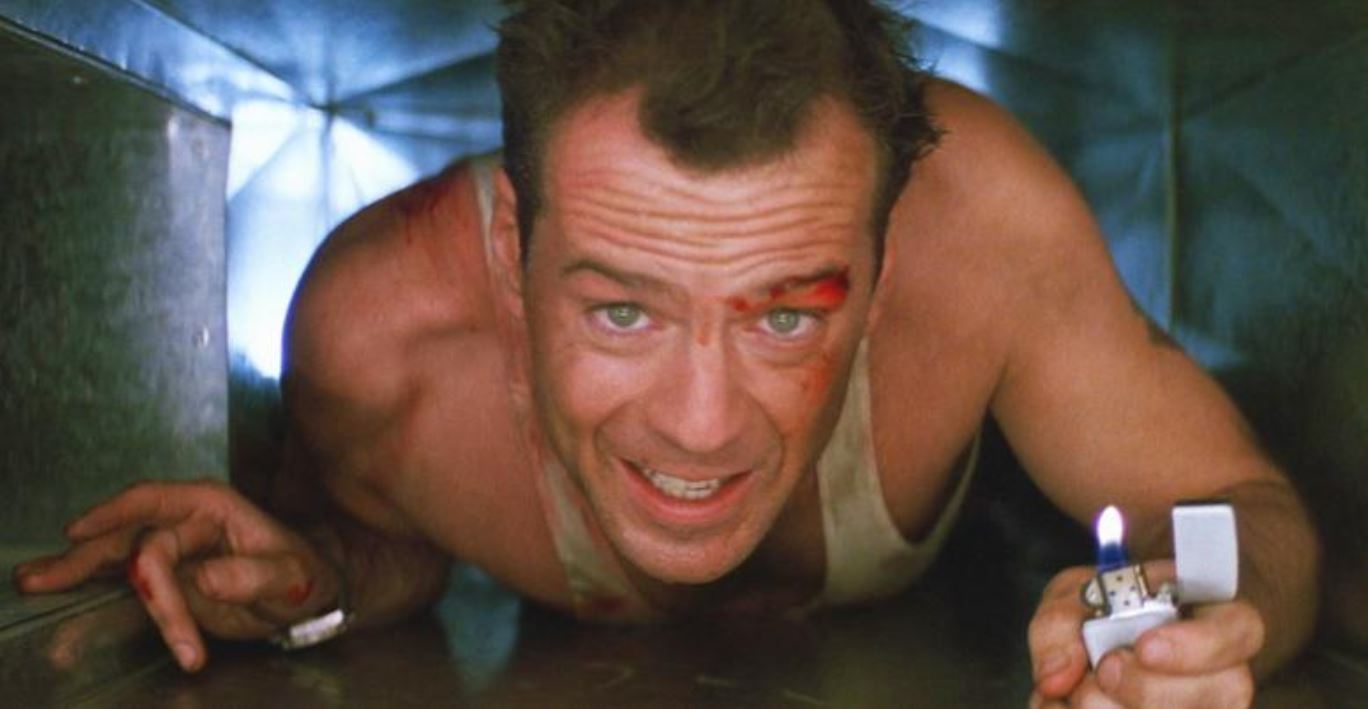






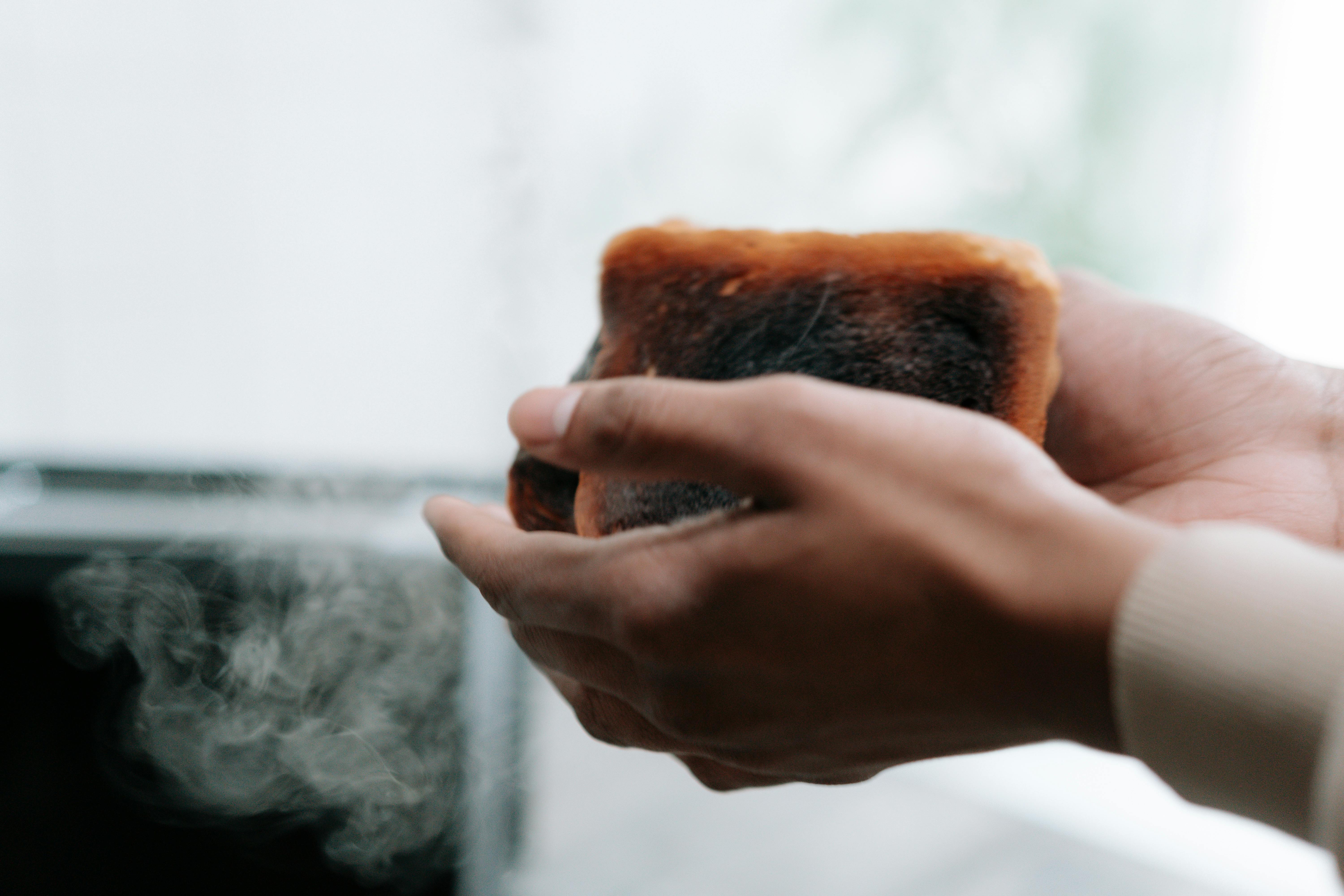
 Breaking Into The Craft