You will write a lot of words that never, ever get read.
I often wonder how much content writers like Stephen King have that will never see the light of day. We tend to measure how prolific a writer is by what makes it to print, but how many drafts and failed attempts are sitting back there in his creepy Victorian home that will never make it to print? I can only imagine it is double or three times what he has had published, probably even a lot more.
Chances are the vast majority of your words will go unread by anyone other than yourself. Even if you do manage to get published, the number of eyeballs parsing your prose is likely far fewer than you think.
I recall hearing the majority of traditionally published books sell between 200 and 2,000 copies over their entire lifetime and self-published books often fare even worse, with many selling fewer than 100 copies total.
Those numbers might make you want to stop. Why write if no one is going to read it? Why struggle with plot, voice, pacing, or character arcs when no one will see it?
We say we write for others, but we actually write for ourselves.
It’s like working out. The final physique might be for the world. But the daily discipline of exercise is ours alone. The early mornings, the sore muscles, the days when you show up just to keep the streak alive, few see that (nor do we want them to) yet it is essential.
Writing is the same. Every word you write teaches you something. Every awkward paragraph, every overwrought metaphor, every false start are all part of the mental muscle-building.
Those words we throw out are the reps needed to get to the words we keep.
I’m not an expert on how to get there. Honestly, I’m probably a better example of what not to do. This very Blog is a great example. As of this writing, there is not a lot of daily traffic. I can blame it on the SEO algorithm, but it’s probably comes down to me not be writing what people want to read.
But still, I write. Ignoring the stats and pushing through because, while I hope people find value in what I have to say, the truth is these words are mostly for me.
If you’re a writer who feels unseen, just know that you’re not alone. Even if your words don’t find a large audience, they still matter. Words that are thrown away are essential. They are needed to get to the words we keep; the ones that end up being foundational elements for the strange and beautiful craft of turning thoughts into language and language into story.
So keep writing the words that don’t get read until you get to the ones that do.
When I think about the vast landscape of what I haven’t written yet it feels daunting. There are so many authors out there writing way more than me. I can picture them writing away at this very moment outpacing me word by word.
It takes a lot of stories and a lot of submitting for authors to gain even a small presence. Having had some success, I also know that you have to write a lot of bad stories before you finally unearth the good ones.
It’s a lot like the feeling I get when I have a big TODO list. it’d daunting, I just know I will never get through it all.
Martin Luther King Jr. once said, “You don’t have to see the whole staircase, just take the first step.”
That mindset has helped me, no only with my TODO lists, but with writing as well. There is a power to realizing that I really only need to focus on the very next story. After that, I really only need to focus on submitting it. After that, move onto the next one. We eat the cow one hamburger at a time, as the saying goes.
If you are like me and often feel buried under the weight of what you haven’t written, step back from the overwhelming wide view and narrow it down.
It’s not: look at all I have to do!
But rather
What’s next?
Let me know in the comments below what’s next for you.
If you’re a writer of fiction with limited publishing success, consider writing nonfiction.
Why would you want to do that? Because it will make you a better writer.
The elements that make good fiction are the same for nonfiction. You need to tell a story. If you think about it, most stories are nonfiction. “Did you hear about what happened to Bill and Susie?”
You also have a better chance of getting published and getting paid.
There is a continual demand for nonfiction and there is money involved, primarily due to advertising revenue. If a magazine publishes monthly, with the ads already sold, when the first of the month rolls around you can be damn sure they will be putting out a magazine. And what do they place around and among all the ads? Nonfiction writing! Original words! Your story!
If you start getting published and receive positive feedback, it will inspire you to continue your writing journey. Writing is difficult and lonely. Making a connection with readers makes it less difficult and lonely.
——————-
Hello Breaking Into The Craft readers. I’m Matthew Walter, friends since first grade with your BITC creator, James Miller. Besides our friendship, we support each other’s writing and discuss the craft.
When James told me his idea for a new direction for BITC, I said, “Go for it! When you look at the supply and demand of fiction, there has to be tons of good stories that never see the light of day.” I’m glad to see his weekly posts and read some good fiction.
I love reading fiction and writing fiction. However, I’m primarily a writer of nonfiction. I respect you writers of fiction, because writing fiction is a struggle for me. But if your goal is to get published, try writing some targeted nonfiction.
For ideas, turn to your work and interests. If you’ve spent any time in a workplace, I’m sure you’ve been struck with an idea about how to make something better. See if there is a trade magazine that would publish your ideas.
If you have a hobby, chances are there is a magazine or website looking for content. I’m an avid disc golfer and I published a humorous piece on some of the disc golf forums. I received overwhelmingly positive responses, with a few negative (You have to take the good with the bad.)
Your local newspaper would almost certainly accept good writing on pertinent topics. Look for a question no one is answering. Do your research and become a reporter. Even Stephen King started out writing for his school newspaper.
Get writing and see what you can accomplish. You may surprise yourself.
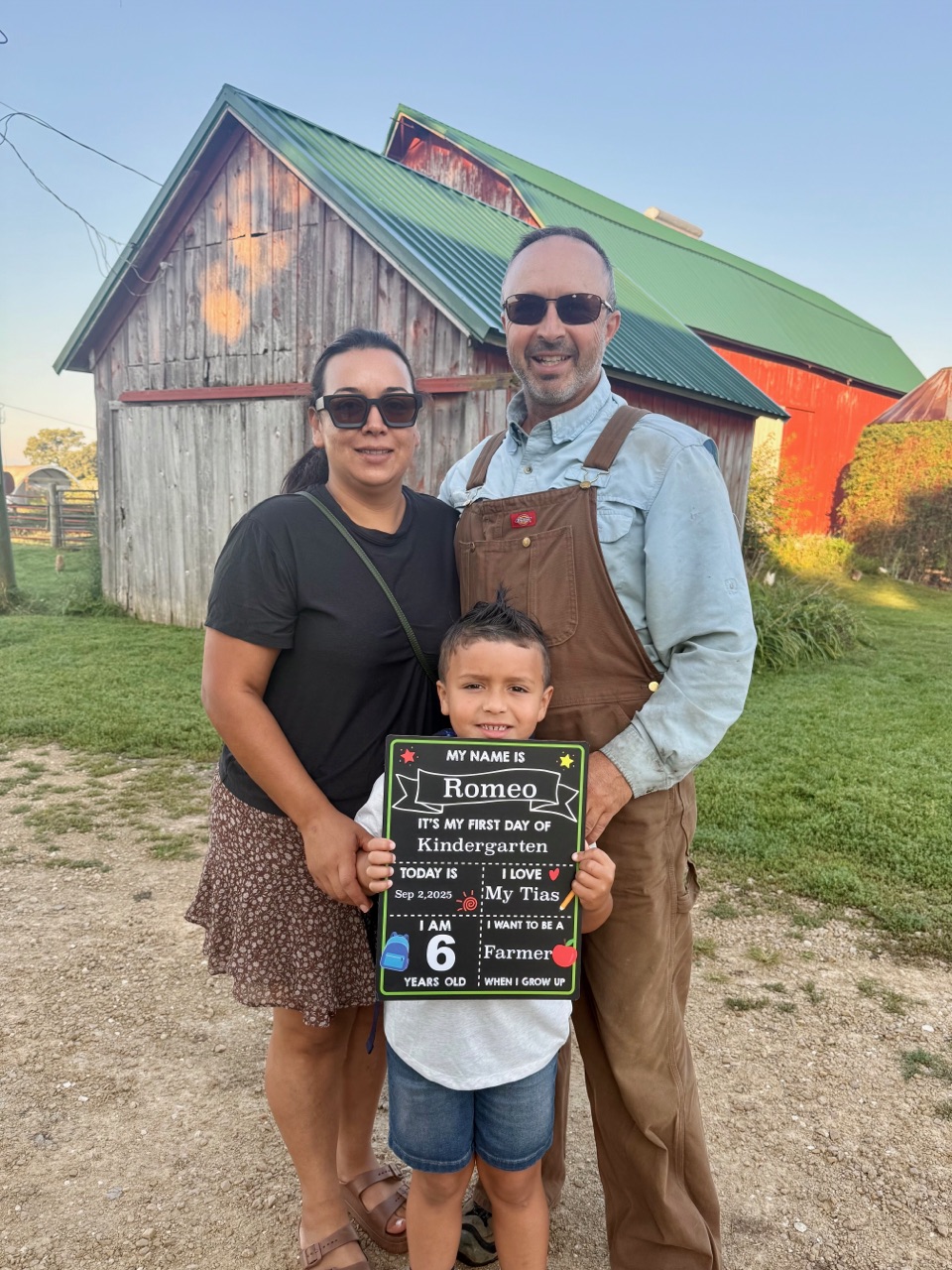
I’ve been writing and selling my nonfiction writing for the past fifteen years. I started my blog, Curiousfarmer, in 2009. I had never written much before that. I liked the challenge of crafting an interesting story, and it was a way of capturing my thoughts and questions as I farmed.
Without ever proclaiming myself an expert, my blog quietly proclaimed it for me. It wasn’t long before an editor at Successful Farmingfound me and asked if I would contribute. I said sure. I was honored, as my family has been reading that magazine forever.
I wrote and sold three articles to Successful Farming. They pay well. When an editor suggests changes, I always have the revision back to them within 24 hours. They pay enough; I’m not about to argue my work is too precious to edit.
Successful Farming is in the commodity agriculture business and I’m a regenerative farmer, so ultimately we weren’t a good fit. If I could go back in time, with the writing experience I have now, I may try to pitch different ideas to work with them. But I let it go at the time.
I kept posting to my blog. I received some positive feedback, but was mostly internally driven, which is a great character trait for a writer. I had no real writing goals, but I just kept posting, building my body of work.
I partnered with another couple to market our products in Madison, Wisconsin under the brand name Jordandal Farms. When their marriage ended, the partnership dissolved and I didn’t want to pay what they wanted for their share of our brand name.
Voila! I started over as Curiousfarmer, with an online presence dating back nearly ten years and hundreds of posts. When potential customers wanted to check us out, I could direct them to Curiousfarmer.com. This thing I had been doing for no compensation other than the joy of doing it, was now valuable to me.
A couple years later, Covid hit, and when our farmer’s market was shut down, I was forced to pivot again. I had been assembling a small email list. I sent an email to all our customers asking if they would like to meet in Madison for a contactless meat drop off. Many of them wanted to!
If you remember the early months of Covid, there was a scarcity mindset but my business boomed. I added to customers to my email list weekly.
I settled on an every other week delivery schedule. On the Saturday I wasn’t delivering, I sent an email to my customers reminding them I was coming to Madison next week and to place their order if they wanted anything. I quickly got bored with the typical email, listing what we had in stock, what was good, etc. I was basically saying, “buy my bratwurst.”
I realized that besides good meat, most of my customers wanted a connection with a farmer, so I reasoned a short story about the farm might be appreciated. It was. I received even more positive feedback about my writing and felt the challenge to come up with a new story every other week. It propelled my writing to another level.
I started to really enjoy writing and the process of discovery. Not always, but sometimes, it felt like I was uncovering hidden treasure. I got busy after our outdoor farmer’s market opened back up when Covid tailed off. I decided to save my stories for the winter months when I would return to email marketing.
I’m not sure why, but I got the notion to try to sell some articles again. I was subscribing to two regenerative ag magazines, Acres USA and Stockman Grass Farmer. I submitted an article to Acres USA and was rejected. I submitted to Stockman Grass Farmer and was accepted.
I decided to concentrate my efforts on Stockman Grass Farmer as that seemed to be a better fit for my expertise. I asked the editors what they were after and then tried to shape my articles to their specs.
Its working. In the last few years I’ve published ten articles in Stockman Grass Farmer. This year is shaping up to be my best year yet, with four articles published already and four months to go.
I worked really hard last winter in my slower farming time and submitted eleven articles. Stockman Grass Farmer works a bit differently; they don’t tell you if they accepted your article, they either publish it or they don’t. The first time I know an article is accepted is when an issue comes out and I find one of mine in there. I receive a check shortly after. They usually don’t edit my articles, but when they do, they just do it themselves, sometimes in ways I don’t like, but they’re paying, so I never complain.
This is my experience with writing and selling nonfiction. Unless I become way more prolific, I’ll continue to focus on submitting to Stockman Grass Farmer as we seem to be a good fit.
In the meantime, to challenge myself, I’m working on fiction. I feel like I have a head start finding my voice because of all the nonfiction stories I’ve written. My wife sees the checks come in, so she never rolls her eyes when I say, “I’m working on my writing.”
Nonfiction has catapulted me into writing. It may do the same for you. Give it a try.
Unbeknownst to me, my wife of 13 years went through my writing files and read a bunch of my stories. She made little notes at the end of some of the pieces — the kind of notes that non-writers tend to make like: “This is good hon, you should keep going” and “I’m not sure I like this one,” and my personal favorite “Do better with this one. Maybe start over?”
As much as we love it when people read our fiction, general feedback like that has little value outside of encouragement (or, in my case, discouragement). So I thought I would talk to her to get a better understanding of what she thought of my writing overall.
The main takeaway she had for me was that my writing was very “soulless.”
Soulless.
I can’t think of anything that can gut-punch, cut to the core, donkey kick to the back of the head, a writer any harder than telling them their writing is “soulless.”
I recall I felt like crying. I don’t remember if I did but even writing about it now makes me tear up a little so, yeah, I probably did.
I have a philosophy that when you get feedback from a reader, no matter how much you disagree with what they say — every reader is right from their own point of view.
That makes sense, right? Your perspective is colored by your own personal experience, so the stories you read will be colored that way as well. It’s actually kind of a fun and useful thought: every story is unique to each reader.
But soulless… really, hon?
I had to accept what she was saying to stay true to my philosophy. I had to look at my writing through her eyes and see what she was seeing. And scariest of all, I even had to peer inward.
Eventually I came to understand what she was getting at. My stories lacked both stakes and characters the reader cares about. Those two things are related by the way.
The inward part came later, when I finally understood why I was writing that way. It came down to me not being comfortable putting my characters into really difficult situations — which is kind of silly when you think about it. That’s what conflict is: the difficulty engine that drives a story. Conflict raises the stakes and makes you care about what happens to the characters. The bigger the challenge, the better the payoff.
I did see a slight bump in my acceptance rate after I put my main characters in tighter spots, but more importantly, the stories felt more alive and real.
I learned that acceptance letters may feed my need for validation, but loving what I write feeds my soul.
A blog post from this very site has been picked up by Allegory. Ironically, Cracking the code, the first piece that I have ever gotten published, is a rant about not getting published.
OK, maybe “obsessively studying” is a better term.
Stanley Schmidt is the Editor for Analog Science Fiction and Fact Magazine. The Magazine is what I would consider the pinnacle of the Science Fiction short story market.
I have sent off a few short stories, trying my hand at getting into this pro market, and so far have been thwarted… but rightly so. My fiction contained grammatical errors, and probably a lot plot related errors that Editors like Mr. Schmidt are able to spot in an instant.
My goal is to get published, and not in any old “Pay in copies” type publication, I am going for the pro markets; the kind that count toward the three stories you need to get qualified for membership to Science Fiction and Fantasy Writers of America.
So while I am working to better hone the craft of speculative fiction, I thought it might be a good idea to get to know the gatekeeper at Analog. Some people might just give him a phone call, or shoot an E-mail off for virtual meet and greet, but I know how busy Stanley is, and don’t want to be that guy that bugs him at work to pick his brain for publishing tips.
I just can’t imagine that going well.
Besides, studying him from afar is necessary to keep my preconceived illusions intact. I don’t want to risk finding out that the man I put up on an editorial pedestal is anything less than the literary genius I expect him to be. Didn’t we all feel just a little bit bad for Oz when Toto pulled the curtain away?
But why study Stanley?
My first comment on a rejection slip came in the disappointing form of a request to always number my pages. It came from Stan the man himself. It was the sci-fi writer’s equivalent of a message from God, but instead of instructions on how to carry the tablets down from Mt. Sinai, it was more of a “don’t do that or you’ll go blind” sort of thing.
I later read through one of his editorials that are always present in the front of each issue of Analog. A chill went through me when I saw:
“Lately, for reasons that perplex me, I’ve been getting an astounding number of manuscripts with no page numbers, a practice for which I’m hard put to imagine an advantage.”
I knew that that at least two of those page-numberless stories were mine. It felt like an indirect communication. Sort of like if my dog crapped on his lawn and he wrote a letter to the town paper about it.
I suppose this could be a pet peeve of his that is set off by two only occurrences. But an “astounding number” sounded like it must have been on the order of dozens of stores submitted without page numbers for Mr. Schmidt to make such a remark in an editorial like that.
In a strange way, it almost feels as though Editor Schmidt and I have a connection; granted it’s built on my failings, but a connection nonetheless. Like when I do finally get a story published with Analog there will be a wink and a nod in a now you get it kind of way.
I am about halfway through the Aliens and Alien societies book and it is apparent that Editor Schmidt feels that there are a lot of Aliens being created for fiction that are not really plausible.
I think this comes from the dividing line between Science Fiction and Fantasy. In Fantasy almost anything is possible within the rules that are set up in that story’s universe. In Science Fiction, while it is still fiction, there needs to be plausibility to the Aliens. A possibility that, while these creatures may not really exist, in some way or another, there is a logical scientific reason why they could exist and that doesn’t break the laws of nature.
For example: Giant insects 100 feet tall could never exist on Earth as they would collapse under their own weight. Tiny microbial beings wouldn’t really be able to have any sort of intelligence, as there is no room for a thinking brain that small to develop, at least following any sort of rules that we currently know about neurology.
But what I have really learned was something I have known all along.
Stanley Schmidt, like all great Editors, is really just interested in a dammed good story.
Well, I hear you Editor Schmidt, and I am going to do my best to try to knock your socks off.
I read a story in Apex magazine by Terra Le May. At the end of the story is a link to her site/blog, so I decide to check it out.
I am encouraged by her as it seems she has just recently started getting her stories sold. She also seems to be an interesting person as her full time job is a tattoo artist, and the name of her blog, Rarely Tame, is an anagram for “Terra Le May”.
I write her an e-mail telling her that I liked her story and ask her if there is a stack of rejection slips in her life or if the editors saw genius and picked her up right away. I resist the urge to include a link to this blog, as I don’t want her to think I am just trying to drum up traffic.
Of course I see nothing back from her all day.
I think maybe she is already too popular and receives a ton of e-mail, but then realise that, more than likely, I am just being impatient.
Inspired by how easily the remote possibility of being published seemed to happen for Terra, I repackage my Little Green Fonzie story, changing the title to “The Right Answer“. I make the name change because I want the whole Fonzie aspect to be more of a surprise within the story than something expected right from the title.
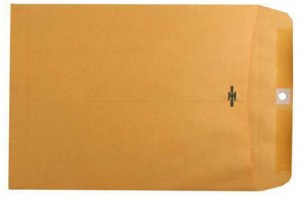
I get halfway through addressing the 9″X12″ envelope when I see that, under their guidelines page, F&SF has a bullet point stating, “We prefer not to see more than one submission from a writer at a time.”
Shit.
I already have a story called “The Closet” sitting with them that I just sent out on 8/5/10, only nine days ago.
Screw it.
Being human and impatient, I shove the story into the envelope and send it out anyway. What’s the worst that could happen? They reject both stories? There’s a dammed good chance of that anyway.
Magazines have an insane amount of rules that they ask you to submit by. I can understand the need for rules, as I am sure the editors are inundated by submissions from wide-eyed dreamers such as your’s truly. I am also certain that they are constantly beating down the ever growing slush pile, but I have to think that if it’s a good story, a truly worthy tale, it could show up on their desk, typed on hot pink paper and stuffed into an old tennis shoe and they would accept it.
So does it really matter how many stories I send in at one time?
Or where the commas go?
Or if I spell everything exactly right?
James
UPDATE:
I was just being nervous and paranoid. Terra e-mailed me back the next day. It was easy to tell from the e-mail that she is a super nice person.
She did tell me that she has about 50 rejection slips sitting at home, and how that wasn’t as many as a lot of the writers she knows.
I also found out that she has gotten a Locus review of her story, and that she is a member of a couple writer’s organizations.




 Breaking Into The Craft