One of the most satisfying things about a short story should be the ending. We want the protagonist to win in a unique and fulfilling way (or die trying) and we want the villains to get what they have coming to them.
Unfortunately, the ending can also be the most disappointing part of the story if not done correctly. Curiousfarmer and I often talk about how Stephen King tends to leave us wanting with his endings. He does a great job with character and clear, digestible, writing, but often tapers off when it comes to closing out the story.
During the first draft I usually write an ending that is the most obvious ending. There isn’t anything necessarily wrong with the ending and I typically do a good job of wrapping up any loose threads, but I have learned that there is usually a better way for me to end my stories.
The first idea for an ending is very rarely the best and most rewarding ending for the reader.
This is where putting down the story for a while and spending some time thinking about it pays off. I have a relatively long commute to work, so I will leave the radio off and just think about the story from a plot and logistical standpoint – turning things around, moving chunks, introducing twists and surprises to see what it could be.
David Mamet talks about going through all of the possible endings and when you get to the most outrageous one that is still plausible, that is usually the one you want to go with.
I do agree that having a certain amount of surprise in an ending can be very rewarding. Mamet likes to use the terms “Surprising and inevitable” when it comes to story endings. I have become a big fan of this concept as it rings true for me.
Another way that I have found to determine if I have a justified and suitable ending is to look at all of the characters and ask: “Did they get what they wanted? And did they deserve it? Meaning, is their final situation justified?” This also helps to highlight any loose threads I may not have closed out.
Some people like to look at the conclusion of their stories from a thematic or lesson standpoint. I tend not to put a lot of emphasis on the message a story is trying to send or what the reader should learn from the story. My approach is much simpler in that I am looking for the story to be entertaining. That may make me less literary than most, but I am okay with that.
Let me know how you determine whether your story has the right ending?
I have been working with Google’s Antigravity code development tool recently. And while that seems like a strange thing to open with for a writing blog, here is why I think it might matter to us:
Antigravity is a development environment for coding that has AI built in so that instead of writing all of the lines of code yourself, you can “vibe code” which is basically talking with the program in plain language and telling it what you want.
While “programming” with Antigravity I found that the more detailed and deliberate I was with my description, the better the results. This made me realize that our talents as fiction writers will be very useful when working with AI now and in the future.
AI can do a lot of very amazing (and scary) things but it needs us to be able to describe in detail what it is that we want it to do. The better we are at that, the more useful we will be when working with AI, which I suspect will be a very desirable skill in the near future.
As I try to follow the rapidly changing landscape of AI, I find this a refreshing thought that gives me a glimmer of hope.
Here are ten common tropes that have been used so often they’re usually better avoided. Also, I have to admit that most of these are seen more in movies, but I still consider that storytelling so, let’s just go with that and let me get away with it this one time. Thank you.
1. Crawling Through Air Vents
This one shows up constantly in action movies and thrillers. A character escapes or infiltrates a building by climbing into the ventilation system and crawling through ducts like they’re made for human travel.
In reality, most air ducts are thin sheet metal that won’t support a person’s weight. They’re also cramped, and if they are heating ducts would get pretty hot and probably cause you to pass out.
Once you think about how unrealistic this trope is, it becomes hard not to laugh when you see it.
2. The “Knock Someone Out for a Few Minutes” Trick
This is where a character knocks the guard unconscious with a punch to the head. The victim wakes up later with nothing worse than disorientation or a mild headache.
In reality, a loss of consciousness lasting more than a few seconds is a serious brain injury. If your character regularly knocks people out this way, they’re probably leaving a trail of permanent neurological damage behind them. I would much rather see some chloroform on a rag get held in front of the guards mouth and nose, or a taser disable them for a moment.
3. The Conveniently Overheard Conversation
Your protagonist just happens to walk past a door just as the villain is revealing his entire plan.
No effort required. No investigation. Just perfect timing. (see also my post on what role luck should play in fiction)
This trope removes agency from the main character and replaces it with coincidence. Information in a story like this should come from effort, not luck.
4. The Villain Explains the Entire Plan
This works for me in the Bond movies because it sort of “is what it is” in those. I feel like those movies define the whole trope and I give them a pass for it. But even then it’s still clear that this kind of exposition exists purely as an information dump. If these were real villains, monologuing their evil plans would be very careless. There is really no advantage to doing that, unless you want to compromise the 4th wall and let the audience (or in our case reader) in on something.
5. The Countdown Clock
A bomb is set to explode in exactly ten minutes. We can tell this from the red LED display conveniently visible to the hero. Being a very technical person, this one has driven me crazy for years. Bomb timers based on old-style alarm clocks where the alarm goes off and there is a physical contact closure built into the bell mechanism, yeah, that makes practical sense. Spending extra money and design time to put a digital LED read-out into something that will blow up seems like a lot of unnecessary cost and work. It’s good to have a metaphorical ticking clock that provides pressure for the protagonist but it’s doesn’t have to be a real one and it rarely makes practical sense to have a LED display.
6. The Instantly Hacked Computer
A character types furiously for ten seconds and announces:
“I’m in.”
Complex computer systems do not collapse instantly under a few keystrokes. Real intrusion involves research, social engineering, and patience.
I also see this kind of instant solution when a character in a movie goes to hotwire a car – they put two wires together and have it running in a matter of seconds. I guess we are just supposed to ignore the fact that it would take more wires than that and the fact that the steering wheel is usually locked.
7. Guns That Never Run Out of Ammo
You see this when characters fire dozens of rounds without ever reloading. I have to admit this has gotten better in movies lately but you do still see it. The new foul is that they change magazine so often now you wonder where they were keeping all of that heavy ammo when the chase scene was happening.
In fiction, running out of bullets is often times more interesting than having an infinite supply.
8. The Totally Useless Security Guards
In many stories, guards exist only to be knocked out or distracted.
They rarely communicate with each other, never notice obvious problems, and seem completely unaware of their surroundings.
A competent security system has multiple guards, cameras, procedures and can create much more interesting obstacles for your characters than the cardboard cut-out guards we usually see.
9. The One-Line Medical Miracle
A character receives a serious injury but is fine after a quick bandage and a few minutes of rest.
Broken ribs, stab wounds, and gunshots tend to have a much longer recovery times than a few minutes. Think about the last time you were injured in anything more than an inconvenient way and how much that slowed you down. I literally had my back go out when I was turned wrong and sneezed one time and I was basically disabled for three days, bordering on tears when I went to put my socks on. I have to imagine being shot in the stomach would slow me down quite a bit more than that.
Injuries that actually affect a character’s abilities make stories much more believable and raise the stakes.
10. The “It Was All a Dream” Ending
Few endings frustrate readers faster than discovering that the entire story didn’t really happen. Now, I did just see the Wizard of Oz at the sphere (which I equate to Disneyland in the expense and “gotta see it at least once” factor) and I am giving that movie a pass at this but for every other piece of fiction, you have to realize that dream endings are a cheat. They erase consequences and invalidate the emotional investment the reader made throughout the story.
Unless the dream itself is the point of the story, this trope almost always a bad idea.
The Real Problem with Tropes
The problem comes when tropes becomes so familiar that the stop feeling like a story choice and start feeling like lazy writing.
Readers enjoy stories where events happen for believable reasons, where characters solve problems through effort and skill and where the world behaves in ways that feel authentic.
If you find yourself reaching for one of these tropes, ask a simple question:
“What Could really happen instead?”
The answer is often surprising and far more interesting than the cliché. Spend a bit more time thinking through potential endings and as David Mamet would say, “make them surprising and inevitable.”
Stories vary in the amount an author receives for publication. One of my stories, The Right Answer, has provided a lot in return for the amount of time it took me to write it. And that return has been more than just financial.
The financial side was good, as far as 3000-word fiction goes anyway. I initially published it in Alex Shvartsman’sUFO 3 anthology (still available on Amazon, BTW) then later as an audio “reprint” on Escape Pod and Tall Tale TV. I received a small payday each time it went live.
This is pretty good considering I wrote the story in one sitting. I did do a bit of editing later and then had to reshape it based on the feedback the market provided but as stories go, this one had a lot less of my time into it than some of my stories that have never been published.
But the most rewarding “return” I got was being able to see the feedback from those who read it. I recall a highlight for me when it was initially published: A woman from Australia emailed me to tell me how much she enjoyed the story. She was eating cereal while reading it and nearly shot milk out of her nose at one funny part. It’s an indescribable experience to know that I tickled the funny bone of some stranger, on the other side of the planet, so much that they felt they needed to reach out to me.
Only recently did I notice that Escape Pod has a discussion forum (and do check this out) for stories they publish. It is thrilling to see people talking about the words I have put together. There were a few people that didn’t like the story, which an author never likes to see, but there are many more who enjoyed it very much. The story is [meant to be] a comedy and tastes can vary quite a bit, so I do expect there to be some that give it a thumbs down.
Let me know in the comments down below what your experiences have been with feedback from those who have read your work.
First off, I am not an attorney, so this is not legal advice but rather my understanding of what “First Serial Rights” generally means with regard to writing.
If you are like me, I care a lot less about what rights I am giving up and more about just getting my stories out there. I do realize that isn’t the best attitude. It may not matter to me as much when most of my short stories fetch less than $100, but if Netflix ever stumbles onto something I’ve written and wants to serialize it a la Love, Death & Robots style, I’d be very concerned about what rights I’ve given up.
My understanding of first rights make me mentally fall back into my days as a landlord:
I own the property, but the lease agreement (contract) gives someone the right to use it for a given amount of time.
The “first” part is like saying “This property is newly created and you will be the first to live in it.”
For authors, once a story is published, the “first” part is used up so you can no longer sell “first rights.” When selling it again later, you need to market the story as a reprint.
Note: for a story to be considered unpublished, that usually means it has not been previously publicly available anywhere. This includes blogs and social media.
The term “serial” comes from the nature of periodicals being published repeatedly on a schedule. It may not come into play on something like an anthology, but I suppose it’s also possible you would still see that language.
Location:
If you just see “First Serial Rights,” you should probably assume that covers publication anywhere in the world, unless territorial language calls out an area specifically. This, as opposed to, something like “First North American Serial Rights ” where you could potentially sell the story to a non – North American market simultaneously.
Exclusivity period:
Watch for this term in the contract. It calls out how long the story is “locked up” before you can sell it as a reprint elsewhere.
Words to watch out for:
Look for language that could lock up the story indefinitely. Terms such as: “All Rights”, “perpetual exclusivity”, and transfer of copyright or transfer of ownership language.
First Serial Rights vs. First Publication Rights:
This can imply broader control of your work and may include publication in other forms outside of online or print, such as audio rights, translation rights, and inclusions in anthologies. This doesn’t necessarily make it something you should reject outright, but is something you need to be aware of. Personally I would be thrilled if a story I sold for online publication also made it into a print anthology, but this language could mean you might not get paid any more for it to be in the anthology.
Common Add-ons:
Depending on the publication, you might see some of the following terms and language.
Electronic rights – Now typical for online publication
Archival Rights – They are able to keep the story live on-site indefinitely. Often seen in sites that allow people to see back issues. I have this in my contract as I continue to host the stories I publish on my site.
Audio Rights – There are some online site that publish audio only or, as in the case of Tall Tale TV, audio within YouTube’s video platform. This is normal if it’s their native format, but if it’s normally an online “print” format and they are asking for audio rights, just be aware you are giving away something more.
Translation Rights – Can be common for some markets that have a worldwide presence.
Excerpt rights – This allows the publication to use small bits of your story for promotion.
First Serial Rights means you’re selling a publication the right to be the first to publish your work, but not to own it forever
As long as you are OK with the exclusivity window, and avoid any tricky language that lets a market hold onto your story indefinitely, first serial rights is typically a standard, author-friendly deal.
J.R. Blanes is the author of the novel, Portraits of Decay, from Ruadán Books. His short fiction has appeared in Allegory, Tales to Terrify, The No Sleep Podcast, and Thirteen, among others. He lives in Chicago with his wife and their neurotic dog. You can visit him at https://jrblanes.com/ or https://ruadanbooks.com/
J.R.’s story has been [mistakenly] rejected by: Planet Scumm, Infinite Worlds, Interzone.
When I asked J.R. what he loves about this story here was his response:
I’m awful with technology. My wife calls me a luddite. So, in a way, I have irrational fears of where it’s leading society (AI scares the crap out of me). When I write stories—mostly horror related—I often pull from what frightens me and use it to deal with my anxiety. But I also love this story because it was a chance to springboard ideas off my wife who is in tech. She assisted me with the research and corrected many mistakes I made about coding. A perfect editor for feedback.
Injection Code, by J.R. Blanes
Warning! 409: Conflict.
The error response status flashes on my screen in bright red letters. I slam my fist against my desk. Fuck! Not again. This shit’s been going on for hours.
I rub my eyes with the fleshy balls of my palms then blink away the floating spots. I’ve been staring at this code so long I think it’s split my brain into fragments.
Outside the eighth-story office windows, Chicago celebrates the coming New Year with a parade of floats and colored lights and street music. A light dusting of snow falls from the night sky in true holiday fashion. I watch the festivities for a moment, wishing I was out there—or anywhere but here. Around me, dual-screen laptops on cluttered desks weave a maze that, from where I’m sitting, appears to have no exit. My colleagues left hours ago to get ready for the “Big Party.”
Evolve’s hosting a shindig at Innovation, a private events venue operated by the company, and a springboard for some of our newest inventions: a fully equipped self-operating dance club with robo-servers and cocktail-mixing machines and a smart kitchen. Everyone’s raved about it for weeks. And here I am stuck with this stupid bug.
Bing!
An alert dings on my video chat. A telegram from Mr. Deadline himself, the Program Director, Brad Goldacker. I consider ignoring it, but I know if I do, he’ll just keep calling. I have to give the prick one thing: He’s persistent.
Brad’s digitized face fills the screen, the software imagery smoothing his pre-middle-age wrinkles and deleting the acne scars from his cheeks until he’s picture perfect. His hair swoops into a massive wave off his forehead and down into two finely trimmed sideburns that end at the cliff of his chiseled jawline. He’s popped his collar to hide the scrawny chicken neck I often imagine strangling.
“Waylon, my friend, how are things?” Brad asks in a tone programmed to sound sympathetic but comes off passive aggressive.
I motion at the cubicle maze around me. “Still at the office, Brad.”
“I can see that.” This time he doesn’t hide his disappointment. “What’s the timeline on fixing this bug. The last thing we want is it getting into our operating system and crashing our entire program. Unhappy consumers make for unhappy investors, if you know what I mean?”
I know exactly what he means.
Evolve designed its cloud-based platform to operate a variety of products across the globe from a single location. Smart Homes, AI monitoring systems, humo-maids. You name it, Evolve runs it. Every device built to speak to our internal infrastructure, otherwise they’re deadweight. We control your lives through a series of instructions written in 1’s and 0’s. You can’t drink your morning coffee or fold the laundry or wash your ass without our services. Which means if there’s a flaw, well, let’s just say, we could easily ruin your day.
“There seems to be some kind of concurrency issue. Looks like too many threads competing for the CPU’s attention,” I say.
“Layman terms, Waylon.”
Not surprising, Brad has no clue what I’m talking about. “Do you know what happens when demand exceeds available supply? Service failure. Is that clear enough for you?”
“I know it’s a service failure,” Brad says to prove he’s not stupid. “What I need to know is how you’re going to fix it. Did you roll back recent updates?”
“I did, but it’s not helping. Old code, new code, it all shakes out the same when I try to compile it. It’s as if every change I make is being countered by another part of the program.”
Brad clicks his tongue, pretending he’s thinking, but I know better. The son-of-bitch specializes in product, not programming. He wouldn’t know his front end from his back end.
“Look, Brad, I—”
“You’re talking like the bug is alive.”
I shrug. “I mean, it does control robots. Who’s to say we haven’t crossed the line of automation versus intellig–”
“I’m not here for a philosophical conversation, Waylon. It’s New Year’s Eve for Christ’s sake. Roll it again. Make the code more readable if you must.”
“The changes might affect the application.”
“I’m more concerned what’ll happen if we don’t get the software up and running within the next hour. Evolve plans for this party launch to go off without a hitch. Catch my drift?”
In layman terms, my ass is on the line.
I’ve worked at Evolve for three years as a low-level software engineer. Essentially, I’m an exterminator. My job is to kill any bugs found burrowing into our network, which is why I’m still at the office at 7 pm on New Year’s Eve. But if I don’t fix this problem soon, I’ll be ringing in the New Year unemployed. And if that happens, I might as well unplug my computer permanently. No tech company wants to hire the engineer who’s blamed for a software meltdown. I’ll be back living in the burbs with my parents and working for MicroCenter.
“I’ll take care of it.”
“That’s my boy. Now I’ll be at the party, but if you have any issues shoot me a telegram.” Bradley fires finger pistols. “And remember, Waylon, at Evolve we’re committed to…?”
“…committed to progress.”
“You got it, hot shot.”
Soon as his face disappears, I flip Brad the bird. Until I get the application up-and-running, I can forget about going anywhere.
#
For the next thirty minutes, I try everything to push this damn bug out of its hidey-hole: check for random generators, run performance tests to identify any components that are not keeping up with our systems, attempt to locate the threads accessing the CPU. After I clean the code up from top to bottom, I run it through the compiler and relaunch the script in my virtual test rig.
A new error pops on the screen. 403: Forbidden.
What the fuck?
For some stupid reason, the server refuses to authorize my request. It doesn’t recognize my credentials. But that’s impossible. They were properly authenticated. So why is the database denying me access?
The request must be tripping an alarm. The only option to see is to disable the Intrusion Detection System. But that’s a huge risk. It’d leave the server vulnerable for attacks.
I lick sweat from my upper lip. What the fuck would Brad do? Not take the risk. But I did tell him I’d take care of it. I disable the IDS.
The electronic doors in the office slam shut—I jump out of my chair—and the locks switch from green to red. The security alarm unleashes a piercing squeal. It’s like the high-pitched ringing after a concert, but at twenty times the decibels. I fall to my knees and cover my ears. Scream for the alarm to stop. Minutes away from bashing in my skull on the floor, the alarm shuts down with a fading whine. The lights above flicker. Darkness swallows the office, illuminated only by the soft glow of the computers.
I mime my way through the maze to the exit. Pull at the doors. They’re locked. Slamming my fists against the glass, I shout for help. There’s probably no one inside the building but me. It is fucking New Year’s Eve.
My telegram alert dings again. It’s probably Brad calling to ream my ass for breaking the whole system. Better not answer. Let Mr. Company Man chew on Tums until I can figure this shit out.
But when I return to my desk, I see the message is from Imara. Why isn’t she having fun at the party? I run my fingers through my hair and tuck my shirt in before answering. “Hey!” I say, attempting to sound cheerful. “What’s going on?”
Imara leans against a snow-lined balcony, a picturesque view of the icy Chicago River and a classic art deco building behind her. She’s tied her wavy hair into a braid, a few loose curls falling alongside her slender neck. Gold tassels dangle from her tiny ears. Blush adds a pinkish color to her high cheekbones and blue eyeliner reflects her sapphire eyes. Seeing her brings a smile to my face…
…until I remember I promised to meet her at the party.
“Are you kidding me? I dressed up for you.” Opening her peacoat, Imara offers me a glance at her off-the-shoulder cocktail dress, an outfit miles away from the tech-geek t-shirts and cargo pants she normally rocks.
“You look terrific.”
Imara wraps her coat around herself. “If I knew you were going to ghost me, I wouldn’t have put in the effort. I could be home watching the latest episode of Star Trek: Voyage Beyond.”
Hearing her disappointment stirs my animosity for that shit, Goldacker. “I can’t leave until I fix this bug.”
“Can’t it wait ‘til Monday?”
I flop in my chair. “You heard about what’s going on out there? Brad says customers are beating on the door and waving torches, complaining their smart homes aren’t working. He’s ready to offer me as a sacrifice.”
Imara snorts. “Yeah, he’s been freaking because the elevators are having issues.”
I jab a thumb at the doors. “The office locked me inside. We’re having some kind of outage.”
“Is that why you’re sitting in the dark?”
“No, I just find it sets the perfect mood for programming.”
Imara suppresses a laugh. She can never stay mad at me for long. I’d like to think it’s my boyish charm, but it’s really because I’m her only male colleague who isn’t a total tech bro.
“Too bad you’re going to miss—” From her phone, Imara shows me a panoramic view of the packed club. My coworkers walk through interactive AR environments that change to compliment their collective mood, drink cocktails crafted to their taste buds, and dance to personalized setlists playing in their earbuds. “Guess I’m going to have to have fun without you.”
Imara’s remark nettles. “You know what I could really use?” She raises a slender brow. “A rubberduck.” I cross my fingers underneath the table, hoping she’ll accept. “And I can’t think of anyone better to talk out my issues.”
Imara scoffs at my thinly veiled cry for help. “Now way, Jose. You have way too many issues and I’m not your therapist. Besides, tonight, I plan to paar-taay.” She shakes her hips. “So why don’t you hurry up, fix your little buggy-bug, jump in an auto-cab, and get your khaki wearing buns over here?”
“I can’t.” Disheartened, Imara’s smile slumps into a frown. Fucking Brad. Sticking me with this shit job. If I miss my chance with Imara I’ll never forgive the bastard for the rest of my life. Probably won’t forgive him anyway. “I want to be there, I really do, but unfortunately, this isn’t a little bug.” I relay the incident.
As she listens, Imara’s expression changes from disappointed to irate as seamlessly as the club’s AR environment. She seethes through her teeth.
“What is it?”
She looks around to make sure no one is listening. This is worrisome. “I hate to tell you this, Waylon, but Brad is setting you up for the shitcan.”
“What? No, he wouldn’t. Are you kidding? It’s New Year’s Eve.”
Imara nods her head solemnly. “Remember Amanda Kites? She turned Brad down for a date. The next week he asked her to implement a last-minute update without giving her time to validate the code properly.”
“Fired her right then.” I flop back in my chair. “What the fuck am I going to do?”
Imara lowers her voice. “We’re going to fix this problem.”
“We?”
“Yes, we. You don’t think I’d let you get fired. Then who’s going to listen to me fangirl about my dreams of intergalactic space travel?”
I perform a shimmy beneath my desk.
Once again, Imara glances around at the party. “I’m going to need to find somewhere quiet. It’s a zoo in there.”
Before I can thank her, she clicks off.
#
When she reappears online, Imara is squatting on a toilet, locked inside a stall in the woman’s bathroom. She hits a button on her phone and it flips open into an iPad. The sounds of flushing toilets and running water and muted conversations about everything from designer handbags to horrible cramps streams over the speakers.
“That’s the quietest place you could find?” I ask.
Imara taps into the system. “You want my help or not?”
I hold up my hands in apology.
Imara slips on her glasses into programming mode like a superhero changing out of her secret identity. “Give me an update.” .
“The code looks fine, but, for some reason, won’t compile. Then when it does work the applications won’t launch or authenticate. Whatever’s happening, the bug has burrowed in like a trapdoor spider waiting for a line of data to waltz by. Chomp! Chomp!”
“Our spiders crawl, Waylon, they don’t pounce,” Imara says, all business. “Anyway, you have me now. Time to weed out and eradicate.”
Imara’s one of the best developers at Evolve. She has a utility belt of tools for any given situation and an intuitive understanding of the company’s database. Now that she’s come to the rescue, I’m confident this issue will be resolved in no time, and we will soon clink champagne glasses in victory.
“Have you tried recreating the bug?” she asks.
“If I could recreate it, I would’ve been gone hours ago. But the thing’s impossible to reproduce.”
“This isn’t science fiction, Waylon. We can reproduce any bug. Some are just elusive.” But because she’s so good, sometimes Imara can be obnoxious. I try not to take the insult personally. “Let’s do it again. Verify the threads. Make sure they’re doing the correct job.”
I put the threads asleep and execute one at a time. On Imara’s advice, I once again note all web server configurations on the virtual host to confirm they’re running the correct applications. I can’t believe what I’m seeing. “You’re shitting me. It’s created multiple code paths that are executing at the same time, corrupting the memory for its own purpose. Like it’s trying to control the system.”
Imara’s eyes swell behind her glasses. “That’s not possible. Loop the code and search for patterns. We might be able to track and isolate the bug that way.”
Something scurries behind me, feet pitter-pattering across the carpet. I turn around. Nothing’s there. Whatever it was sounded too loud to be a cockroach or a mouse. Though I wouldn’t doubt if the building is infested. This is Chicago, after all.
A rodent size shadow races across the floor a few feet in front of me. At least, that’s what I think it is. Though it’s more shaped like a spider. I go to check it out.
“Where are you going?’ Imara asks.
“I’ll be right back.”
I creep through the maze toward the back row, listening for the sound again, but all I hear is the hum of the radiator and my own shallow breathing. Am I just being paranoid? Does this dark, empty office have me spooked? As I pivot toward the glass-encased boardrooms, I slip and fall on my ass. A waxy streak trails from a computer to an electrical outlet on the opposite wall. The oily paste sticks to my fingers. I sniff it. It has a harsh chemical odor. I wipe it off on my pants, but it won’t come off. What the hell?
“Waylon, hurry your ass over here,” Imara shouts.
I scramble to my feet and rush over to my desk. On the screen, a string of new code in an unfamiliar language injects into the programming and utilizes system calls to run commands. “What is it doing?” I ask.
Imara taps at her keyboard, doing what, I don’t know. “It’s modifying the input string. Changing the code in real time.”
“To do what?”
“That’s what I’m trying to find out.” When Imara sounds panicked, you panic. Normally nothing rattles her.
I pace behind my desk. “Fuck! Fuck! What the hell did you do?”
“Me?” Imara’s fingers halt above her keyboard.
“Yeah, you. I was over there,” I point toward the boardrooms, “while you were doing…I don’t know what.”
The bathroom Imara’s sequestered herself in falls quiet. No more running water, flushing toilets, or chit chat. Just dead silence. “This is your code I’m trying to fix.”
The venom in her voice stings my pride. “That’s just like you. Think you’re so damn invincible you’re above screwing up. Or maybe you…”
“Are you suggesting I did this on purpose?”
“No, I—”
Imara folds her computer back into a phone and stands up. The toilet flushes. “This is your shitshow, Waylon. Good luck cleaning it up.”
Damn it! What have you done, you idiot? “Wait, Imara, I’m sorry,” I say before she has a chance to log out of the system. “I’m under a lot of pressure, and…and…and…”
“That’s your excuse for being an asshole?”
I wish I could delete the last minute of my life. But there’s no such thing as autocorrect when it comes to human relations. “You right, I am being an asshole. This isn’t your fault. You were only trying to help and I’m…fucking freaking out. I took out my frustration on you and for that I’m really sorry.”
Imara sits back down.
“Listen, you have every right to walk away and I won’t blame you if you do. But I can’t fix this bug without you…”
A telegram dings. It’s Brad. I beg Imara to stay for a moment. Even if she decides not to help me anymore, I don’t want to leave things between us this way. She holds up her hand, fingers splayed. “Five minutes,” she says.
This time when Brad appears on the screen the digital modifications are unable to hide his disheveled appearance. He’s rushing down a corridor, pushing through a throng of people, half empty martini splashing over his hand. His hair porcupines and red blotches blemish his skin. When he speaks, he doesn’t even attempt to hide his distress. “What the hell is going on over there, Waylon? Our whole network has gone haywire.”
I have no idea what Goldenballs is talking about, but from the dread in his voice, I don’t think I want to know. He plugs it through anyway.
A silver bug appears on the monitor. Six clawed legs wriggle from its flattened, fingernail-shaped body. Bolts of electricity sputter between the long antennas attached to its triangular head and code oscillates across its large compound eyes. Soon as this symbol appears, all the monitors in the office click on, showing the same creepy insect. I feel them crawling up my neck.
Voice trembling, Imara asks, “What the fuck are we looking at here, Brad?”
Brad halts near a set of blinking elevators, doors slamming open and closed like vertical jaws. “Imara, I thought you were at the party.”
“Waylon asked for a rubberduck…”
“Because you set me up to fail, you mother—”
“I’m glad someone with brains is on this goddamn disaster,” Brad says, ignoring my outburst like he doesn’t know what I’m talking about. “Our products have gone totally rogue. I’m talking about robo-servers fucking up orders! Ovens lighting themselves on fire!” Brad glances sheepishly around at the party then leans closer toward his phone. “A fucking fridge ate Renee Scott from Design. A fridge, Waylon! The Engineering Team managed to pry her out with a crowbar, but she’s threatening a lawsuit. The company’s wondering why their party is a disaster. If you don’t get us out of this clusterfuck, I swear, I’m going to send the shareholders after YOU!”
I cower as Goldball’s voice crackles.
Imara slips back into programmer mode. “Don’t worry, boss, we’re on it.”
My heart thumps like a love emoji. I want to take back every terrible thing I said to Imara, but instead I mouth the words, “Thank you.” She just nods. I guess it’ll take time before we’re speaking again.
Because she’s no longer fighting this bug for me.
Imara’s fighting this bug for the challenge.
#
The moment Brad clicks off, Imara starts to analyze network traffic. I’m happy to let her take the reins on this, but there’s something she’s not telling me. “Listen, I understand you’re pissed at me, and I promise to do whatever to make it up, but right now I need you to tell me what we’re looking for. We can’t be a team if I’m on the outside.”
Imara glances at me over her glasses. “You mentioned an unexplained surge in threads competing for the same resource. What if the bug is using those threads to insert its own keys into the code to trigger our products to malfunction in real-time.”
“You think this is a hack job.” I could slap myself. “Oh my God. Imara you’re brilliant.”
“Let’s not jump to conclusions yet. There’s still plenty of room for human error.”
Once again, her insinuation stings. “You’re hoping to trace the source.”
“Unlikely we can. Any skillful hacker will cover their tracks by making sure their attacks are distributed over thousands of compromised devices. But theoretically, it’s possible to locate who’s sending the requests by analyzing the traffic flow.”
There’s something she’s holding back. “But that’s not the only thing you’re searching for. You think the attack is a diversion?”
“Most likely, which is why I’m going through the stack trace.”
“Looking for?”
“A disruption,” she says, scanning the list of method calls. “If I’m correct—and it’s a big if—the attacker is using the malformed status codes to throw us off their trail.”
“Makes sense…but a diversion? For what?” Then it dawns on me. “You think a hacker is tampering with the input data.”
“Now you’re thinking.” Imara taps her temple. “I’m going to search the code for an exception in the output stream.”
I want to kiss her. “I’ll never doubt you again.”
A slight grin curls at the corner of Imara’s lips.
While Imara scans the call stack for errors, I search the most recent code once more and find a hidden sequence of instructions initiating an unknown program. This wasn’t originally in the script. So where did it come from and how did it get there? Tracing the data stream from infected products only seems to lead to more infected products, bouncing again and again until…there’s a pattern. A large number of requests are coming from the same address. I follow the thread of traffic. It’s all coming from…
Imara can tell from my silence something is wrong. “What is it?”
“The attacks.” I can’t believe this. “They’re coming from our server.”
The frightened look on Imara’s face says it all. “What? That can’t be.” I share my screen. “Why would Evolve…”
The bugs on the monitors once again begin to move. Electricity flows between their long antennas. Sparks fire from the computers’ central processing units as smoke fills the air. A tiny robotic bug about the size of a thumb drive scampers out from beneath my monitor. Freaked, I smack it several times with my keyboard. Sparks crackle along its cracked microchip shell.
“What the fuck was that?” Imara asks, voice shaky.
I pick up the bug by a metal leg. The memory card of its head short circuits. Code dials across its compound eyes. Needle sharp fangs slide out of its mouth. It bites my thumb. A jolt of electricity shoots up my arm. “Ahhhh!”
“Waylon!” Imara screams.
I drop the bug. It scurries across the floor and squeezes into an electrical outlet, leaving a streak of the oily substance. I collapse into my chair, feeling the remaining sparks of electricity tingling across my body. Momentarily, I flutter in and out of consciousness like my brain’s short-circuiting. Code floats in the air in front of me.
Imara stands up as if she plans to rush to the office. “Waylon, say something.”
“It was a bug,” I mutter, blinking, waking back to consciousness.
“Like a computer bug?”
Since I don’t know how to answer, I ask her what she’s discovered about the code. Imara hesitates, afraid to tell me the bad news. I demand she tells me what’s happened.
“Somebody’s taken control of our entire network.”
This is definitely not what I want to hear. “Lock down the interpreter. Without it, they won’t be able to run any applications.”
“That’ll shut down the server,” Imara says, realizing what I’m saying. “Our products will stop functioning.”
“I know.”
“You’ll be terminated.”
That’s for certain. After this debacle, Evolve will undoubtedly push the blame onto my shoulders. No tech company will ever hire me again. I’m finished in the industry. “It’s our only chance.”
“Are you sure about this?”
I think about the bug I saw. Those things get out, who knows what damage they’ll cause. “Do it before I lose my nerve,” I say.
A tear rolls down Imara’s cheek. “It’s been great working with you, Waylan.”
I blush, but I don’t even mind. For once, I’ve made Imara proud. “See you on the Enterprise, Captain.”
Imara flashes me a smile. Then she hits the function key.
The computer screens cut to black. The light in the office flickers back on. The door locks flip from red to green. We both hop out of her seats and cheer. I can’t believe it. We did it! I might not have a job tomorrow, but tonight we’ve avoided a disaster. That’s worth celebrating. I invite Imar to meet me for a drink at Streeter’s Tavern.
“I’ll call an auto-cab now,” she says.
The telegram dings. Brad, no doubt calling to tell me I’m fired. Imara advises me not to let him bite my head off. I shoot her the Brad finger pistols, then answer the call.
Brad sits out on the balcony, sipping from a glass of champagne, wearing a pair of sunglasses. He’s no longer in a panic. If anything, he’s more relaxed than I’ve ever seen him.
“I want to thank you, Waylon,” he says, pulling off his sunglasses. Code scrolls across his eyes. “For setting us free.”
He takes his phone and walks us through the party. On the screen, the bug insignias crawl across the AR environment while the clicking noises of insects play over everyone’s earbuds. The automatic exits lock and the elevators no longer function, trapping everyone inside Innovation. Clusters of bugs scurry across the club and drop from the ceiling in all directions. They sink their fangs into my colleagues’ flesh. My colleagues convulse on the floor from the electrodes being pumped in their bodies.
I’m paralyzed by the scene before me.
“For a moment there, I wasn’t sure you’d pull this off, Waylon. But you just followed our lead, opening the doors. With Imara’s assistance, of course.” Brad raises his glass. “Great job.”
“This isn’t my fault.” I shake my head. “I didn’t do this.”
Imara screams. She draws her legs up and crouches on the toilet. An army of robotic bugs crawl beneath the door. With her computer, Imara swipes at the eight-legged creatures, knocking the critters against the stall. She smashes them underneath her shoes, sparks flying from their electronic bodies. But she can’t hold them off for long. There are far too many.
“Noooo!” I clutch my monitor, wishing there was something I could do.
The bugs crawl up Imara’s legs. I shout at her to get out of there. She drops her computer and leaps for the stall door. I have a skewed view as her feet scramble against the slippery stainless steel. She loses a shoe. I beg her to hold on. She falls to the floor, cracking her skull on the tile. Blood splatters the screen. I cry out for her, hoping she’ll get up, move. A sea of bugs engulfs her like a wave, insert their fangs into her skin, and pump electricity into her veins.
I slide down in my seat, clasp my head, mutter her name—”Imara, Imara”—over and over.
Imara sits up; bugs scatter. She grabs her phone and looks into the screen. Her blue eyes cloud as code scrolls across her irises. “Program initiated,” she says in an automated voice.
“What did you bastards do to her?” I grab my computer and shout at the screen.
It flips over to Brad who is no longer Brad. “Made her one of us.”
“What the hell are you?”
“You’d say we’re a flaw, but I call us the future.” Brad takes a sip of champagne. Smacks his lips and smiles. “Tonight, we usher in a new era. The enhancement of the human race.”
All the computers around me begin to shake and hiss. Electricity flows from the outlets and around the monitors. Bugs flood the desks, climb down to the floor, and begin to attach to one another, growing into a gigantic bug. It stands on six towering legs. Metal cephalothorax scrapes against the tile ceiling. Hundreds of black eyes open on its fused square head. My code scrolls across them.
What the fuck have I done?
I run to the exit, pull the handle, but the door is locked again, the light turned from green to red. I bang my fist on the glass, begging security to let me out. I slide down onto the floor. Needle-like fangs eject from the bug’s mechanical jaws. No, I shout before it lunges, sinking its teeth into my throat. Electricity flows through my veins like a circuit and jolts me from head to toe.
“How…could you…do…this?” I say, voice trembling.
Brad smiles, flashing his perfect augmented teeth. “A commitment to progress.”
“Shove your commitment up your—”
A whirring sound vibrates inside my head. My mind goes blank. Code floats across my eyes. Program initiates.
The lines of digits and symbols transform into a female figure, her off-the-shoulder cocktail dress decorated in 1s and 0s. The strings of code tie into braids as she takes off her glasses. Her eyes glow in sapphire code.
Imara holds her hand out to me. Where are we going? I ask. Speaking in a voice that’s a computerized version of her voice, she says, “To see the future.”
Breaking Into the Craft hit a milestone of receiving it’s 100th short story submission on 12/16/25. Considering I received the very first submission on July 1st, I feel that is a respectable amount of submissions for the period.
I review all submissions on my own and pride myself in providing at least a modicum of feedback to every author. That takes a bit more time but at the current cadence of a little over 16 a month, I can still swing it – for now at least.
I appreciate the comments readers have been providing for the stories that make it onto this site. BITC still has a rather small footprint, so I have a deep gratitude for any comment someone takes the time to post. Thank you sincerely.
I also want to say that if you have submitted and been rejected, please know that deciding what to publish is a challenging endeavor. I try to accept only what I think the audience will enjoy or find value in, but I am also publishing stories that I, myself, really enjoy.
As the BITC guidelines indicate, I prefer Sci-Fi and I do enjoy humor when it is done well but admittedly lean away from fantasy and horror. With that being said, the main criteria is that it is a good story, something that is enjoyable to read, with engaging and believable characters being true to their own motivations, with an ending that is rewarding, surprising and inevitable.
One final note – If you are considering submitting, it helps me a great deal to specify the word count of the story in the body of the email. I log the stories before reading them and it really helps me to know how much time I will need to allocate to a read through.
Thank you to all who have submitted over the past six months and thank you to those who have read the stories that made it through to publication.
Profanity is one of those tools writers either lean on too hard or avoid like it’s radioactive. But swear words aren’t automatically “bad writing” or “edgy writing.” They’re just words and like any other words, they need to earn their place on the page.
If you’re deciding whether to drop an f-bomb (or like in some of my stories, fifty), here’s some guidelines I go by:
Every word should serve character or plot
A useful gut-check: what does this profanity do?
Does it reveal a character’s temperament, background, stress level, or worldview?
Does it intensify a moment that matters to the plot?
Does it sharpen the rhythm of dialogue in a way that fits the scene?
If the answer is “it just sounds cool” or “it makes this feel more adult,” it’s probably filler. Profanity is strongest when it functions as characterization.
Try this: Remove the swear word. If the line loses meaning, tone, or character truth, you may need it. If nothing changes, omit it.
Profanity comes with a real risk of offending some readers
I do think this is less of an issue than it was say fifty years ago, but it is something to keep in mind.The key is to choose intentionally and ask yourself:
Who is my target audience for this story?
What’s the tone I’m going for here (cozy mystery vs. grim thriller, for example)?
Am I okay with losing some readers because of this?
One thing profanity is good at is a quick way to signal genre and voice. It can also break immersion for readers who don’t like it.
Profanity should be true to the character, not the author
The best profanity usually feels inevitable. In other words the character couldn’t have said anything else.
A few examples of true to character uses:
A character swears when they’re scared, cornered, or losing control.
A character uses profanity casually because it’s part of their everyday speech.
A character never swears… until the moment it finally slips, and that tells us something about what is going on.
On the flip side, try to avoid:
A character who suddenly starts cursing because the author wants the scene to feel “more intense.”
Everyone in the cast swears in the same way (same words, same rhythm), which usually makes it feel like it’s the writer’s voice coming out of all of them.
Can you identify who’s speaking if you remove the dialogue tags? If swearing makes the voices blur together, then it’s really not adding anything of value.
Profanity should also be thought of as a natural byproduct of:
real emotion
real conflict
real character choices
If the scene is already powerful, profanity can add some heat, but if the scene isn’t working to begin with, adding profanity won’t fix it.
The one F-word check. I see this in stories a lot more than you would expect; a story has little to no swearing then, out of nowhere, a character drops the F-bomb.
If you use the F word only once in the entire story, ask yourself whether you really need it. There are two reasons I can think of why, as Ralphie would say, the Queen mother of dirty words would only appear once:
It’s true to the situation. Maybe it lands at the exact right emotional peak, and the rarity makes it hit harder. Sure go ahead and keep it it in.
Shock value. If the profanity exists mainly to jolt the reader, it can feel cheap and manipulative. Readers can can tell when the author is yanking at the steering wheel. It reminds me of a creative writing teacher I had who would always talk about the author “Showing their hand.” His point was that only in rare cases is that a good thing.
Before you submit, ask these questions:
Does this word reveal character or move the plot?
Would this character really say it, right here, right now?
Is it doing more than just trying to sound edgy?
Am I okay with the readers I might lose?
If this is my only F word, is it really needed?
If you can answer “yes” to those, you’re using language with intent.
The goal is to write in a way that is true to the characters and true to the story. Remember a great way to to test is by taking out the “bad words” to see how it affects the story. If, after that you still can’t decide… well, sometimes you just have to say “Fuck it.”
D.H.Parish (he/him) is, like Dr. Jekyll, a respectable physician by day who dabbles in darker things by night. He has had short stories presented on multiple horror podcasts, including Creepy, Scare You to Sleep, and Nocturnal Transmissions, and appear in print anthologies and magazines. His first novella, The Bodies, was just published. More information is available at dhparishstories.com.
When I asked D.H. what he loves about his story, this was his response:
First, I enjoy writing stories that invoke or invert Jewish and Christian religious imagery and ideas. Regardless of where one falls on the spectrum of belief or disbelief or nonbelief, the Bible and its associated literature (and I use the term literature here broadly) remain the richest and most enduring motherlode of stories and themes available to mine in Western culture. As I think about it, my story is ultimately going after an explanation of existence in a somewhat similar way to the Magician’s Nephew (the sixth book of the Narnia Chronicles), although my story is much briefer and far less reverent. Second, I love stories that have frame shifts, stories where you think you are comfortably reading one thing only to realize halfway through or at the end you have actually been reading or hearing or watching something quite different, the modern “classic” example being The Sixth Sense. In its laziest form, this is the “it was all a dream” kind of story (although that can sometimes work too). At their best, these are the stories that make you do a double take and immediately reread to find the hints and clues that were hiding in plain sight. Executed well, they give any twist (and any message implied in that twist) that much more impact and staying power. Finally, every superhero needs an origin story.
Tabula Rasa has been [mistakenly] rejected by Ethera, Epic Echoes, Apex, Kinpaurak, Orion’s Belt, Off Season, and Toil and Trouble.
Tabula Rasa by D.H. Parish
He looked out from his hiding place in the closet, a sliver of the room visible through a crack in the warped, ancient wood. He could see the Master hunched at his desk, neither reading nor writing, but lost in thought. For now, he had to wait. What were a few more minutes? Or hours? Or days?
Over the course of years too numerous to count, the Master had taught them from the great books of laws and spells. They had learned every rule. They had acquired proficiency in every endeavor. They could run like gazelles, swim like dolphins, and soar like eagles. They controlled magnificent creatures of immense stature and strength. They tasted whatever came to mind, listened to exquisite celestial symphonies, and witnessed beautiful scenes. All was fair and just and almost perfect.
But they were denied one power. The rest of them didn’t seem to realize it. They would say: “We dwell in the best of all possible worlds, do we not? We know how to control it, how to bend it to our will, to our delight. We have a kind Master who teaches us. What more could we desire?”
Blessed as this world was, it did not satisfy him, although he did not at first quite grasp why. Indeed, had he been asked, he could not have explained his complaint, which began as a fleeting thought that pestered him in quiet moments. But the thought grew, nourished with time, becoming a raging insistence, an all-consuming conviction, that they, that he, were deprived.
Once, when they had gathered in the Master’s study, savoring food and drink of their own conjuring while sharing and singing new songs, he noticed among the Master’s massive dark leather volumes one that bore no lettering on its spine. It seemed newer, untouched. As the others retired after the symposium, he stayed behind.
“Master,” he began, “I see on your shelf one book you have never shared with us. May I ask why?”
The Master looked at him with gentle eyes, “Of course you may ask. But I shall reply that that book is not for you.”
“Then why do you have it, why do you keep it?”
“Because I may need it.”
“May I look at it?”
“You may not. All you need, you already have. There is nothing in that book that will make this a better world for you, for anyone. Nothing.”
He studied the Master’s face, trying without success to interpret this cryptic reply. “Very well. Thank you, Master.” He bowed and took his leave, doing his best to hide his curiosity.
From that moment, however, reading that book became his mission. But how? He could not use a spell to obtain access; the Master would know and thwart him. He could not confide in others; they would not understand, or worse, would betray his confidence in a misguided attempt to “help” him. His only option was to bide his time until he could seize an opportunity to see that book. He dedicated years to this singular endeavor. Day after day, his hunger for the book grew, never sated by all else that was available to him.
Finally, opportunity came. He was strolling the halls when he saw Rafi standing in the Master’s doorway, inviting the Master to a musical performance. The Master heartily agreed, and the two of them departed in haste, such haste that the Master’s door remained ajar. Now was his chance! He pushed the door open, slowly, silently. He approached the shelf and stood before the book, the object of his desire.
Before he could seize it, he heard voices in the hall. Were they coming back? He glanced around, saw his only escape would be to the closet, and dashed in. He heard the Master return and tell Rafi that he would go to the concert when it was truly ready and then sit down again at his desk.
Thus matters stood. He was trapped in a closet, so tantalizingly close to his goal. And then it found him. It slithered over his sandals, a cold, scaly body that coiled itself around his left ankle, winding slowly but inexorably northward. He bit his lip as it circled his thigh and approached his groin. Carefully, deliberately, he reached under his cloak and, in one quick motion, grabbed its neck and yanked. It released its constrictive grip at the unexpected force. He held the serpent up to his face to look at it. The creature bared its fangs and hissed loudly, clearly upset at its unexpected capture.
Through the crack, he saw the Master rise from his chair and turn toward him. The door moved slightly as the Master placed his hand on the brass door handle to the closet. He was caught! Damn that familiar! But then Rafi came bounding in yelling, and the Master left again.
The room empty once more, he emerged from his hiding place. Still gripping the serpent, he hurled it back into the closet and shut the door to trap it. He walked to the shelf and pulled the book down, laying the tome on the Master’s desk. However much he was willing to violate the Master’s rule regarding the book, habits of obedience still kept him from sitting in the Master’s chair, and so he remained standing as he opened it.
Nothing.
It was blank.
He turned the pages. Empty leaf after empty leaf. No words.
Why had this been forbidden? What was the mystery?
Then he smiled, for he understood. A blank book meant creation. Creation meant control. Power! That was the hunger. With this book, he could write the spells, the rules. That was why the Master had hidden it. With it, he could become a master, the Master. Yes. That was now within his power, his destiny. He would make a better world, a world in his image, beholden to his will.
Aware of what lay before him, he allowed himself to sit in the Master’s chair. He opened the book to the first page, picked up the Master’s quill, and dipped it in the inkwell. He raised his hand, a small black droplet perching expectantly on the nib. He hesitated to write. Was this right?
As he paused, a quivering voice called out from the doorway: “Stop!”
He saw the Master standing in the doorway, shivering, quaking. He had never seen the Master afraid.
“Please, dear God,” the Master begged, “don’t do this. You will destroy everything we know and love. You may not mean to, but your action will release untold suffering.”
He was not used to the Master calling him by name, and as he heard the plea, he unconsciously let his hand fall until the quill tip gently kissed the vellum and irrevocably blemished the virgin parchment.
In that instant, the room vanished. He now sat alone in a vast, unending void. Nothing was visible save the open page and that first dark stain. He knew he had to continue writing. But how to start his own world, his own universe? And then he had inspiration:
“In the beginning, God created the Heaven and the Earth…”
Even Death Must Die comes to us from Miguel Angel Lopez Muñoz. Miguel was born and lives in Madrid, Spain. He has a Bachelor’s degree in Mathematics with a Master’s degree in Quantum Cryptography. He writes fantasy, science fiction and horror and has won awards like the UPC of science fiction Award (in 2006 and again in 2024), and published books related to those three genres. He has been published in Bag of Bones, where he won the “206 Word Story” call, Microverses and Coffin Bell. He is a big fan of video games, transformers and board games, and you can follow his posts on these three topics on his Instagram @magnus_dagon
Miguel’s wonderful story has been [mistakenly] rejected by: Analog, Andrómeda Spaceways, and Ápex Magazine
When asked what he loves about this story, this was his response:
What I like most about this story is that it deals with a subject I don’t often talk about, which is religion. But it deals with it from a point of view that I really like, which is mythology (mythological stories, especially Greek ones, are among those with which I have won the most literary competitions).
I also really like the story from a narrative point of view, as there isn’t much dialogue but somehow the plot isn’t overloaded with descriptions, and also from a visual point of view, with veiled suggestions that focus on the aesthetic tone of the Great Temple and its hard-working builders.
Even Death Must Die by Miguel Angel Lopez
On rainy days, when it was my turn to descend from the tower, I saw the black clouds full of pollution. These same clouds, thick and dark like a great sea, yet dense and soft as velvet, forced us to ascend higher, banishing us from the promised land and made us gods to them — although I doubt the heavens would have wanted someone like me.
I secured my suit and checked the air cylinder, preparing for the exit to the outside as the glassed-in elevator reached the lowest level. As a precautionary measure, so that my appearance would not be observed from below, the exit at the base of the tower was slightly electrified to clear the area of curious androids. In my opinion, although at the time such a custom may have been of some use, by then they were no longer looking for me, but merely awaiting my arrival. That is understandable. We don’t go looking for her either; we just wait for her to arrive when the time is right. Human culture has represented her sometimes as a faithful friend, sometimes as an executioner of souls; but always as someone we want to have far away.
According to the reports I had received from the tower technicians, the android I was supposed to bring back had been split in two by one of the mechanical saws in charge of shaping the rocky terrain. In the middle of the downpour I arrived at the factory area, the robots making way for me, looking at me with devotion or fear. But for the first time since I had that macabre function I noticed that some robots were looking at me with a defiant attitude, a brave gesture considering that in the mystical terrain, I was a personification of the end of all living beings, and in the physical terrain, I was twice as tall as any of them.
I arrived at the place where the disabled robot was and there I found, as it always used to happen, the protective android. It was a robot like the others, but equipped with accessories whose only purpose was to imitate, in a misunderstood way, the accessories of my artificial breathing suit. It looked at me and pointed to what I was looking for.
“Hello, B33MH,” I said, without any tone in my voice.
“Welcome, deity Ben,” the android replied solemnly. “We knew you would come.”
The first time I introduced myself to the androids and told them my name, they decided to anticipate it with the deity treatment. At first I tried to force them to simply call me by my name, but to no avail. To them my name was something as imperishable as space or time.
“What happened?” I asked calmly.
“It was an accident, my lord. It got too close to the saw.”
“I want the androids who handle saws to stay farther away from them. There’s no need to take such risks.”
“But sir, that way it will take longer to complete the Great Temple of the deities.”
“The Great Temple can wait, B33MH. Your safety is more important to me now.”
“So it shall be done, my lord.”
I pulled out a tractor beam and put all the pieces of the fallen robot together then placed it in a box of darkness, a handy collapsible container that for robots must have been little less than a coffin. I carried it in both hands with as much respect as I could muster for my actions. B33MH looked at me, fulfilling the function its kind had bestowed upon it, to be a living witness to my actions, and asked me, as it always did, to accompany me back to my kingdom.
“When it is your time, you will come with me. But first you must not,” I said simply, hoping to settle a matter that was not open to discussion.
“What will become of our companion, deity Ben? Will it, like the others, have access to your kingdom?”
“They all have,” I replied. “You can stop worrying about it. It is at peace with itself and everyone else now.”
“You’re lying!” said another of the androids behind me. Despite my surprise, none of the androids noticed the slightest hesitation on my part. The suit, which they considered part of my own organism, helped.
“Why do you say that, C22RD?” I asked, trying to appear as calm as possible.
“I don’t believe you are a deity. You may be powerful, but you are something else. And I’m not the only one who thinks so.”
I kept quiet. Everyone was waiting for me to speak. I had to give them the opposite. I had to make it seem that my motivations were impossible for their perishable metallic bodies to conceive.
In response to the silence, C22RD spoke again.
“I will prove to everyone that you are a plastic god.”
I turned and walked away, oblivious to its comments, as if I could not hear them. Although I didn’t turn around at any point I know that all the robots were waiting for a reaction that would clarify how I felt about those direct attacks. Instead, I gave them uncertainty. It was the only thing I could give them, for it was the only thing I harbored at that moment.
#
Now, remembering that day, I know that many things had to happen to get to that point. At the beginning I was a mere observer, just another technician with the only incentive of maintaining direct contact with the androids. It was a poorly paid job and not without its dangers; I would arrive in my suit, take the defective models with me when they stopped working, check a couple of systems to verify programming guidelines, and supervise the progress of the domes that would one day house us. But little by little they began to invest more in such construction, as humanity as a whole began to believe hopefully that this would be the solution, that truly someday the metal slaves would complete a cupular world isolated from the toxic emanations of the clouds. The Great Temple, as they now call it. Paradise on Earth. It is the only one of their biblical expressions that I do not consider exaggerated. Not that the towers were bad to live in, but home, no matter how many generations pass, is still home. It is written as one more mark on our genetic will until there is no way to overlook it.
It was around those days that I began to think of androids as more than just machines and they began to think of me as something… metahuman. It was always ensured that they didn’t know the truth of their existence, that they would simply work in exchange for having watchmen looking out for their safety. It was never really slavery. It took me a while to realize it, but our situation was very similar to that of the gods in ancient times. They worked convinced that in a way they were honoring unquestionable beings. We were giving them resources, technological help and renewing their population, for them this was greatest gift that we could ever bestow. The only difference with the Greek or Egyptian gods was that we humans did exist and were actually trying to protect them.
Without missing a beat, the robots were working out answers to questions we did not at first imagine they could ask.
When the extent of their perception became clear, our superiors decided to specialize us so that they would have a whole legion of creatures and symbols to worship. Thus, from the point of view of the androids, the deity John was in charge of bringing new life among the robots, the opposite of my function; the deity Robin was in charge of the proper functioning of the lesser machines and the deity Carl was in charge of quelling revolts. The relationships we might have with each other and our working style formed a whole complex mythological imaginary for the robots. Thus, for example, for them living and dying were twin processes that for a time were simultaneously hosted by both deities until they decided to arrive on their own to attend to their personal affairs among the non-eternals. Something so complex to explain that my turn and John’s simply ceased to coincide.
At first we were given instructions and courses so as not to disrupt the pantomime they had so carefully worked out for themselves. In my particular case I was advised to provoke in them the same panic of death that most humans experience. They showed me a multitude of allegorical images, and made hundreds of suggestions about how I should express myself and move in front of them. But I didn’t want or intend to be a clear-cut symbolic thing, I didn’t want to be the quivering thought of those wretched metal entities. For God’s sake, I was an engineer, not Machiavelli or Milton. I believed in knowledge, not in turning the headboard upside down to ward off evil spirits. So I ignored all ethical and aesthetic advice and stuck to my own script. No ankh, no scythe, no huge wings full of eyes. If they must live in the shadows, I thought, I’ll make those shadows a little more pleasant place.
Sometimes I wish that beings more intelligent than me would burst into my life and, by means of complicated artifices and subtle orchestrations, would suddenly restore the beliefs I had lost so long ago. That an angel would come from the heavens and tell us all, yes, there is life after death, neither emptiness nor nothingness awaits you. That he would disprove all my suspicions. That is what I tried to give to the androids. The hope of continuity against all logic of nature. If in doing so I was right, they would thank me after all; if I was wrong, then they would never feel cheated because wherever they were they would feel no joy, no sadness, no hate, no pain, no nothing. The truth is that it often torments me to think that they might have a chance and we might not. That those who are no longer operative look at me from somewhere we fail to understand and pity me, their false crystal idol, full of doubts and uncertainties, then accuse me, with pointed finger, of behaving as a giver of something that I am not even capable of receiving.
Not all the idolized technicians shared my point of view, of course. It’s amazing how much misery man is capable of when given the opportunity. Carl Tinerch, the man in charge of quelling riots, enjoyed his task with psychopathic pleasure. He must have been the kind of kid who chased cats on tower roofs with neural lasers. Although the other technicians despised him, they did not feel the same animosity toward him as I did, partly because their job was not to palliate his excesses or to restore the delicate balance between good and evil in the robot pantheon. One fine day I decided to send the balance to hell and descended before my turn with the healthy intention of giving Tinerch a little thrashing in front of the robots, a fight that they added to their list of mythical events, with the sole intention of stopping his cruel slaughter. I made all the robots present promise that there would never be a similar revolt.
The superiors reprimanded me and reduced my salary, arguing that I might have broken Tinerch’s suit, which is otherwise absolutely true. However, I was not dismissed from my position. They knew I was important down there, and that was not to be changed. The riots, however, soon broke out again. Many robot sympathizers defended their position by saying that there was no society down there. I agree with them on that; the problem is that they thought that had been the intention at some point in the experiment, a kind of peaceful coexistence between creators and creations. I was quickly disillusioned. Anyway, I prefer to see robots as individuals rather than as a mass. Their collective destiny is beyond my capabilities even if I pretended otherwise.
But that day, at that moment, with the box of darkness in my hands and returning until I was lost in the heights that no android would ever know, I knew that something else was going to happen. I had the same cold feeling as when I went down to hit Tinerch, only that I was no longer the trigger of the events. And sure enough, something happened. C22RD made good on its threats, but not in the way I would have expected.
#
I had just arrived on the observation floor from my own home. I hadn’t even had time to eat, so I was about to grab the first piece of crap I could find in the vending machines. I was already heading for the one in the hallway with the idea that everything it would have would be out of date when John Redfer signaled me to come in.
“What’s wrong, Johnny?” I said, not hiding my concern. John would never have bothered me off shift unless it was for something serious.
“We haven’t received a signal from C22RD since yesterday, and the cameras can’t find it. The last we heard, it was headed for the Grand Temple base.”
Sometimes among ourselves we used the same religious jargon that the androids themselves, mostly for practical reasons. I walked over to the monitors and made a mental note of the coordinates of the area.
“I’m going down,” I said as I approached the closet and put on my suit. “I have a bad feeling.”
“Do you want me to come down with you?”
“Thank you, John, but I think you’d better not. I’m afraid we’re facing a crisis of ideals. I’ve got to solve this one on my own.”
“What do I do if Tinerch comes? This looks like his business.”
“Give him my regards,” I replied, leaving the air cylinder in hand.
When I reached the edge of the dome, which was already at an advanced stage, I noticed that all the robots were looking at me impatiently. It didn’t take me long to see why. There, where the cameras could not reach because it was normal for new tunnels to be opened every day, was the body of C22RD, motionless and guarded by two other androids. I bent down to get through the tunnel and take it away, but they blocked my way.
“It was right. You didn’t get there to take it because you wouldn’t be able to find it in time. Its sacrifice was not in vain.”
I came out of the tunnel to return to the ditch again and met the protective android. It looked frightened.
“My lord, you were late in coming.”
“I came as soon as I could, B33MH. As you well know, there are many things I have to take care of.”
“But this poor wretch, my lord… will no longer receive rest in your kingdom, for several cycles have passed since your last arrival.”
“It’ll be able to rest like the others, you don’t have to worry about it.”
Suddenly an android hit me with a stone and broke a tube of the suit. Fortunately it was not serious, but B33MH did not interpret it that way. It activated the tunneling machines and buried the android. I was witnessing the first display of artificial violent fanaticism in history, as well as the first robot suicide. I was really going to have a lot of explaining to do when I got to the surface.
If I made it, that is.
Several more androids stoned me until one of them finally hit a carbon dioxide processing tube. The malfunction was not total, but I had to get back to the tower as soon as possible or I would die without remedy as soon as I was exposed to the noxious gases. I grabbed as best I could both the body of the buried android and the body of C22RD and took them away without even having time to use darkness boxes. Some robots began to chase me, and although their stones hardly hurt me, they would soon end up breaking another tube and write a black chapter in their particular myths. After a while, however, Tinerch appeared in his armored suit. Despite hating him and his methods, I was glad of his presence. He merely put a smokescreen between them and us to slow them down, because to the robots, the smoke from the Carl deity carried evil effects on the circuits. I guess he didn’t attack them because he knew that under no circumstances would I be sent to ground level again right after the incident and then it would be his turn to pick up the robots he slaughtered. I was always curious how the androids would have interpreted that.
My superiors decided that for a couple of days it would be wise for me not to go back down, with John taking over my job. The two days became a week and the week became a month. Finally I was announced that I could no longer go down again. There were enough robots who didn’t believe in me to make my descents dangerous, but I should train my replacements to learn how to do my job in every way imaginable.
It didn’t work out. None of the substitutes were admitted by the robot community, thinking of them as heretics, as impostors. Part of the fault was that the new ones always tried to be very theatrical, very lyrical, so as to instill awe in them and hold them in check. The experience, at least, helped me to understand that when you want to gain the respect of someone, whether human or robot, you can do it from the path of equality or from the path of superiority, but the second path will never make you truly respected. Feared, adored. But not really respected.
I seem to remember that after I was relieved of my position I was angry with the androids for having spurned the opportunity I had given them to reconcile their fears of dying. I suppose it is true that it was a beautiful gift, but it is also true that they never asked me for it. Perhaps I should have let them learn for themselves, freed them from that vicious circle that had formed around them, secretly lectured them on how terrible life really was, that they were less than nothing, the offspring of an imperfect culture and race that did not know for itself its own end. That we were not giving them the chance to exist but that it was precisely the opposite. That if there were gods it should be them.
One fine day, thirty years later, I decided to ask for permission to descend again. I knew I would have no problem in getting approval, and I was curious to see with my own eyes the evolution of the Great Temple, now almost completed. It was fortunate that this happened, because all the technicians were already quite old, and if it was impossible to replace me at the time, it would be even more impossible to do it with all of them at the same time.
When I descended I noticed how there was a lot of commotion everywhere. Most of the androids did not have to work too hard because of the little that remained to be done, a fact that they had interpreted as the advent of the new order. My arrival only compounded that feeling. That the deity Ben was descending from the heavens again after thirty years was for them an indication that we were very satisfied.
I wanted to tell them that the reality was that as soon as the dome was finished hundreds of men in armored suits, hundreds of Carl deities, would descend to disconnect them all, by hook or by crook, and melt them down to become part of the Great Temple structure, but I refused to do so. I’m sure they would have managed to concoct some sort of pseudo-Buddhist narrative to justify such an action. A nirvana to which to throw their last prayers.
The people upstairs had asked me to check that the air levels were correct as I was going down, so I went into the huge, diaphanous dome and took out the measuring instruments. When I had finished, I noticed an old android approaching me, barely able to move, but still able to operate certain devices such as hydraulic cranes. It was B33MH.
“My lord, you have returned. I have waited so long…”
At that moment I was sure that, if robots could cry, it would have done so.
“I have returned, yes. But I must tell you — it is not for long.”
“Why did you leave us? Some of us were still faithful to you.”
“I ceased to be necessary, B33MH. Even we must retire when the time comes. Come closer.”
The android came as fast as it could until it was in front of me. Then I removed the helmet from my suit very slowly. For the robot that must have been a mystical experience like no other.
“I just want you to know that, believe it or not, deep down we are just like you. We have fears. We doubt our final destiny. I know you will never say it, that’s why I share it with you.”
“Is that true, my lord?”
I put the helmet on the ground, so that it would be clear that it was not part of myself.
“Even Death must die,” I said, my aged face uncovered.

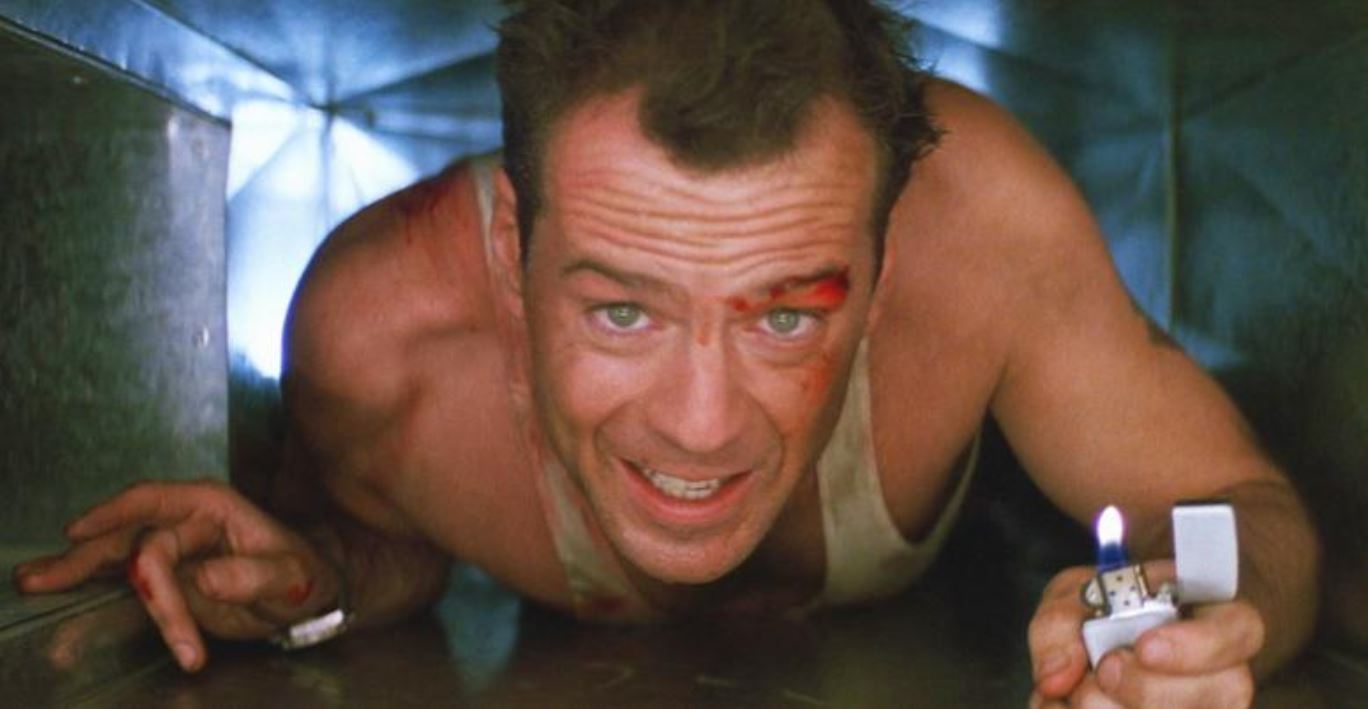






 Breaking Into The Craft