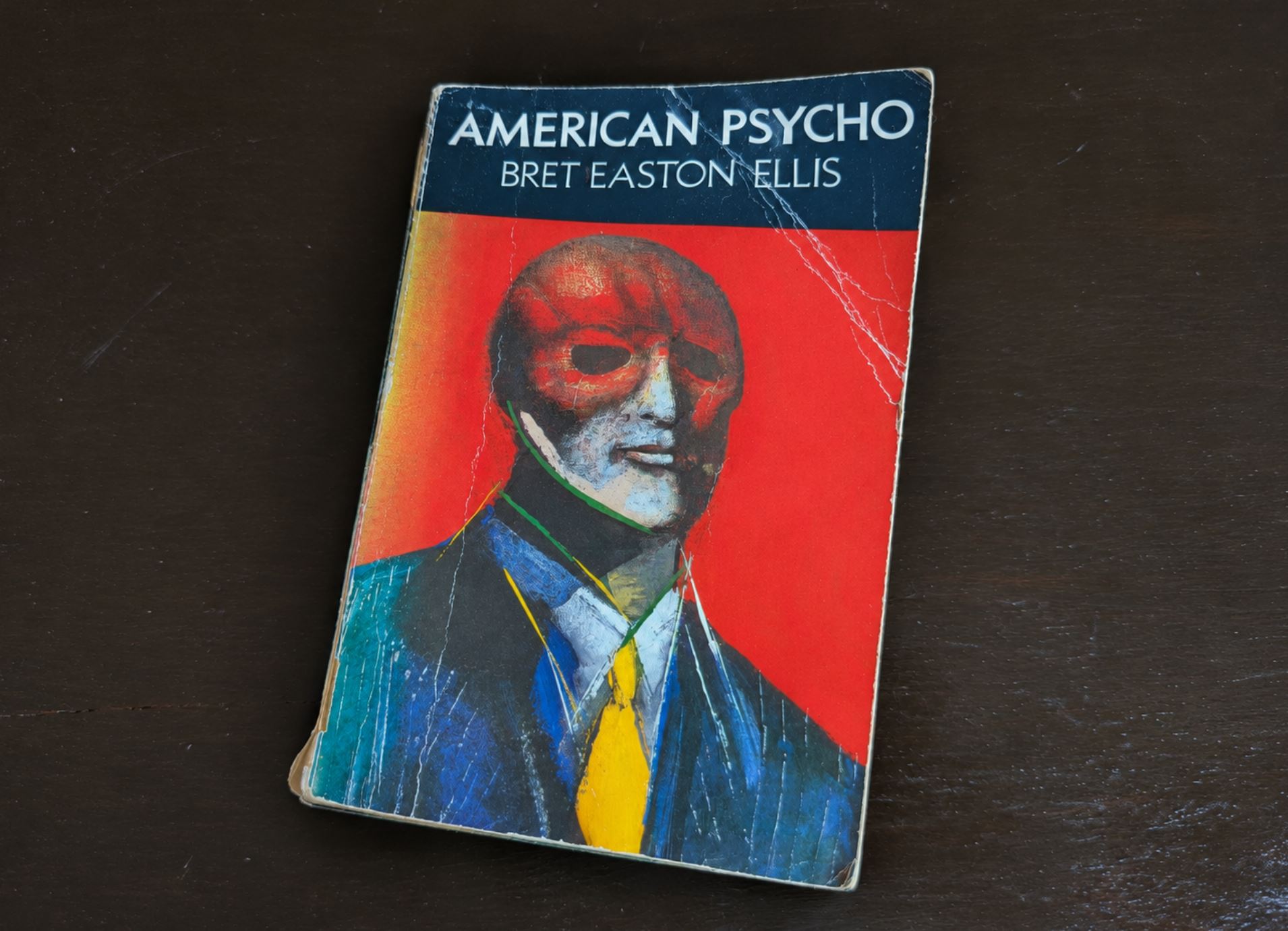
I recently read American Psycho, a disturbing yet utterly interesting novel by Bret Easton Ellis published in 1991. It chronicles yuppie serial killer Patrick Bateman and his slow descent into madness.
While there is a lot I could talk about with this book (later turned into a movie by the same name along with a musical adaptation that played in London and on Broadway), a couple of things stood out to me: Patrick Bateman is an unlikable character, but Ellis somehow makes him relatable enough for us to keep reading. There is also no clear motivation for the character’s actions.
The story is narrated by the main character as he goes about his life in the late 1980s. We experience large sections of descriptions of brand-name items: attire, home furnishings, entertainment equipment and so on (He does a whole chapter on Huey Lewis and the News), periodically punctuated by gore and porn.
Unlikable but relatable
Patrick Bateman is a wealthy vice president of a Wall Street firm. He is the epitome of narcissism, is clearly racist, and does things like taunt bums with cash and then walk away without giving any to them. And, oh yeah, he tortures and kills people.
Who would ever read a story about such a character?
Turns out I would, and over a million other people would too.
So how does Ellis pull this off? How does he make his main character relatable? I think in a few ways. First, the other characters that surround Bateman are just as unlikable and shallow, often even calling Bateman by the wrong name. Second, the author always has us in a situation where we are wondering how Bateman will get caught. While it is human nature to want such a monster to get caught, the first-person narrative has us riding along close to Bateman, which can’t help but feel the tension in his need to stay free. Third, Bateman isn’t all monster all of the time. Most of the time he is a person going to work or out with friends or on a date with the normal issues those things entail. Only periodically does he let his bloodlust take him over. There are even times when he makes statements like “I am afraid I will hurt you.” This shows he is aware of what he is and actually cares about the person he is talking to. It gives the character depth and maybe even makes us feel bad for him on some level. Maybe.
We feel how Bateman’s urges are almost like a growing hunger to him. He knows he will eventually do something horrible. He doesn’t even seem to push back or try to control these terrible urges. He just lives with them, quietly preparing during the day for what is to come later on that night — purchasing duct tape, rope, box cutters, etc. Urge control is a relatable trait. It is a common human experience for many of us to overeat, gamble more than we would like, or spend too much money. Most of us can relate to not being able to control ourselves.
The question of motivation
The other thing that stood out to me was how there seemed to be no motivation for Patrick Bateman to be doing the horrible things he was doing. I am a staunch believer in a character’s need to have a reason for what they are doing in a story. I am among those who feel that even secondary characters incidental to a story should have a reason for saying what they say and doing what they do. But there wasn’t even backstory hinting at how Bateman became the way he is. Instead, I think the motivation is hidden in what appears to be the book’s theme of the shallowness of capitalism and consumerism.
Ellis himself said, “Bateman was crazy the same way I was. He did not come out of me sitting down and wanting to write a grand sweeping indictment of yuppie culture. It initiated because of my own isolation and alienation at a point in my life. I was living like Patrick Bateman. I was slipping into a consumerist kind of void that was supposed to give me confidence and make me feel good about myself but just made me feel worse and worse and worse about myself.”
In other words, the character’s motivation is actually driven from his situation. Bateman is reacting to the vacuous and pretentious environment he lives in. He is going crazy because he feels like he is doing everything he is supposed to be doing but is still somehow not fulfilled.
At least that’s my read on it.
OK, so one last thing – do I recommend you read this book? Well, it had been banned in many places and for a while came out shrink-wrapped in plastic due to the disturbing content inside. There has clearly been some pushback.
I found it brutally disturbing but fantastically well written. I think the answer depends on you. If you feel you can distance yourself from the horrific and pornographic events described to appreciate the excellent craftsmanship, then it may be a read for you. It is a lot like driving by a horrific car accident. Many of us will choose not to look, but some will slow down and take it in. If you are the type to slow down, you might be OK with the book.
If you have read this book or seen the movie, I am very interested in your take on it. Please let me know in the comments below.
-James

