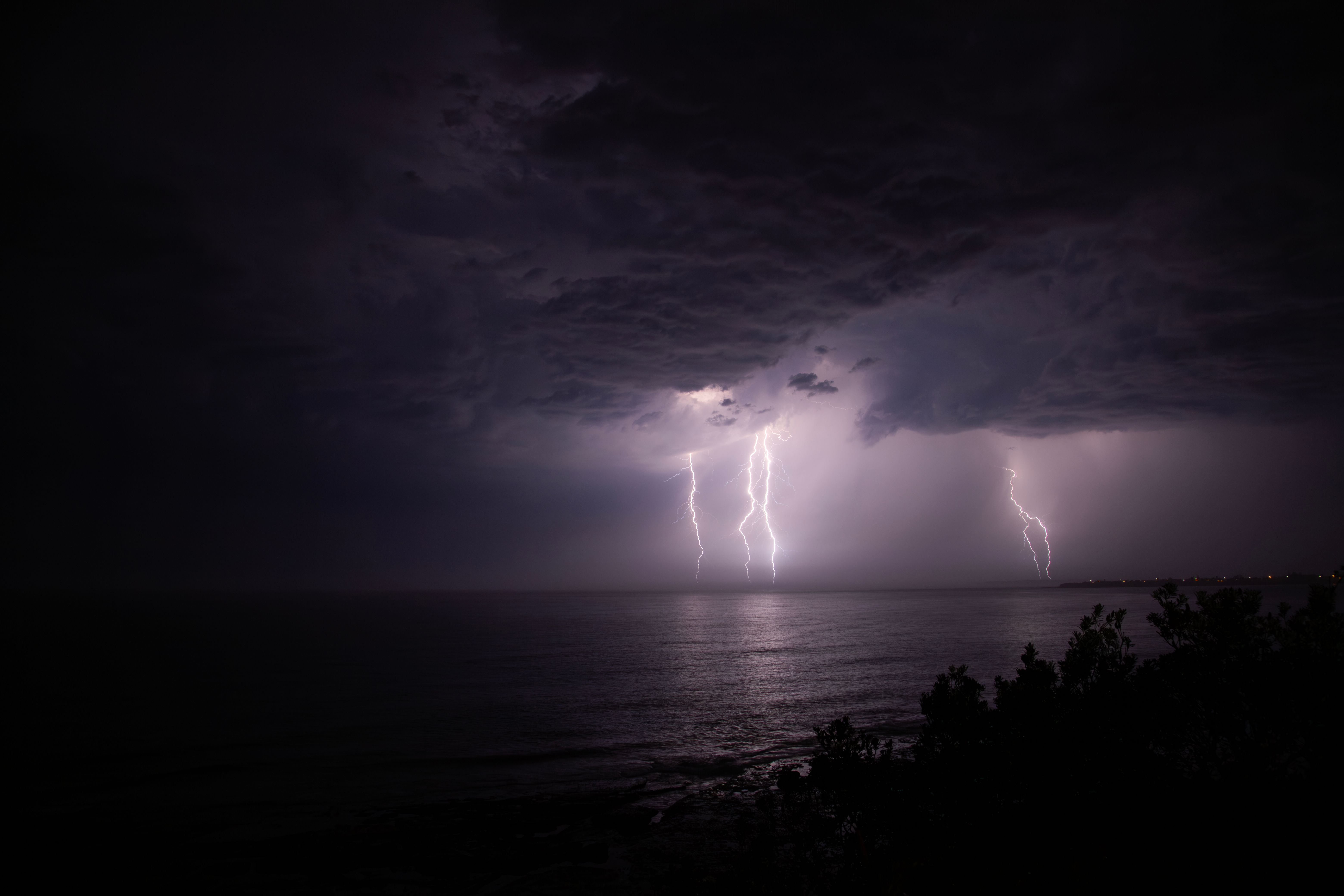
It was a dark and stormy night.
Those famous opening words are associated with Edward Bulwer-Lytton’s 1830 novel Paul Clifford. They begin a much longer sentence describing rain, wind, London streets, rooftops, and flickering lamps. However, Bulwer-Lytton didn’t invent the phrase: Washington Irving had used those same words in A History of New York in 1809, and variations appeared even earlier. Bulwer-Lytton gave us the famous opening, rather than the first recorded use.
Then Snoopy took up the typewriter. The Charles M. Schulz Museum dates the beginning of his writing career, complete with that opening line, to July 1965. For many of us, the image of a beagle typing on top of his doghouse is more familiar than the novel that inspired him.
But is starting with the weather actually bad writing?
Elmore Leonard certainly discouraged it. The first of his ten rules for good writing was straightforward: “Never open a book with weather.”
Your opening words have a job to do: Hook the reader. A paragraph about weather doesn’t give them anything to care about.
Consider this opening:
Rain fell steadily over the town. Dark clouds covered the sky, and water streamed along the gutters.
There’s nothing especially confusing about it. It’s raining. We understand. But who cares?
Now try this:
Martin shoved the stolen wedding cake into the passenger seat, started the car and sped off.
That opening gives me a lot of questions. Why is he stealing a wedding cake? Whose cake is it? Is anyone chasing him?
If we need the weather, we can add the rain once Martin has hooked our attention. It might even be useful to escalate the situation.
This is why I really like stories that start with action. Something is happening, and I want to see what happens next. I feel like am in it and moving right away, not some observer standing around looking at the clouds.
Kurt Vonnegut offered a useful companion to Leonard’s advice: “Start as close to the end as possible.” In the same list, he urged writers to give readers information early so they could understand what was happening, where, and why. Together, those ideas suggest an opening that gets moving without leaving the reader behind.
And that’s the risk with starting in the middle of the action. You can get so busy making things happen that you forget to provide enough context to the reader to let them know what any of it means.
For me, the useful question when considering an opening is to ask is: What have I given the reader to care about?
It could be a person trying to get something or a decision with some uncomfortable consequence. It could be a conversation that has already gone wrong. Even ordinary tasks can become interesting when we understand why someone is struggling to complete them.
On your next draft, try removing the first paragraph. Does the story lose anything important?
If not, I think you know what to do with that paragraph.
As long as the opening gives the reader enough information to follow along, you can usually safely cut those sentences.
And if it really must be a dark and stormy night, please give me someone with a reason to be out in the rain.
-James

