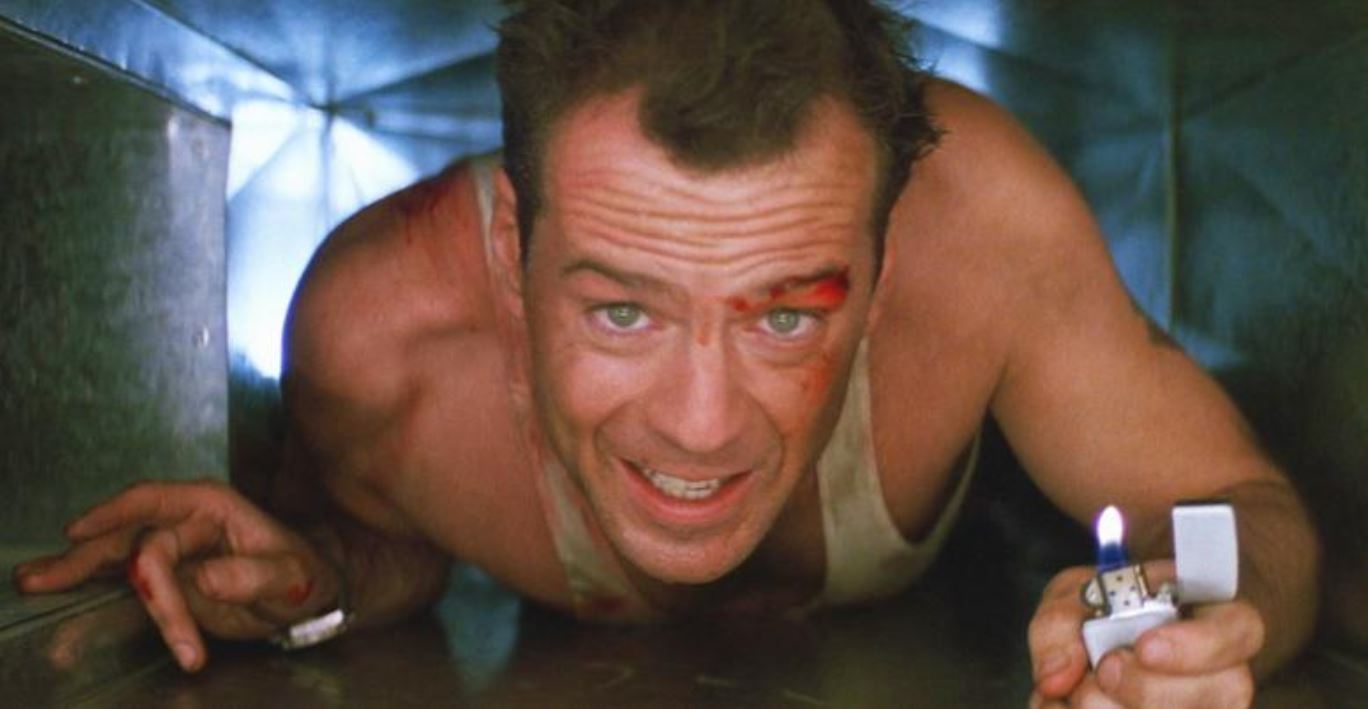
Here are ten common tropes that have been used so often they’re usually better avoided. Also, I have to admit that most of these are seen more in movies, but I still consider that storytelling so, let’s just go with that and let me get away with it this one time. Thank you.
1. Crawling Through Air Vents
This one shows up constantly in action movies and thrillers. A character escapes or infiltrates a building by climbing into the ventilation system and crawling through ducts like they’re made for human travel.
In reality, most air ducts are thin sheet metal that won’t support a person’s weight. They’re also cramped, and if they are heating ducts would get pretty hot and probably cause you to pass out.
Once you think about how unrealistic this trope is, it becomes hard not to laugh when you see it.
For Fun I found a blog post that lists the top 5 air vent scenes in movies.
2. The “Knock Someone Out for a Few Minutes” Trick
This is where a character knocks the guard unconscious with a punch to the head. The victim wakes up later with nothing worse than disorientation or a milk headache.
In reality, a loss of consciousness lasting more than a few seconds is a serious brain injury. If your character regularly knocks people out this way, they’re probably leaving a trail of permanent neurological damage behind them. I would much rather see some chloroform on a rag get held in front of the guards mouth and nose, or a taser disable them for a moment.
3. The Conveniently Overheard Conversation
Your protagonist just happens to walk past a door just as the villain is revealing his entire plan.
No effort required. No investigation. Just perfect timing. (see also my post on what role luck should play in fiction)
This trope removes agency from the main character and replaces it with coincidence. Information in a story like this should come from effort, not luck.
4. The Villain Explains the Entire Plan
This works for me in the Bond movies because it sort of “is what it is” in those. I feel like those movies define the whole trope and I give them a pass for it. But even then it’s still clear that this kind of exposition exists purely as an information dump. If these were real villains, monologuing their evil plans would be very careless. There is really no advantage to doing that, unless you want to compromise the 4th wall and let the audience (or in our case reader) in on something.
5. The Countdown Clock
A bomb is set to explode in exactly ten minutes. We can tell this from the red LED display conveniently visible to the hero. Being a very technical person, this one has driven me crazy for years. Bomb timers based on old-style alarm clocks where the alarm goes off and there is a physical contact closure built into the bell mechanism, yeah, that makes practical sense. Spending extra money and design time to put a digital LED read-out into something that will blow up seems like a lot of unnecessary cost and work. It’s good to have a metaphorical ticking clock that provides pressure for the protagonist but it’s doesn’t have to be a real one and it rarely makes practical sense to have a LED display.
6. The Instantly Hacked Computer
A character types furiously for ten seconds and announces:
“I’m in.”
Complex computer systems do not collapse instantly under a few keystrokes. Real intrusion involves research, social engineering, and patience.
I also see this kind of instant solution when a character in a movie goes to hotwire a car – they put two wires together and have it running in a matter of seconds. I guess we are just supposed to ignore the fact that it would take more wires than that and the fact that the steering wheel is usually locked.
7. Guns That Never Run Out of Ammo
You see this when characters fire dozens of rounds without ever reloading. I have to admit this has gotten better in movies lately but you do still see it. The new foul is that they change magazine so often now you wonder where they were keeping all of that heavy ammo when the chase scene was happening.
In fiction, running out of bullets is often times more interesting than having an infinite supply.
8. The Totally Useless Security Guards
In many stories, guards exist only to be knocked out or distracted.
They rarely communicate with each other, never notice obvious problems, and seem completely unaware of their surroundings.
A competent security system has multiple guards, cameras, procedures and can create much more interesting obstacles for your characters than the cardboard cut-out guards we usually see.
9. The One-Line Medical Miracle
A character receives a serious injury but is fine after a quick bandage and a few minutes of rest.
Broken ribs, stab wounds, and gunshots tend to have a much longer recovery times than a few minutes. Think about the last time you were injured in anything more than an inconvenient way and how much that slowed you down. I literally had my back go out when I was turned wrong and sneezed one time and I was basically disabled for three days, bordering on tears when I went to put my socks on. I have to imagine being shot in the stomach would slow me down quite a bit more than that.
Injuries that actually affect a character’s abilities make stories much more believable and raise the stakes.
10. The “It Was All a Dream” Ending
Few endings frustrate readers faster than discovering that the entire story didn’t really happen. Now, I did just see the Wizard of Oz at the sphere (which I equate to Disneyland in the expense and “gotta see it at least once” factor) and I am giving that movie a pass at this but for every other piece of fiction, you have to realize that dream endings are a cheat. They erase consequences and invalidate the emotional investment the reader made throughout the story.
Unless the dream itself is the point of the story, this trope almost always a bad idea.
The Real Problem with Tropes
The problem comes when tropes becomes so familiar that the stop feeling like a story choice and start feeling like lazy writing.
Readers enjoy stories where events happen for believable reasons, where characters solve problems through effort and skill and where the world behaves in ways that feel authentic.
If you find yourself reaching for one of these tropes, ask a simple question:
“What Could really happen instead?”
The answer is often surprising and far more interesting than the cliché. Spend a bit more time thinking through potential endings and as David Mamet would say, “make them surprising and inevitable.”
-James
 Breaking Into The Craft