This week’s story is brought to us by Floyd Largent.
Bio, as provided by author:
I’m a former archeologist who never woke a sleeping god or unearthed an ancient evil (alas). Since February 2025, I’ve published, or had accepted for publication, six poems and 32 short stories in venues including Altered Reality, Bewildering Stories, Bullet Points, CommuterLit, Corner Bar Magazine, Flash Phantoms, Chewers, Masticadores International, Not One of Us, Beyond the Revolving Door II, and more.
Delicate has been [Mistakenly] rejected by Clarkesworld, The Colored Lens, and Mythaxis and four other markets.
When I asked Floyd what he loved about this story, this was his response:
One thing I love about this story is that it offers a sense of wonder about our nearest celestial neighbor that I believe has been largely missing in recent years, as both SF and US space efforts have focused elsewhere. Now that we’ll be going back to the moon regularly, I feel this is an excellent time for it to appear. I also love it because it was a very slow burn that turned out very much to my satisfaction; I literally began writing the story more than 30 years ago and put it aside for a long while before I finished it last year, and updated it after the first Artemis mission.
Editorial note: I don’t normally comment on these questions, but I loved that last bit about how long the story has been around and how he came back to it. It reminded me how fiction has a timeless quality.
Delicate, by Floyd Largent
About five hours into the first day, as I was taking the first deep lunar surface cores (we had a nice 10-meter drill this time), I lost track of Rojo. When I finally looked up and looked around, having finished prepping and bagging the sections of my core, I couldn’t see him anywhere. I walked the entire perimeter of our camp, and he wasn’t visible. I flipped on the magnification optics in my helm of darkness, which brought features on the crater wall miles away into sharp relief, but I couldn’t find him… though once, I thought I detected motion. When I looked again, though, there was nothing, so I assumed I’d just moved my head too fast and caught an afterimage, or maybe one of those ghostly floaters most of us have in our peepers. When I didn’t see any Rojo, I flipped through a series of optical filters. Infrared wasn’t much use on the bright, hot lunar surface, though I figured some of the filters might have been, but no.
Rojo was gone, out of my sight, probably miles away by now. And I suspected he’d left on purpose. I called for him through my comm system, but there was no answer, except for what sounded suspiciously like a faint snicker. What the…?
Needless to say, Houston, which was listening in, went batshit when they realized Rojo was hiding.
Finally, as the first day came to an end, Rojo Cervantes reported in, in a manifesto heard ’round the world. He began with, “I’m not coming back, Houston. Sorry, Emil.” That part’s usually cut from the audio files.
“What do you mean you’re not coming back?” Zeke asked from Texas.
Four seconds later, the standard time-lag from Earth to the Moon, Rojo declared, “You deserve to be up here someday, Zeke. You’ve trained for this all your life. Maybe after I do this, you’ll get a chance. And humanity will get to enjoy its manifest destiny in space.”
“What are you going to do, Rojo?” I asked slowly.
“What I have to, Emil. I’ve decided to take a stand. Earth’s population is over 10 billion now. We’re constantly fighting each other. Did you know that in the last hundred years, there hasn’t been a single year when humanity was at peace? We need new frontiers to reach for, someplace to send our discontented, our adventurers, the ones who hear a different drummer and are guided, literally, by a different star. This next part, this is for everyone. Be sure they hear it.
“People of Earth, my name is Rogelio Cervantes. If any of you have been paying attention, you know that as things stand, I’m the twenty-sixth and final human to set foot on the face of the Moon, that beautiful world just 250,000 miles away. With modern technology, it took us two days to get here, and cost a tiny fraction of what the Apollo program cost in the 1960s and 1970s. The U.S. Army spends more for coffee filters every year. And yet our politicians, caving to pressure from an uninformed public, have cancelled our manned space program for the next budgetary year, and probably forever. The USA was the last, best hope for mankind to expand into space.
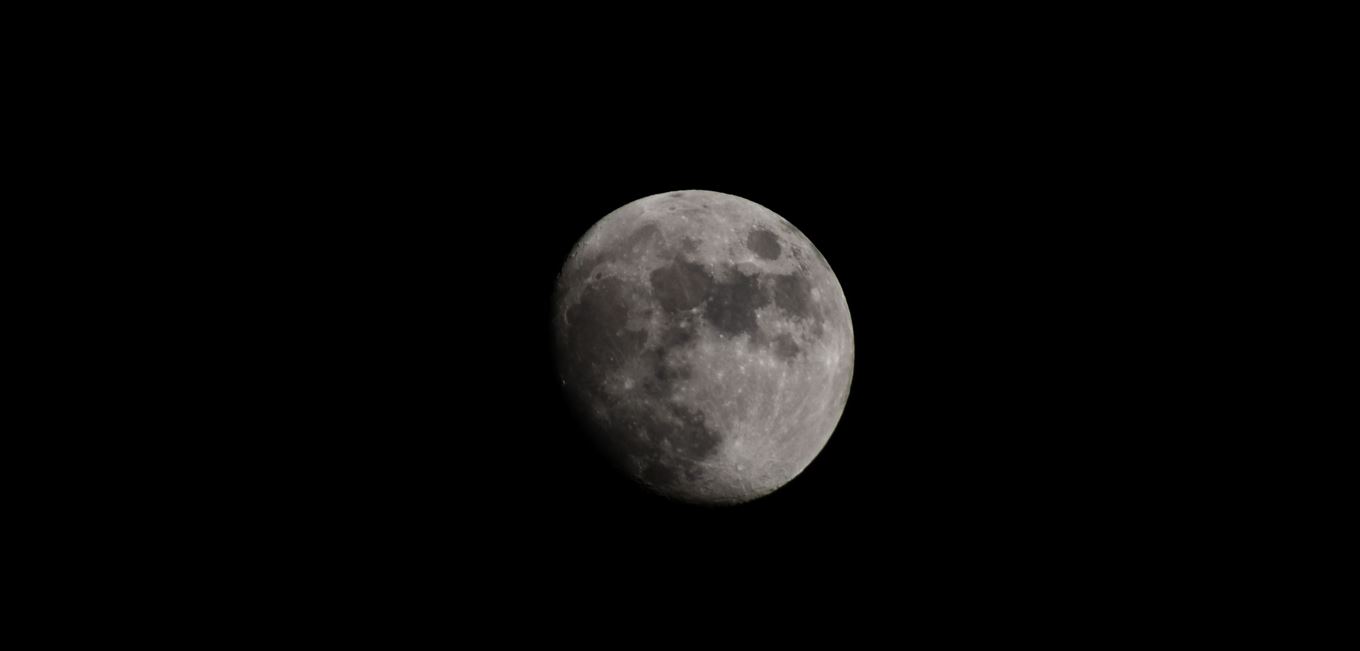
“You don’t know what you’re missing. My fellow astronaut, Emil DuChamp, found a gem-quality diamond the size of a bowling ball today. It was probably formed by the meteor that slammed into the Moon’s surface at Littrow a billion years ago. Look up at the Moon next time it’s full. Even with binoculars, you can see it’s absolutely covered by craters of all kinds. Imagine how many diamonds that means!
”And the Moon is just one of dozens of worlds waiting out here for humanity to claim, in our solar system alone. All this free real estate, waiting for hard-working people to come and exploit it, to mine it, to pick up gemstones off its surface, to cover it with domes and turn it into fertile land to help feed us all. All this elbow room that we can turn into new Earths and fill with our descendants. Then there’s all the free minerals and ores in the asteroid belt. There’s over a million asteroids, people. All waiting for us to extract air, water, gold, platinum, silver, iron, nickel, and more. Someday, the rest of humanity might follow the corporate probes into the depths of space to help spread us across the galaxy. Who knows what’s waiting for us out there?
“We can’t just give up on space. It’s a free gift to the whole planet, to every person in the world, if we just have the will to reach out and take it. It won’t be easy; but then, that’s the challenge of it, isn’t it? Aren’t some of you tired of easy? Aren’t you tired of getting the minimum you need and not a jot more? Shouldn’t you be able to have more if you want it? Or would you rather fester on Earth, while our governments pour more money into outdoing each other on our single gravity-bound world, leaving all our eggs in one basket, where a single madman can start a war that could sterilize our planet or one catastrophic accident could remove our species from the galaxy? I don’t want that for humanity. I have to believe that many of you don’t want it either.”
Rojo took a deep breath. “Which is why I, Rogelio Manuel Cervantes, am taking a stand here on the Moon. Tonight, look up. Know that I, the twenty-sixth person man to stand on this pristine globe, am going into hiding — that as an act against government venality, against the Big Brother attitude, against social inertia, against complacency — I have decided to stay on the Moon. When the Perseus lander leaves the surface of our sister world, I will not be on it. When it docks with Pegasus, Emil DuChamp will enter the orbiter alone. When the Selene 1 mission ends, on the Musk Memorial Carrier in the Gulf of Mexico, only one man will leave the capsule.”
There was a brief pause. “I know what I’m doing. I know I’ll die. I’m not going to change my mind. In the tradition of Bruno and Mandela and Kosciosko, I have decided to make a stand, and I won’t be moved from this place. I’m hoping my sacrifice will mean something. I hope it will jar the world out of its collective self-satisfaction and onto a better course before it’s too late. It doesn’t matter to me if the people who spread out into the solar system, and into the stars, speak English, Spanish, Russian, Mandarin, Arabic, Portuguese, Swahili, Finnish, or Lakota — as long as our species takes its proud place in the universe, in the stars where it belongs.
“Thank you for listening. I beg you to do the right thing. Let your leaders know you want humanity to take its rightful place in the stars… before it’s too late. This is Rogelio Cervantes, signing off.”
If you listen very close at the end of his speech, you can hear me muttering, “Dammit, Rojo.”
Most of the public thinks Rojo switched off his radio after that, but he didn’t. All the rest was recorded, but it was released only to a select few… until now. Truthfully, he didn’t say much more, and at first, it was passed off as the anoxic ravings of a dying man. It wasn’t. He still had hours of air left when he started talking again, and had full use of his faculties. He didn’t address me directly, and he wouldn’t respond when I asked him to — I think he’d cut the incoming comm — but I knew he wanted me to hear him, whatever happened. Of course, at first he didn’t know how significant that decision was, or how historic what happened to him would be.
I was frantically running around looking for his trail when I heard him again; I didn’t learn until later that he’d done a lot of high-hopping on his tiptoes, and wasted some of his O2 to brush away the marks every time he took off. It was impossible to tell where his signal was coming from, but about two hours later, during a lull in NASA’s ongoing logorrheic explosion, I heard Rojo say, “Huh, that’s interesting. Ice?” which set off another battery of demands that I find him and that he respond. I finally shouted them down at Mission Control, and told them to keep their mouths shut so I could listen.
Half an hour later, he muttered, “What’s this?” A moment later he gasped, followed up with, “Oh. Wow! Ave Maria, I can’t believe it!”
And then he turned his radio off, and that’s the last I heard from him for nearly four hours. By then, he would have been on his last few breaths, and maybe he really was into the anoxic raving stage. I hadn’t given up, but I knew I was going to find him too late. There was a click over the com, and he stated, breathing heavily, “Rogelio Cervantes… reporting in… for the last time. Emil. Find me. I’m… north of you. I made it back… as far as I could. You have to… make them come back. They’re… they’re beautiful. And… they’re everywhere.”
“What, Rojo? What’s everywhere?” I asked desperately, but my response was only a click. The words “they’re everywhere” were the last words Rojo said to the world.
By then, Rojo’s defiant stand on the Moon had been smoothly publicized by NASA, and was having exactly the effect he intended. I almost wondered if it had been deliberately planned. Sometimes I still do, but I really don’t think the bureaucrats had it in them to do something so radical and glorious.
As directions go, “to the north” doesn’t mean a whole lot. It’s basically a quarter of the compass. I tried due north at first, but no joy. Then I worked my way east along the crater rim, hoping he hadn’t gone beyond it. I don’t even know how he would have anyway; it’s pretty high, and significant climbing is a no-go in a pressure suit. I searched for him all the rest of that day and the next, knowing I had very limited reserves of air myself. We were only intended to EVA for a total of nine hours. Without Rojo to use up his half, I stretched that to over 16 hours, punctuated with a few hours of exhausted sleep in the Perseus. I used up most of the reserves, but goddamn it, I finally found the bastard, a few points west of north in a little dimple in the crater wall, in one of the last places I was going to be able to look. In the end, when my last bottle of air was down to less than 10%, I found him. He looked so peaceful, so happy, as I suppose most martyrs do when they choose to die for their cause.
I left Rogelio Cervantes where I found him, in the position I found him, untouched except for the one small sample I took. I did so because I didn’t think I’d have enough oxygen to make it back if I was carrying him. Two hours later, I took off alone from the surface of the Moon, in what some historians have called a flawless ascent, and let the AI fly Perseus back to the orbiter while I wept.
Rojo stayed on the Moon, as he’d wanted. The little alcove in the north wall of Littrow Crater where he reclined, peaceful in death, a satisfied smile on his face, became his tomb. Or maybe it was the whole crater, or the whole Moon. It depends on who you ask. There’s been some argument about whether he’ll be left there for eternity, even when we get back to the Moon, or if his body will be returned to his family. They want him to stay, commemorating his accomplishments, his magnificent sacrifice.
They say Rojo’s a hero, the man who almost single-handedly saved the American space program. I agree. His name will ring resoundingly through the ages beside Gagarin’s and Armstrong’s, as it should, and every child will learn it by rote for a millennium to come. His last words will be inscribed in all the history books, just the way he wanted, but not quite for the reasons he expected.
He was my friend, but let’s be honest: Rogelio Cervantes was an egotistical, theatrical fool who paid the ultimate price for his convictions, and I’m sure he felt the same martyr’s fire in his breast that Joan of Arc felt in hers long ago, as the physical fire mounted her legs. And like hers, his sacrifice was not in vain. America and the world will have to return to the Moon someday soon. He left us no choice, due to a little thing I christened Chrysaor lunaris Cervantes, after him and the Perseus legend.
When I finally found Rojo’s body, he was holding humanity’s destiny. The fingers of his right hand were clenched tight around the stem of a flower, a fragile little thing with delicate thorns and petals like spun gold, and we have to find out where it came from.
 Breaking Into The Craft