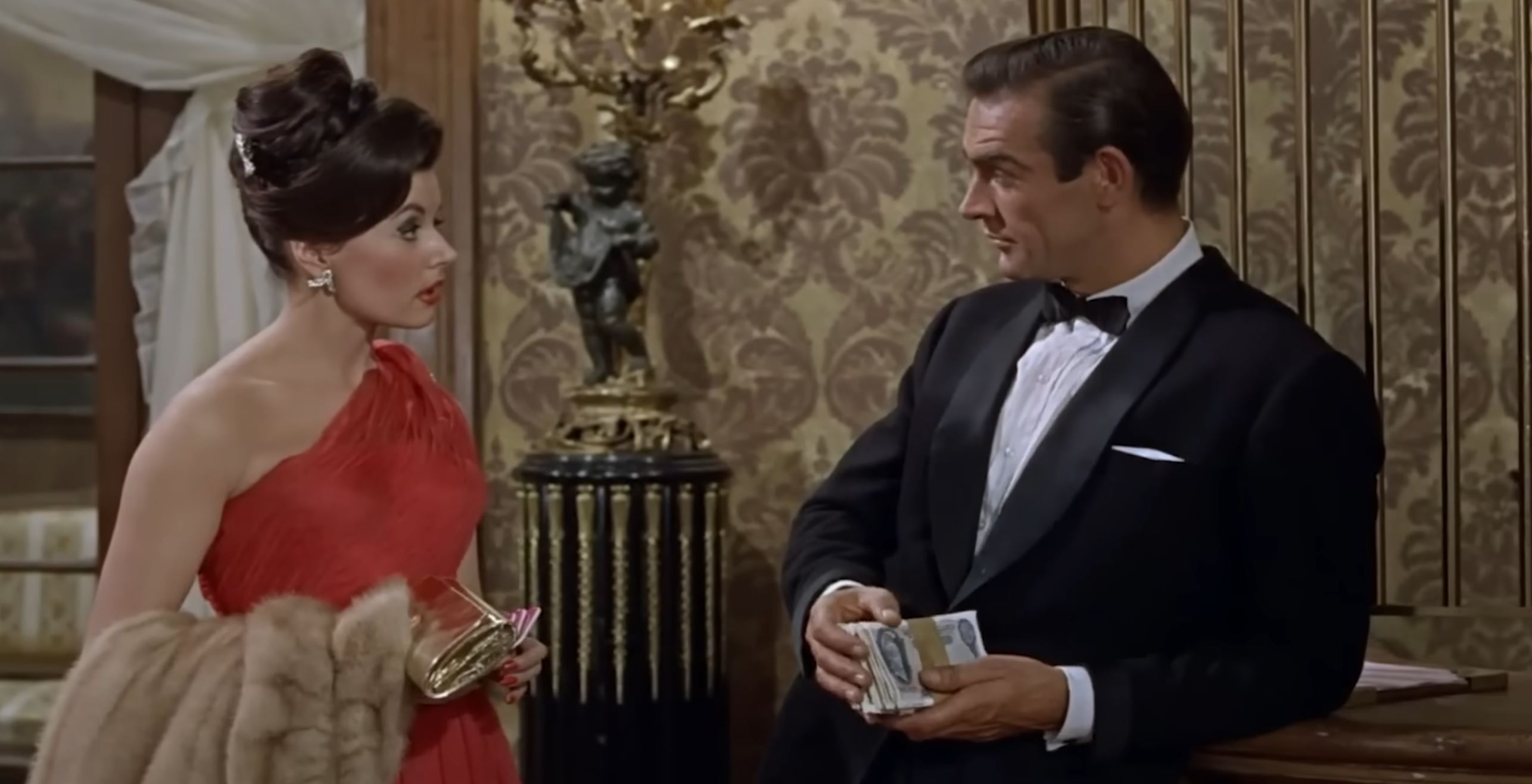
I have been binge-watching the James Bond movies on Netflix. I am mostly going in sequence, starting with 1962’s Dr. No and having worked my way up to 1979’s Moonraker. Watching these movies in quick succession has allowed me to see how quickly culture changes. In 1962, there were still segregated bathrooms. While that isn’t apparent in the Bond movies (that I could tell, at least), what I did notice was how the attitude toward and portrayal of women changed over those films. Early Bond had no qualms about backhanding a woman across the face, then later making what could most generously be described as aggressive advances toward the same woman, who ultimately gives in to her uncontrollable passion for Bond—cut to post-coital pillow talk.
There is also a feeling of the power of feminine sexuality in those films. I suspect some would say this is an example of objectifying women, but to me it feels more like something empowering.
It is interesting to see how the female roles became more assertive and less passive over time, in my mind culminating with the angry power of Grace Jones as May Day in 1985’s A View to a Kill. Yes, James still takes May Day to bed, but as he goes to do so, she deftly flips him over so she is on top. While I may be reading into things, this felt like a nod to the changing role of women in the Bond films. No longer would they be relegated to serving as handy plot devices that provide 007 with information and titillation.
This seems to continue to hold true in 1979’s Moonraker, as the main female character is a CIA agent, every bit as capable and seen as an equal to Mr. Bond. Old habits die hard, however, and she did carry the suggestive name of “Dr. Holly Goodhead.” According to AI, this is the first mention of a leading female character with a PhD in a Bond movie.
Another interesting bit was how they showed the kill shots of pheasants being hunted in Moonraker, clearly showing the birds being shot and falling from the sky. I suspect this would not be seen in any movie today.
Brutally murder 100 guys in an action scene? Yes, please.
Show the kill shot during bird hunting? Sorry—way too offensive.
I admit to feeling a sad nostalgia for these times gone by. Those values and norms have changed and will never be seen again. I say this from a mental standpoint of trying to withhold judgment. It is easy for us to look back and decry the unfairness and ignorance with outrage, but for the people of that time, this was the world they lived in. It felt “right” to them at the time. It was the world they knew, whether we like it or not.
I do think we have changed for the better… but then again, I am looking at that from my current mental framework of social values—just like we all are. There is no way around it. I suspect people have always felt the very same way: things are so much better than they used to be.
I also find it interesting to think that the stories we write today will inevitably capture the cultural mores of our time.
Which makes me wonder: will our writing be considered antiquated and offensive later on?
Almost certainly. But when it comes to writing, much like martinis, shaken is better than stirred.
—James
 Breaking Into The Craft